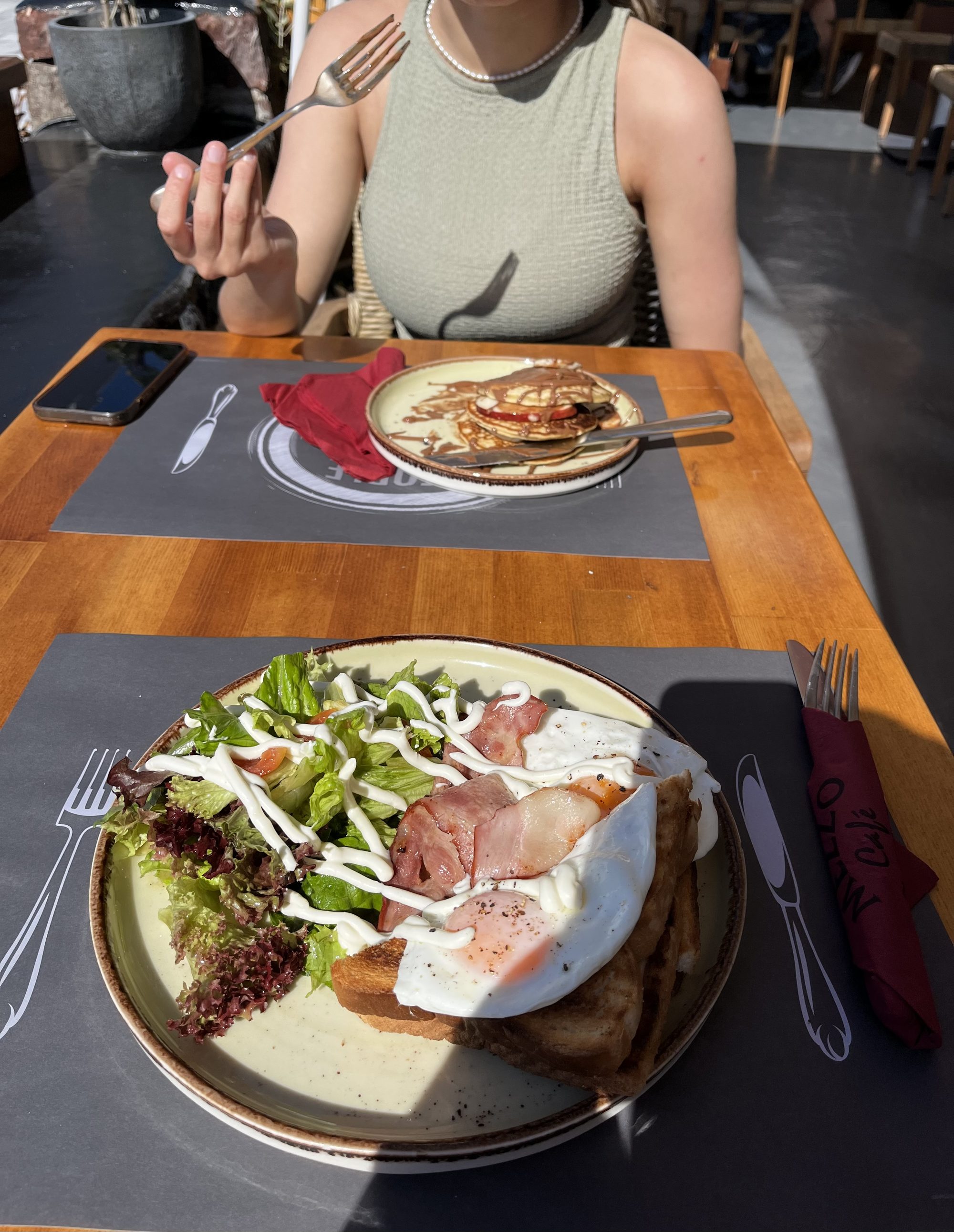
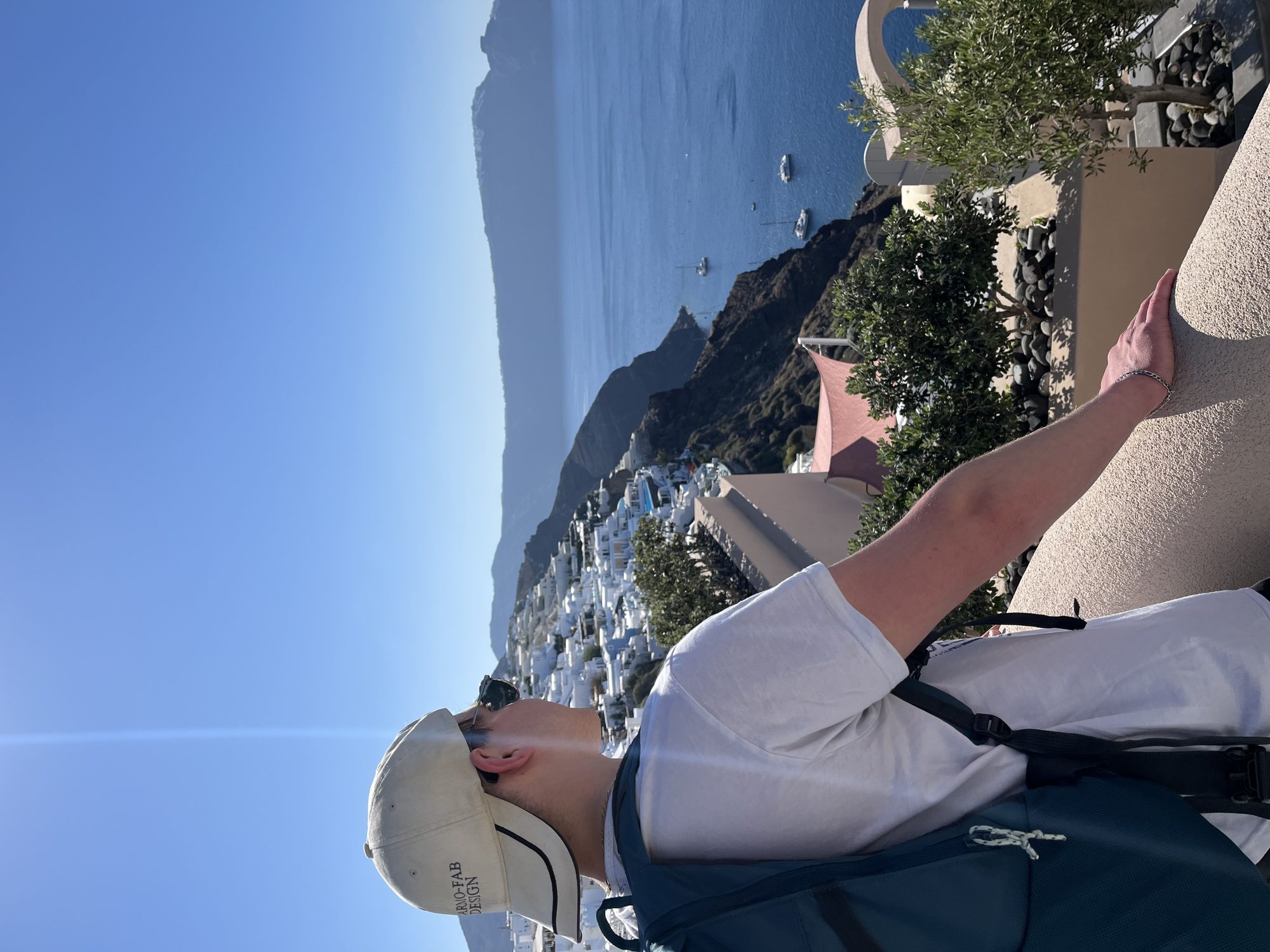
Seven days. Three places. The right order is Athens first, Santorini second, Mykonos last. The split is roughly four nights in Athens, two in Santorini, two in Mykonos. The mistake almost everyone makes is doing it backwards — front-loading the islands and treating Athens as the day-trip on the way home. Athens does not work that way. The order matters, and this is the version that does.
I have written about each piece of this trip individually — the full case for Athens over Santorini if you can only pick one, the Mykonos vs Santorini verdict if you can only pick one island, the question of whether Santorini is actually overrated, and the deeper Athens guide. This piece is the operational version — what to do when you have a full week and want all three.
Three places in seven days is the right number, not a stretch. The catch is the order — Athens first, then Santorini, then Mykonos — and the discipline to not try to also squeeze in a third island. The lines above are the itinerary, distilled. The detail below is how to make each day pull its weight.
Every piece here ends with an honest call on where to actually go. New verdicts land in your inbox first. One email. No noise.
Why this order — and why almost everyone gets it wrong
The first mistake people make on a 7-day Greek trip is starting with the islands. The logic feels right: arrive, decompress, eat, swim, then come into Athens for the cultural part at the end. Almost every tour operator sells the trip in this shape. It is the wrong shape.
Athens is where the trip earns its weight. It is also a city, which means it asks more of you than the islands do — more walking, more concentration, more decision-making about which neighbourhoods to base in and which streets are worth slowing down on. Three days into a sun-and-sea rhythm, you will not have the legs or the appetite for it. Athens at the end of an island week is the version of Athens almost everyone leaves disappointed by — and then blames Athens for, when the real problem is the order they did it in.
Reverse the trip and everything shifts. Athens at the start gives you the city while you are still hungry for it. You arrive, you walk, you eat, you slow down. The Acropolis at dawn on day two is one of those experiences that makes the rest of the week make sense. Then you take the ferry to the islands as the reward — not as the trip itself, but as the unwinding at the end of the harder, deeper, more rewarding first half. My broader argument for Athens over Santorini covers why, in detail. This is the version of that argument applied to logistics.
Days 1–4 — Athens, the part that earns the trip
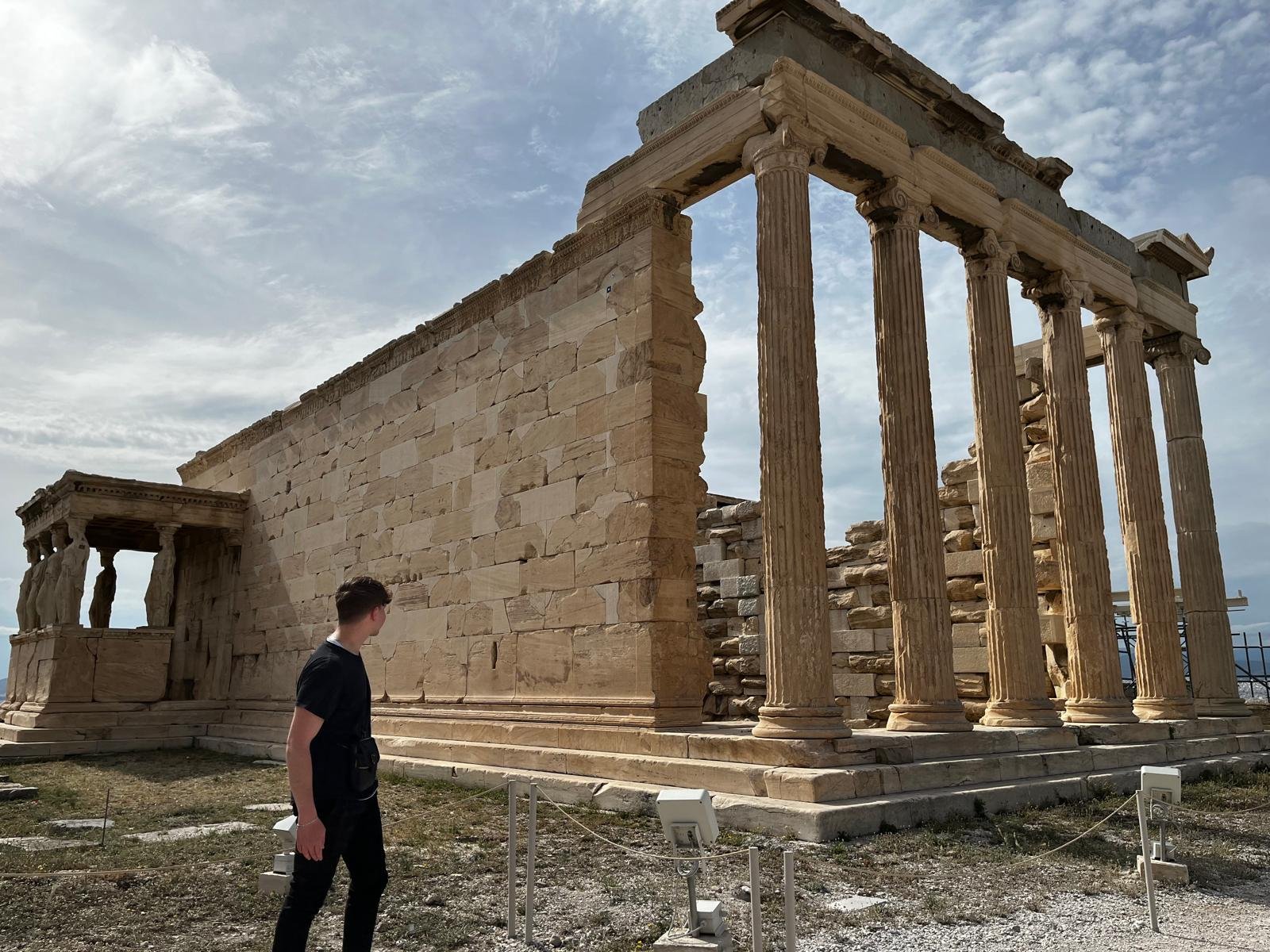
Four nights in Athens. Five is better if you can stretch the trip; three is the absolute floor. Anything under three and you will skim the city without ever sinking into it, which is the only mode in which Athens repays the visit.
Day 1 — Arrive, walk, eat. Land at Athens International, take the metro line directly into Monastiraki (cheap, fast, and the airport-to-old-city ride is one of the genuinely good arrival experiences in Europe). Drop your bags. Walk Psiri in the late afternoon. Dinner where the locals eat — follow the rule from my main Athens piece: when you stop hearing English at the next table, you have arrived. Sleep early.
Day 2 — The Acropolis at dawn, then everything else. Be at the entrance gate by 8am. The light is better, the crowds are smaller, and the silence at 8:15 on the Parthenon side is the version of the Acropolis you came for. Down to the Ancient Agora afterwards — sit on the stones near the Temple of Hephaestus and let the morning slow you down. Lunch somewhere unmarked. Afternoon at the Acropolis Museum — see the originals after standing on the hill itself; the sequence matters.
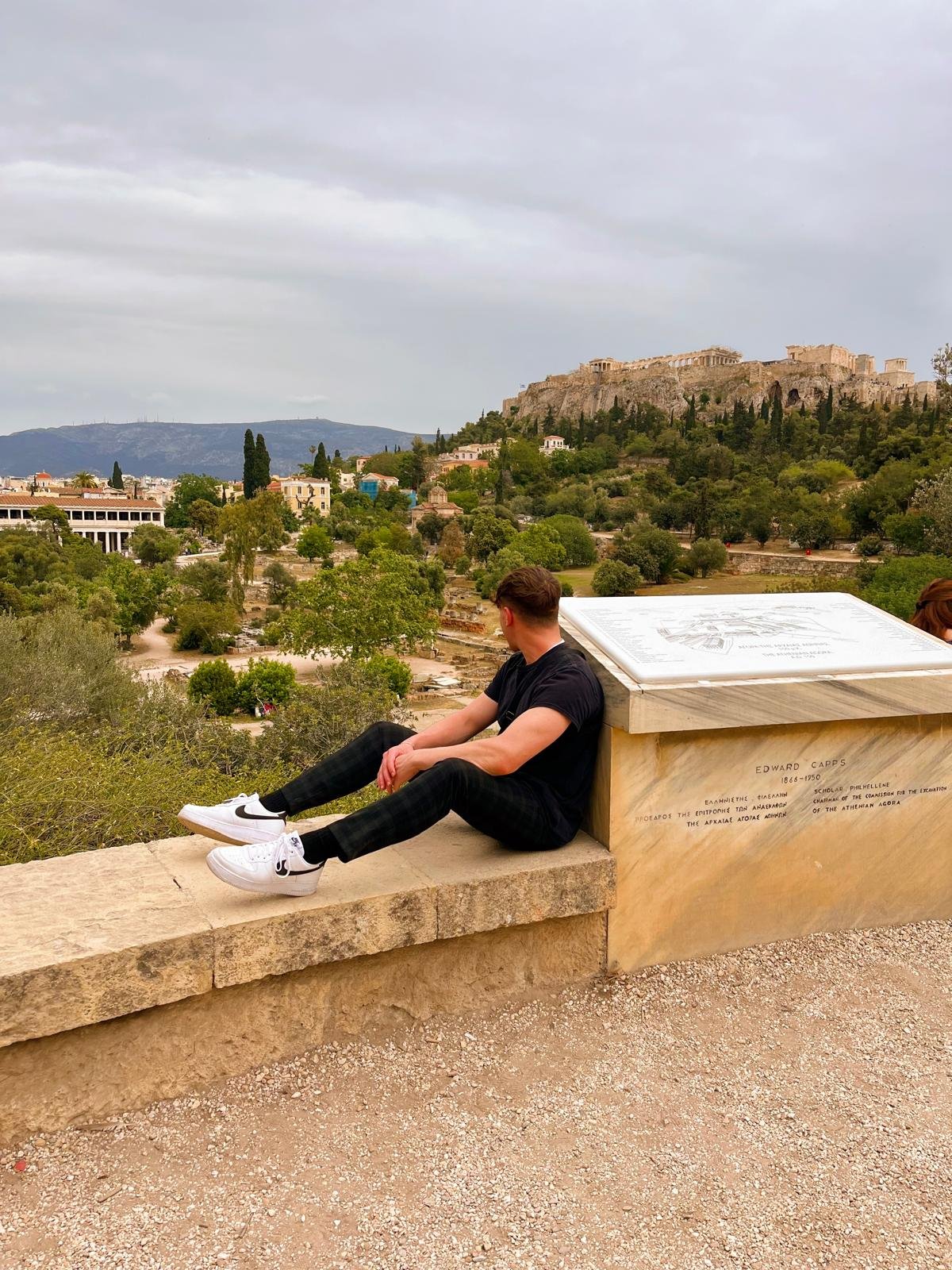
Day 3 — Slow walks and the neighbourhoods. The day you let Athens settle into you. Filopappou Hill in the morning for the view of the Acropolis you cannot get from the Acropolis itself. The Plaka in the afternoon — the touristy version is fine for an hour, but the real reward is climbing up the Anafiotika district, the tiny whitewashed Cycladic village that exists on the slope of the Acropolis hill. Most visitors miss it. Do not be most visitors. Dinner in Monastiraki or Psiri with the outdoor tables full and the music starting low.
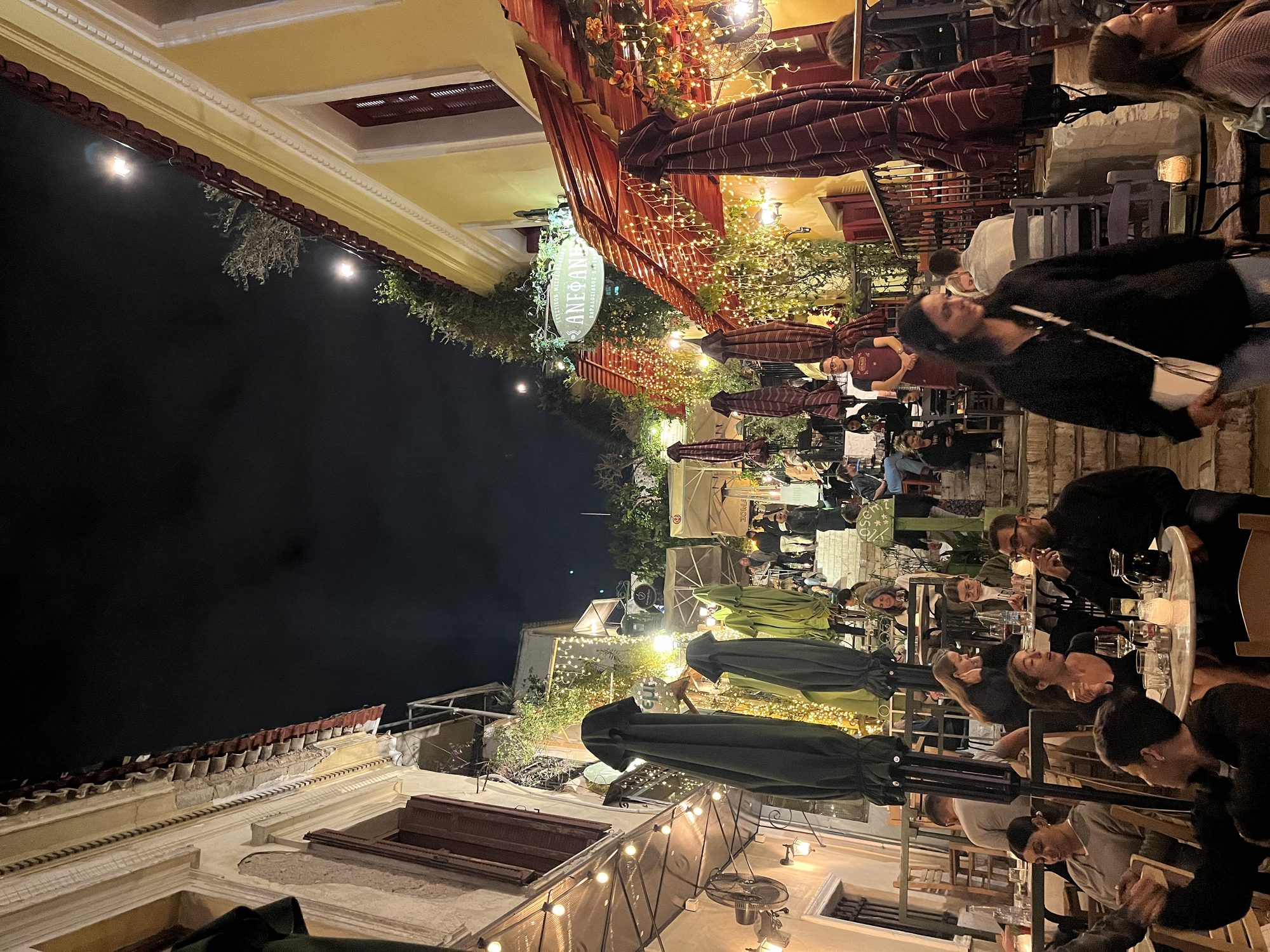
Day 4 — A real day, on your own terms. The day Athens stops feeling like a destination and starts feeling like a city you have lived in for a week. Use it on something you missed — the National Archaeological Museum (genuinely one of the great museums in Europe and underdiscussed), a day trip to Cape Sounion for the temple at sunset, the Olympic Stadium, the Panathenaic. Or skip the list entirely. Walk where you have not been. Eat where you have not eaten. This is the day that proves the four-night argument.
Evening of day 4: ferry to Santorini, or a morning flight on day 5. I recommend the ferry — taking it overnight saves a hotel night and the arrival into the caldera at sunrise is one of the genuinely great moments in European travel. Blue Star does the conventional overnight route at a fraction of the cost. SeaJets runs daytime high-speed. Both work. The flight is faster (45 minutes from Athens) but a runway is not a view, and the ferry sets the rhythm of the second half of the trip.
Days 5–6 — Santorini, the postcard that turns out to be real
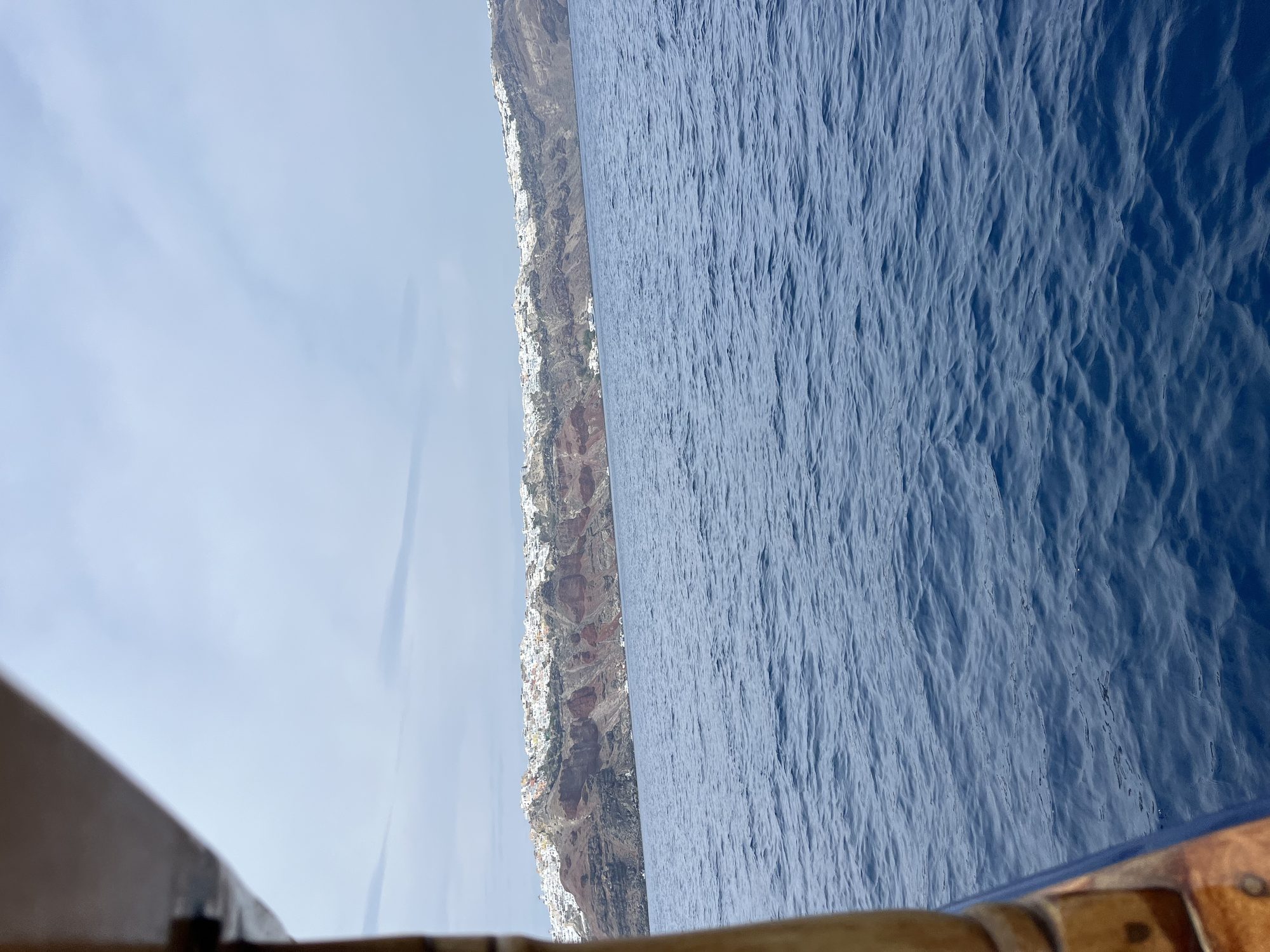
Two nights is the right number on Santorini in a 7-day trip. Three works if you cut Mykonos. Anything more than three on a single-island leg and the romance starts to flatten — Santorini is not built for slow living. The full case for the island is in my "is Santorini overrated" piece; the case against burning a honeymoon on Mykonos instead is in Santorini or Mykonos for your honeymoon.
Day 5 — Arrival and Oia. Arrive Fira port, get to your accommodation (stay in Imerovigli if you can — same view as Oia, quieter, twenty percent less). Walk the caldera in the late afternoon. Get to Oia by 6pm. The sunset is real, the queue for it is also real — claim a wall to sit on by 7pm and let the light do the work. Dinner away from Oia's restaurant strip. The village of Pyrgos, ten minutes inland, has caldera-view tavernas at forty percent of the Oia price and food that is genuinely better.

Day 6 — The hike, the wine, the volcano. The Fira-to-Oia hike is 9 kilometres along the caldera rim and is the best thing on the island. Three to four hours on foot. Free. Most visitors skip it because they are on the bus between towns. Do not be most visitors. Start at 7am to beat the heat and finish by 11. Afternoon: the volcano boat from Fira (a half-day on Nea Kameni, the active volcanic island in the middle of the caldera — walk across ancient lava, swim in warm sulphur water; one of the underrated things on the island). Sunset and a serious wine tasting — Assyrtiko grown in volcanic soil, three thousand five hundred years of vineyard tradition, under thirty euros at a caldera-edge winery. Last dinner in Fira, ferry to Mykonos in the morning.
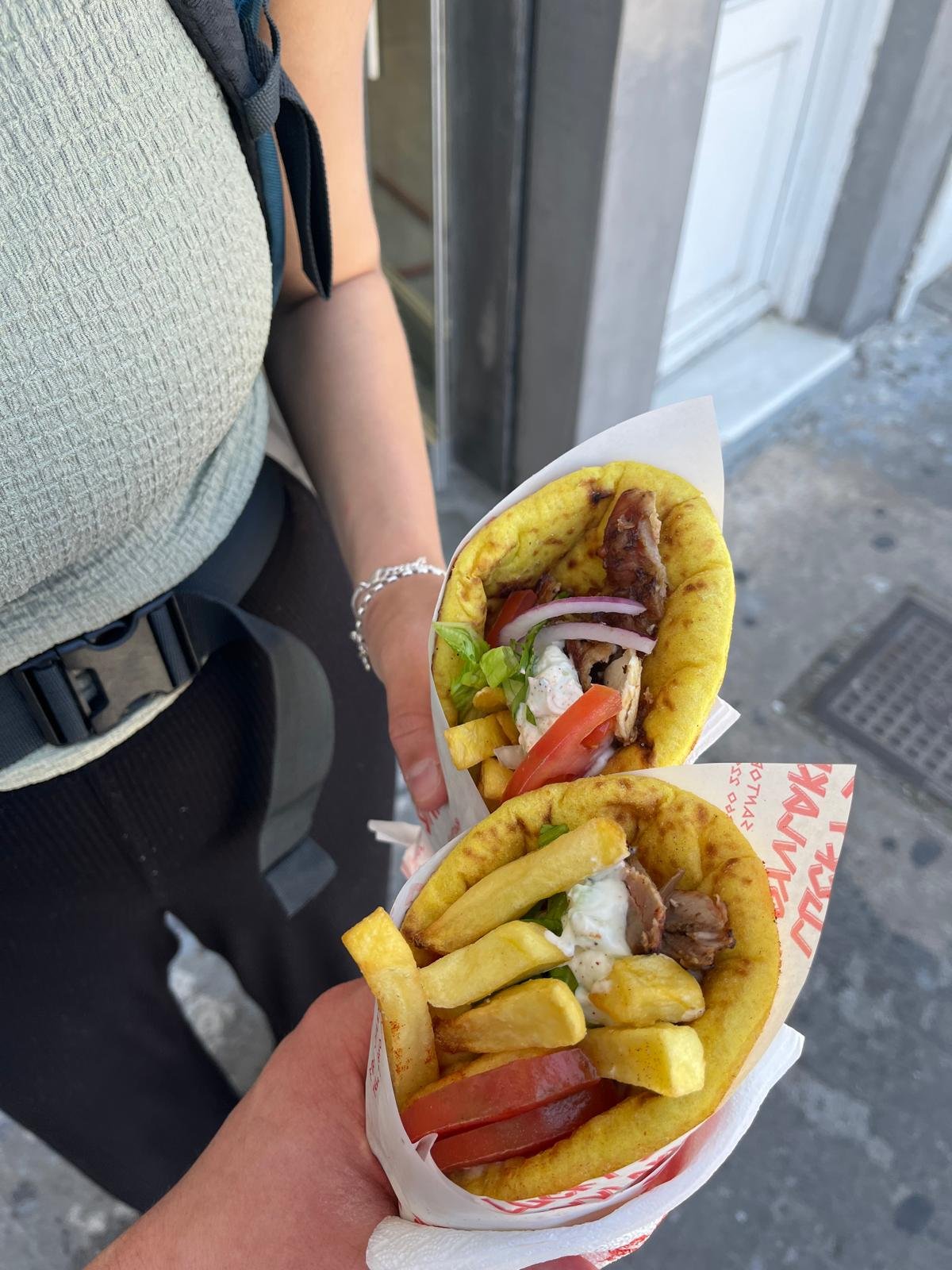
How do you get from Santorini to Mykonos?
High-speed ferry, 2 to 3 hours depending on operator and weather. SeaJets is faster but more expensive and more weather-sensitive — if the wind is up, they cancel late. Blue Star is slower (3 hours) but more reliable in rough conditions. Both run morning and afternoon departures from May through October. Book ahead in July and August — the high-season boats sell out, and turning up at the port without a ticket is how you lose half a day. Bring motion sickness pills if you are sensitive. The Aegean between the two islands is not always polite.
Days 7–8 — Mykonos, the celebration at the end
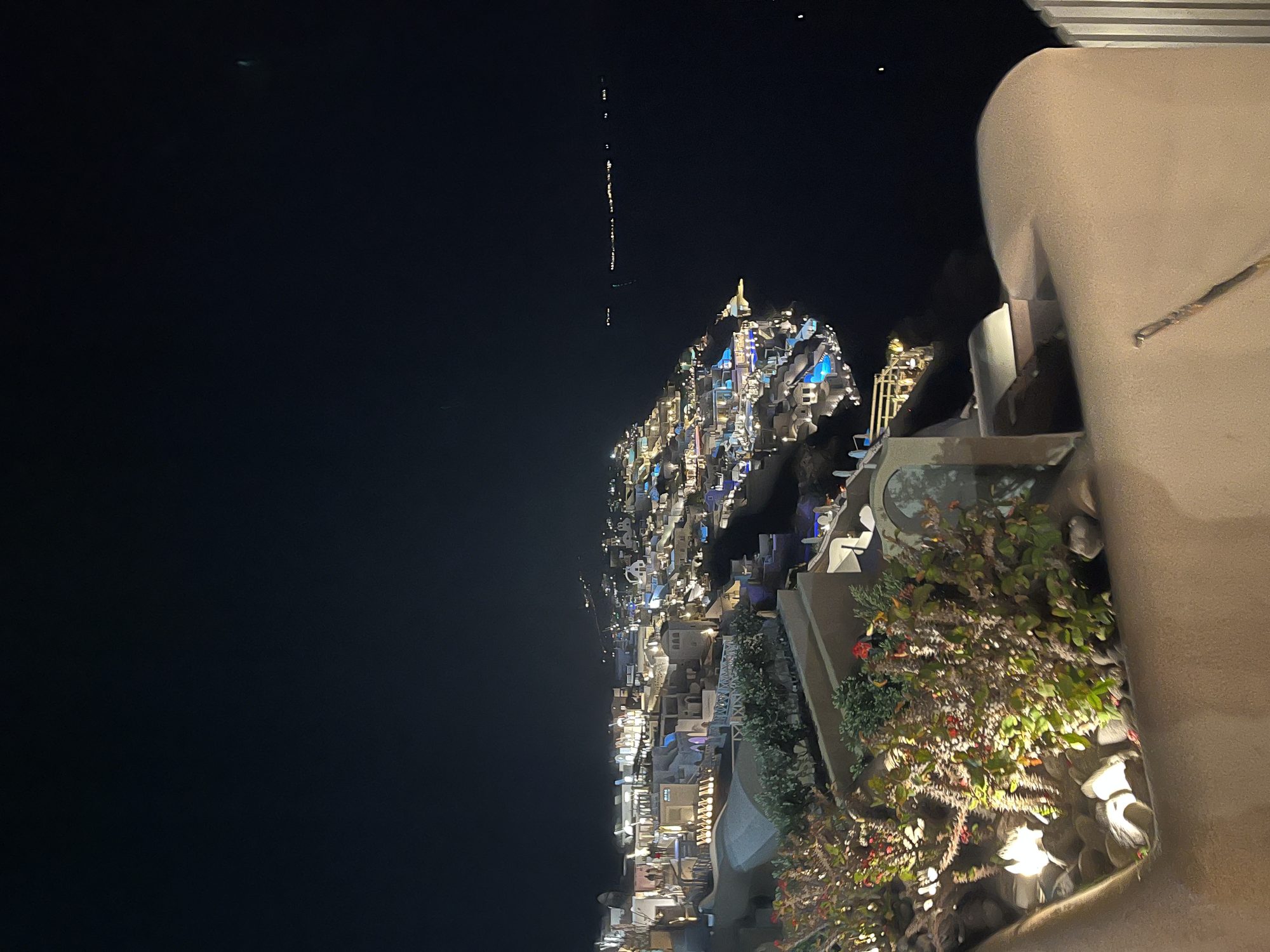
Two nights in Mykonos is the right close to a 7-day trip — if your taste leans toward beaches, nightlife, and a louder kind of energy. If it doesn't, skip Mykonos entirely and stretch Athens to five nights and Santorini to three. The full Mykonos vs Santorini argument is here; the short version is that Mykonos is genuinely great at what it does, but what it does is not for every traveller, and there is no shame in cutting it from the itinerary if it is not your trip.
Day 7 — Mykonos Town and Little Venice. Arrive Mykonos port, settle in. Walk Mykonos Town — Hora — slowly. The whitewashed lanes, the bougainvillea, one shop or bakery or bar after another. Little Venice at sundowner hour — a row of medieval buildings built directly over the sea, balconies hanging above the water, the windmills above silhouetted against the sky. The single most beautiful neighbourhood in the Greek islands at street level. Dinner late. Bar after dinner if your trip leans that way.
Day 8 — Beach, Delos, or both. Mykonos's beach argument is real — Paradise, Super Paradise, Ornos, Platis Gialos. If beaches are why you came, spend the morning on one. If not, take the morning ferry to Delos — the sacred island of ancient Greece, 30 minutes by boat, one of the most significant archaeological sites in the Mediterranean and almost always overlooked by travellers who came for the clubs. The Delos move bookends the trip nicely — Athens at the start, Delos at the end, the entire ancient world on either side of the beach week in the middle. Afternoon flight or ferry from Mykonos back to Athens for the international connection home.
"Athens for the depth. Santorini for the postcard that turns out to be real. Mykonos for the celebration. Seven days. In that order. Do not invert it."
How to actually book the 7 days
Timing: late May, early June, or mid-September to early October. Skip July and August unless your dates are fixed — the heat is real, the cruise ships are real, and the ferries can be cancelled by the Meltemi wind for days at a time. The shoulder seasons drop prices 20-30 percent across hotels and ferries, and the experience is markedly better.
Flights: fly into Athens, fly out of Mykonos. Open-jaw bookings are the right call here — you avoid backtracking and the day spent ferrying back to Athens at the end. Aegean Airlines runs the Athens domestic network; international carriers fly Mykonos direct from major European hubs from May through October. If you must fly home from Athens, build a half-day buffer at the end.
Ferries: Blue Star (conventional, slow, cheap, reliable) and SeaJets (high-speed, expensive, weather-sensitive) cover all three legs. Book a month ahead in May or September, three months ahead in July or August. Travel light — these are stairs-heavy ports and small ferries.
Where to stay, in one line each: Athens — Psiri or Monastiraki, walking distance to everything. Santorini — Imerovigli if you can swing it, Fira for convenience, Oia only if the budget is real. Mykonos — Mykonos Town for first-timers, Ornos or Platis Gialos if the beach is the trip.
If you want to swap Mykonos for something quieter and less photographed, the move is to point at Corfu — the Greek island that doesn't feel Greek, with four hundred years of Venetian-French-British layering and beaches the colour of the Caribbean. Different trip. Same week. Better for the right traveller.
The 7-day Greek trip — booking essentials
When to go: Late May, early June, or mid-September to early October. Avoid July and August unless dates are fixed.
Flights: Open-jaw — fly into Athens, fly out of Mykonos. Saves a half-day at the end and a hotel night.
Order: Athens (4 nights) → Santorini (2 nights) → Mykonos (2 nights). The reverse order is the trip most people regret.
Ferries: Athens to Santorini — overnight Blue Star (saves a hotel night, dawn arrival into the caldera is real). Santorini to Mykonos — SeaJets or Blue Star, 2–3 hours.
Athens base: Psiri or Monastiraki. Walking distance to the Acropolis and the Agora. Avoid the Syntagma hotel strip.
Santorini base: Imerovigli — caldera view at twenty percent off Oia prices, quieter, the underrated answer.
Mykonos base: Mykonos Town. Walkable, lively, the architecture is the point. Save the beach-club hotels for a second trip.
Skip Mykonos and add depth: Replace it with two more nights in Athens, or fly to Corfu for a Greek island that breaks the Cycladic pattern entirely.
For travellers who want this kind of trip to be the norm rather than a once-a-decade event, the PONTUS community runs a private travel membership built around it. Read about the community side →
Seven nights of hotels add up fast. Most of that bill is set by two companies — see who actually owns online travel before you book the trip.
The Verdict — And Why It Matters
A 7-day Greek trip done right is one of the great weeks available to any traveller — affordable enough to take seriously, deep enough to leave you changed, varied enough that the three places never blur into one. Most people do it in the wrong order. Most people give Athens two days and the islands five. Most people come home with a single great memory of Santorini and a vague sense that Athens was hot and confusing and they did not really get it. That is the version of this trip the tour operators are still selling. It is the wrong version.
The right version is the one above. Athens earns the front half. Santorini earns the middle. Mykonos earns the close — or you swap it for a different island that fits your trip. If you have only one Greek trip in your life, this is the shape of the week that gives you all of it. If you have several Greek trips ahead — and most people who love this country end up taking several — this is the right one to start with.
Do this in May or September. Take the ferry both ways. Book the open-jaw flight. Spend four nights in Athens and do not let anyone talk you down to three. The trip rewards the depth of time you give it.
"Athens for the depth. Santorini for the postcard. Mykonos for the celebration. Seven days. In that order. The trip rewards the depth of time you give it."
If you read this all the way down, there's a fair chance you've been somewhere too — and you have your own version of what just happened in this piece. I want to read it. I read every story that comes in, and I write back. The pieces that earn it go live here with your name on them, your photographs, your verdict.
This is what PONTUS
is built for.
Seven days in Greece in May. Three days in Lyon in June, or a weekend choosing between Lyon and Paris. A long weekend in Quebec City in October — or Quebec City or Old Montreal with four nights. A week in southern Italy next spring. This is the rhythm a travel-shaped life looks like — and PONTUS exists to make that life normal, not exceptional.
- For those who want to be part of a community of like-minded people
- For those who don't want to break the bank just because they want to see the world
- For those who are ready to put the effort in and build their own income from the travel industry
Whatever you want, whatever you choose — PONTUS is here.
Join the Community