You should go to Quebec City. And if you live in North America and have been telling yourself for years that you'll save up for a European weekend one day — you can stop. It is here. It is a two-hour drive from Montreal. It is closer than most of you think.
I am from Montreal. I grew up two hours west of Quebec City on the same river, in the same province, sharing the same language and the same winter. And I ignored Quebec City for years. Most Montrealers do. We tell ourselves we'll get there eventually — we'll go for the Winter Carnival, we'll do a long weekend in the fall when the leaves turn — and then we go to New York or Mexico or Lisbon instead, because cheap flights exist and a two-hour drive somehow feels harder than a five-hour flight. This piece exists because my girlfriend and I finally did the drive in August, spent two days walking the Old City and one afternoon out at the falls and the spa, and came home embarrassed by how long it had taken us. If you live within a day's drive of this city and you have not been: this is the article I wish someone had handed me three years ago.
If you have decided you are going — and you should — the route I would walk on a first visit is in Quebec City in 48 hours. Two days, day by day, what to eat, what to skip, where to stay. This piece below is the longer case for why; that piece is the operational version. And if you are weighing Quebec City against its bigger neighbour, Quebec City or Montreal is the head-to-head verdict.
Vieux-Québec is the only walled city north of Mexico, founded in 1608, a UNESCO World Heritage site, and the closest thing North America has to a European old town. Petit Champlain is regularly ranked one of the most beautiful streets on the continent. The food is French. The architecture is French. The language is French. It is not Lyon — but for anyone within driving distance, it is the closest thing your continent will give you, and it is worth every kilometre.
Every piece here ends with an honest call on where to actually go. New verdicts land in your inbox first. One email. No noise.
The honest case against Quebec City
Let me give the argument its full credit first, because it deserves it.
Quebec City is not Europe. The buildings are old by North American standards — meaning, when we say "four hundred years," we mean it relative to a continent where most cities are a hundred and fifty. Compared to the actual European old cities — Bruges, Lyon, Siena, Rothenburg — Vieux-Québec is small, slightly more recent, and inevitably more tourist-shaped at the edges. If you have spent a week walking Lyon's traboules — and I have, and I wrote about it in my Lyon piece — you will notice the difference. Quebec City is not as deep. The cobblestone streets are eight or nine, not eighty or ninety. The taverns are excellent but not in the same league as a real bouchon.
The food is also genuinely good without being world-class. There are very fine restaurants in Quebec City — and we ate in one of them. But there is no equivalent here to the Naples of Naples vs Rome, or the Athens we wrote about in Athens vs Santorini and my standalone Athens piece, or the Lyon I just mentioned. Quebec City is a wonderful place to eat. It is not yet a destination people fly to specifically for the food.
August is also — full transparency — the wrong month. We went in August because that is when we had the days off. It is hot, humid, and crowded. The Petit Champlain in the middle of a Sunday afternoon is a slow-moving river of people. If you have a choice, go in late September or early October when the leaves are turning, the air is cool, and the day-tripper crowds drop by half. Or go in February for the Winter Carnival, when the city becomes a different and even more European version of itself.
"Europe is not the only place that did Europe."
Now — what really matters.
Day One — Out of the city: Chutes Montmorency and the spa overlooking the river
We started the trip outside the walls, and in retrospect I think that is the right order. The Old City is the headline. But the day at the falls and the Nordic spa is the thing that elevates a Quebec City trip from a long weekend of cobblestones and food into something genuinely unforgettable. Do this first. The Old City will hit harder once you have seen what the surrounding landscape can do. It is the same instinct I argued for in Sorrento vs Positano — base in the working town, build the trip outward from it, let the famous thing be the second act, not the first.
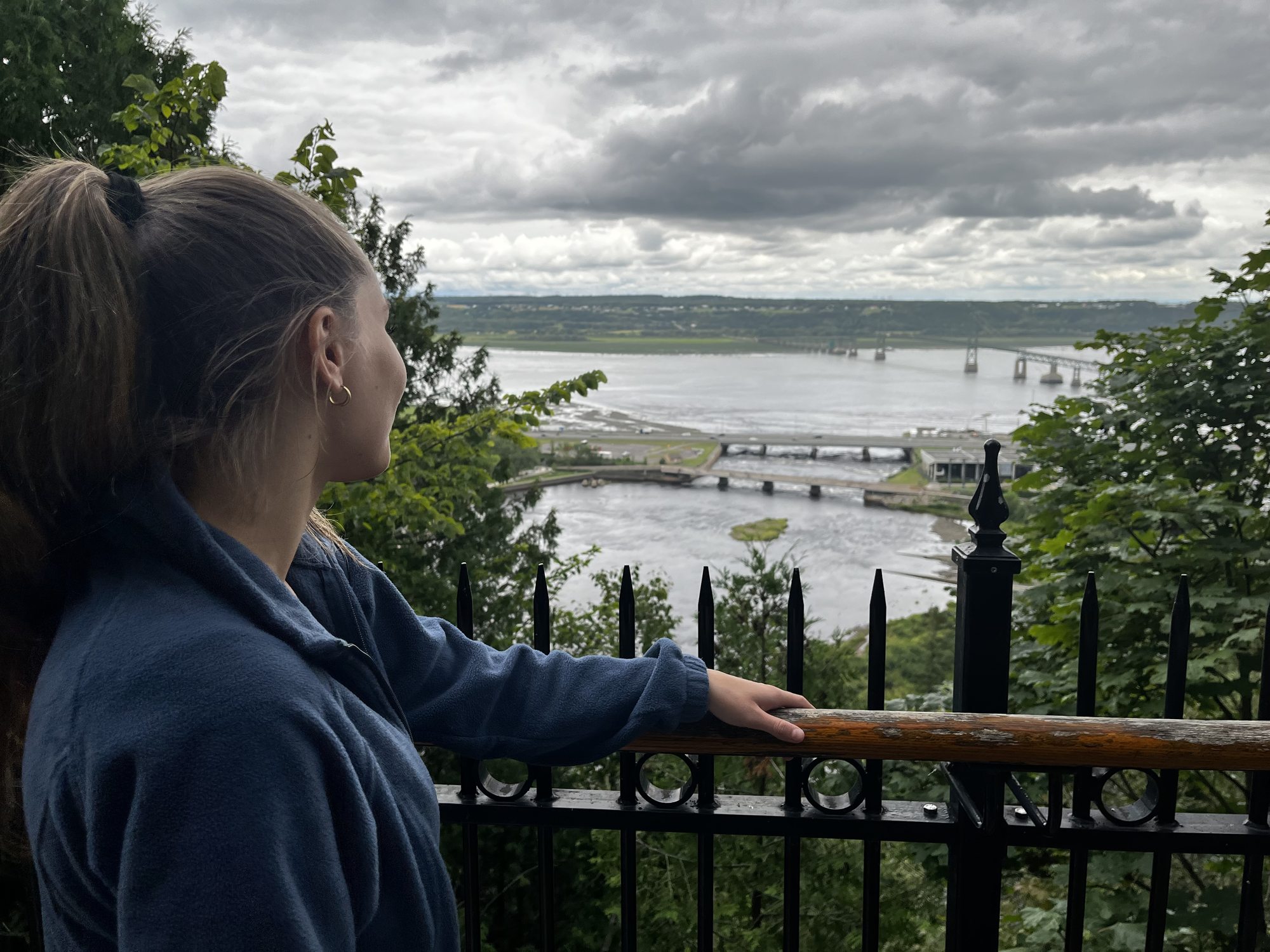
Chutes Montmorency — Montmorency Falls — is a fifteen-minute drive from Vieux-Québec. The falls drop eighty-four metres straight off a cliff into a pool at the mouth of the Montmorency River where it meets the Saint Lawrence. They are, and this is the part nobody from outside Quebec ever knows, thirty metres taller than Niagara. Thirty metres. They are not as wide. But they are taller, more violent, and free to look at. There is a park around them, a suspension bridge over the top, a cable car if you do not feel like climbing the stairs, and a series of lookout points down the cliff side that frame the falls against the Saint Lawrence and, in the distance, the Île d'Orléans bridge.
The Nordic spa — and the hour that fixed the trip in memory
The thing I keep coming back to about that first day, more than the falls themselves, was the Nordic spa we did after. The concept is simple. A series of outdoor thermal pools — some hot, some warm, some cold — built into wooden decks along the edge of the cliff above the Saint Lawrence. You alternate. Hot pool for ten minutes. Cold plunge for thirty seconds. Warm pool to recover. Repeat. No phones allowed anywhere on the property. No conversation above a whisper.
For roughly three hours we sat in hot water at the edge of one of the largest rivers in North America and watched the light change on the water. The Saint Lawrence at that point — east of Quebec City, where it has already started to widen into the gulf — is so big it feels like the sea. You can see the far bank. You can also see the curve of the earth. Container ships pass occasionally. The breeze off the water is cool even in August. The trees on the cliff edge frame everything.
I will say this plainly: this hour is what made the trip. The Old City was beautiful. The food was good. The Chateau was spectacular. But the spa, with the river below and the cool wind off the water and the absolute, deliberate silence — that is the moment I think about when I think about Quebec City. If you have one upgrade you are willing to splurge on for this trip, this is the one.
"Hot water. Cold water. The Saint Lawrence below. No phones for three hours. That is the trip."
Day Two — Vieux-Québec: the cobblestone street that doesn't look like Canada
We woke up the next morning in a small hotel inside the walls of the Old City and walked, more or less without a plan, for eight straight hours. This is the right way to do Vieux-Québec. There is a map and there are lists. They are mostly wrong. The Old City is small enough — about a square kilometre — that you can walk every street in two days and you will be rewarded more by getting lost than by following anyone's itinerary.
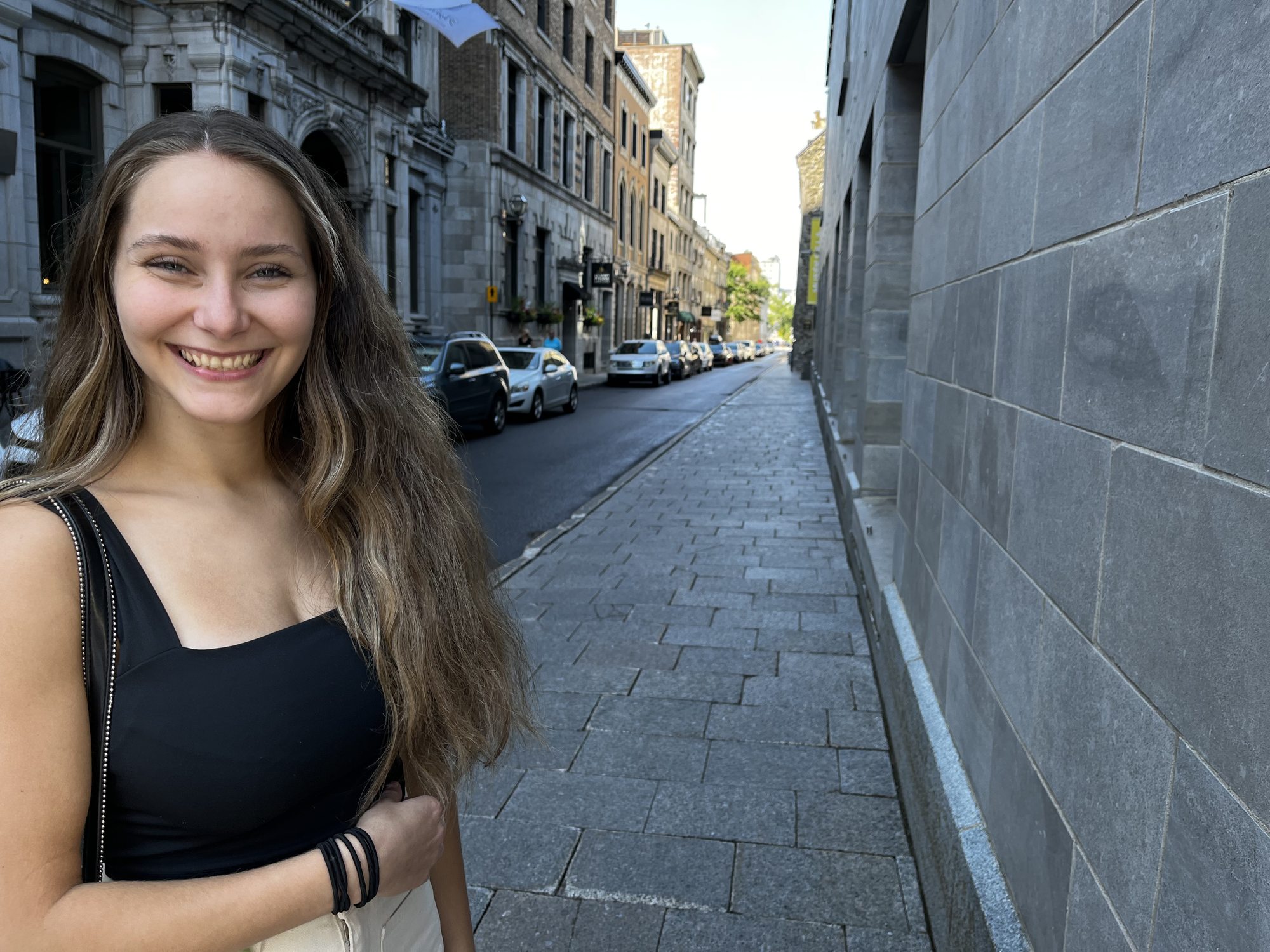
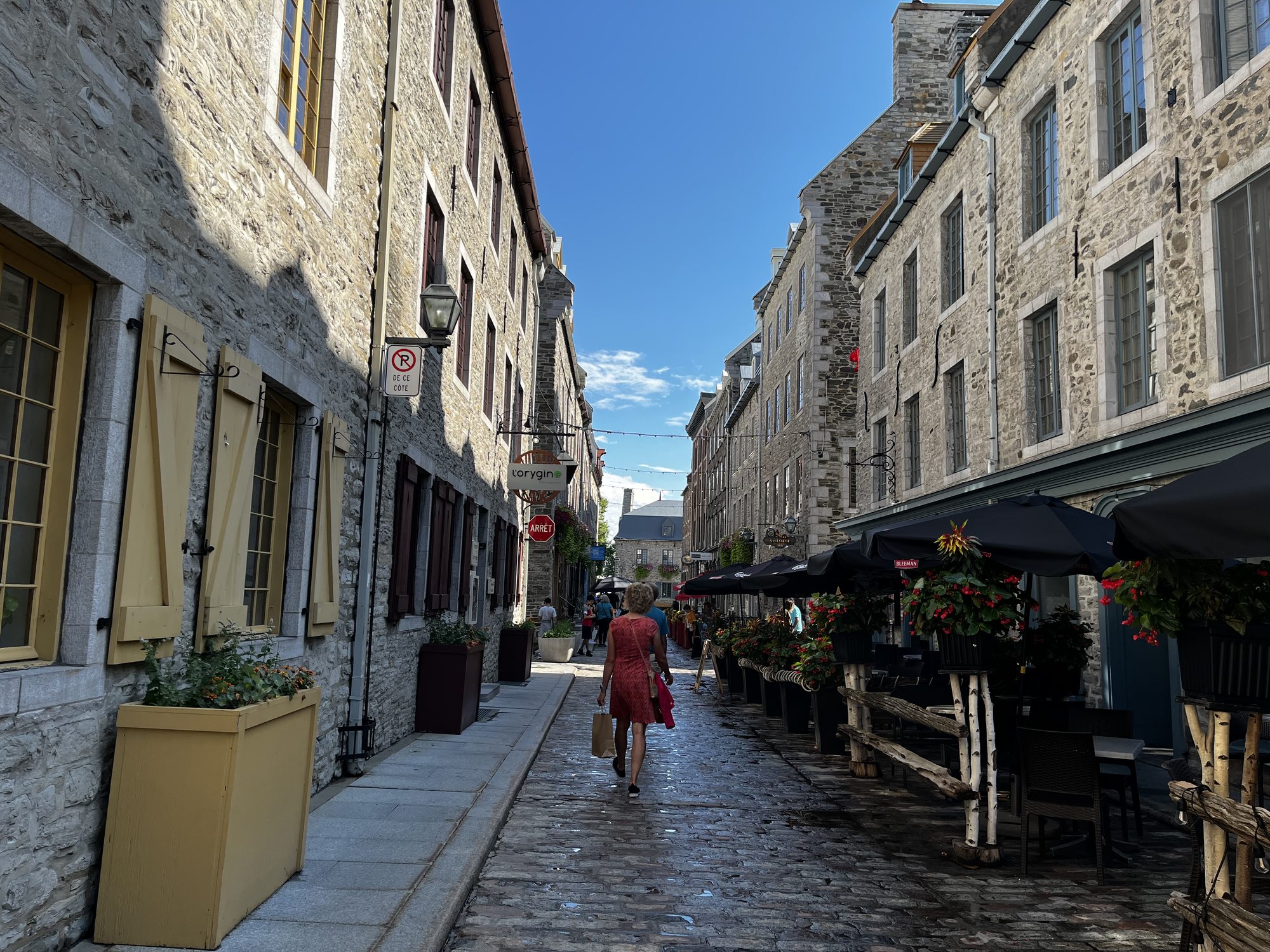
You begin to notice the European-ness in pieces. The street signs are in French. The waiters greet you in French and switch to English without a beat. The buildings are stone, not brick or wood. The roofs are sloped at the steep European angles meant for snow, not the shallow North American ones meant for rain. The windows have small panes set into wooden frames painted in faded greens and blues. The doors are smaller than they should be. The sidewalks are uneven in the way every European old town is uneven, and you trip on a cobblestone you did not see the first three times you walked over it.
And then you turn a corner and you are on the Côte de la Montagne or Rue Saint-Pierre or one of the side streets that drops down toward the lower town, and the whole thing stops feeling like Canada at all.
Petit Champlain — the lower town and the funicular at the end of it
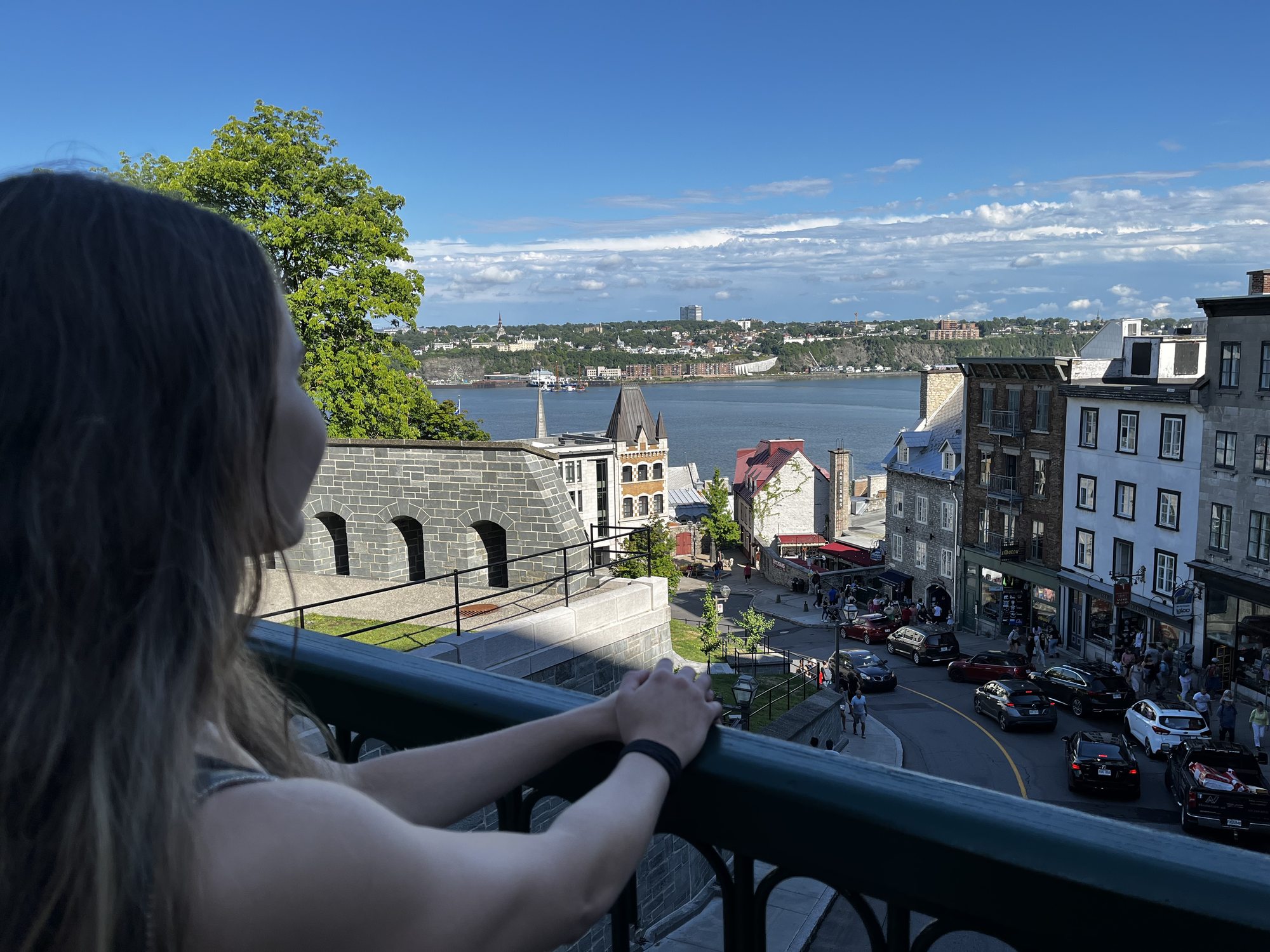
Petit Champlain is the most photographed street in Quebec City for a reason. It is one of the most photographed streets in North America for the same reason. Narrow. Cobblestone. Stone buildings rising four storeys on either side. Iron signs hanging from wrought-iron brackets. Flower boxes on every other window. Restaurants spilling out onto the street with red, blue, and yellow umbrellas. At the end of the street, if you look up the hill, you can see the funicular — a small glass railway car that runs up the cliff face to the Chateau Frontenac and Dufferin Terrace above.
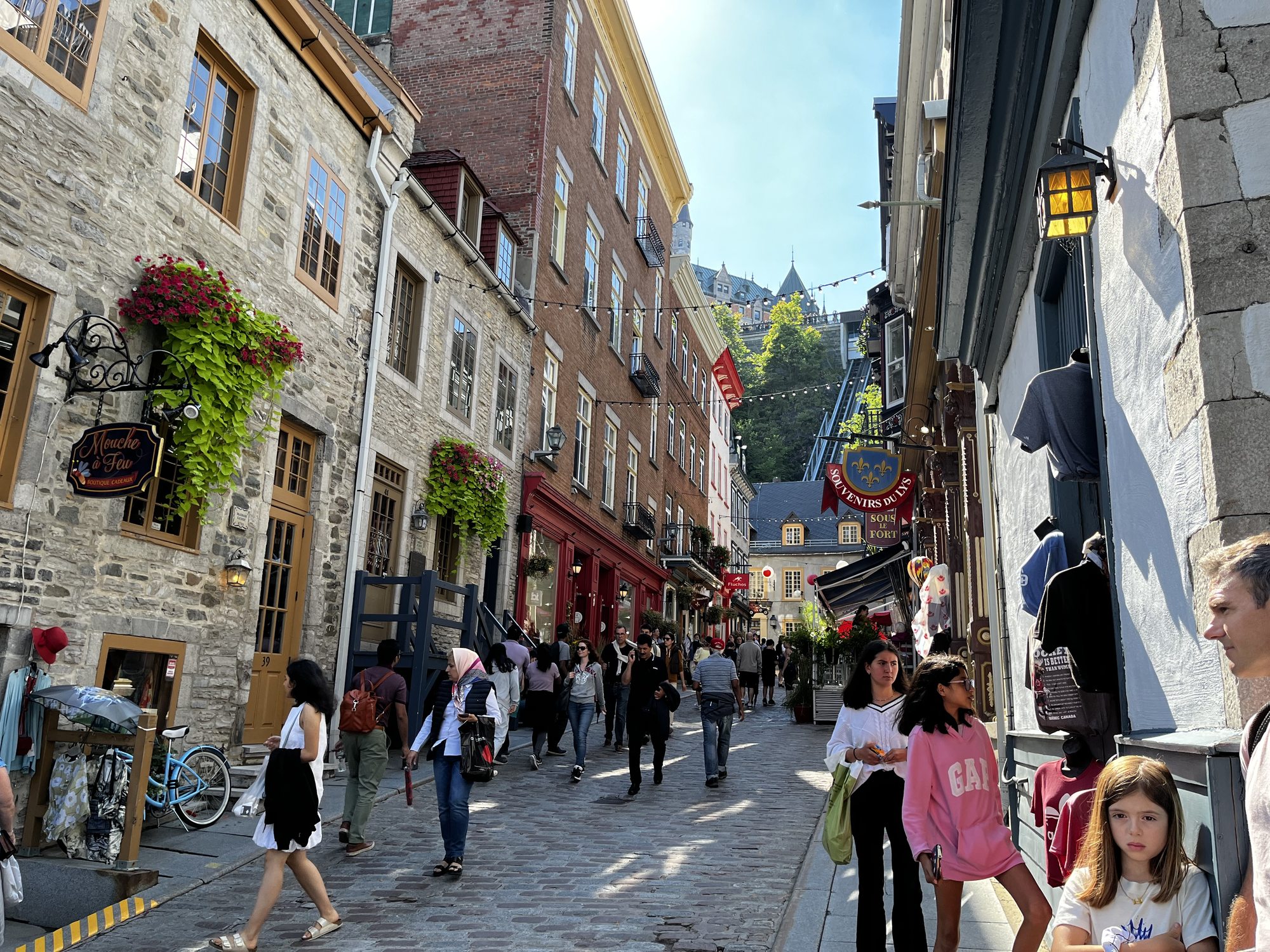
This is the moment when, if you have been to Europe, your brain stops trying to fit Quebec City into a North American frame and starts cross-referencing. This part is Lyon. This part is Bruges. This corner is Saint-Malo. This window is something out of Edinburgh. None of those references are right — Quebec City is its own thing. But your brain reaches for them because the visual language is the same language, even if the dialect is different.
The old taverns — and the one with the brick vault
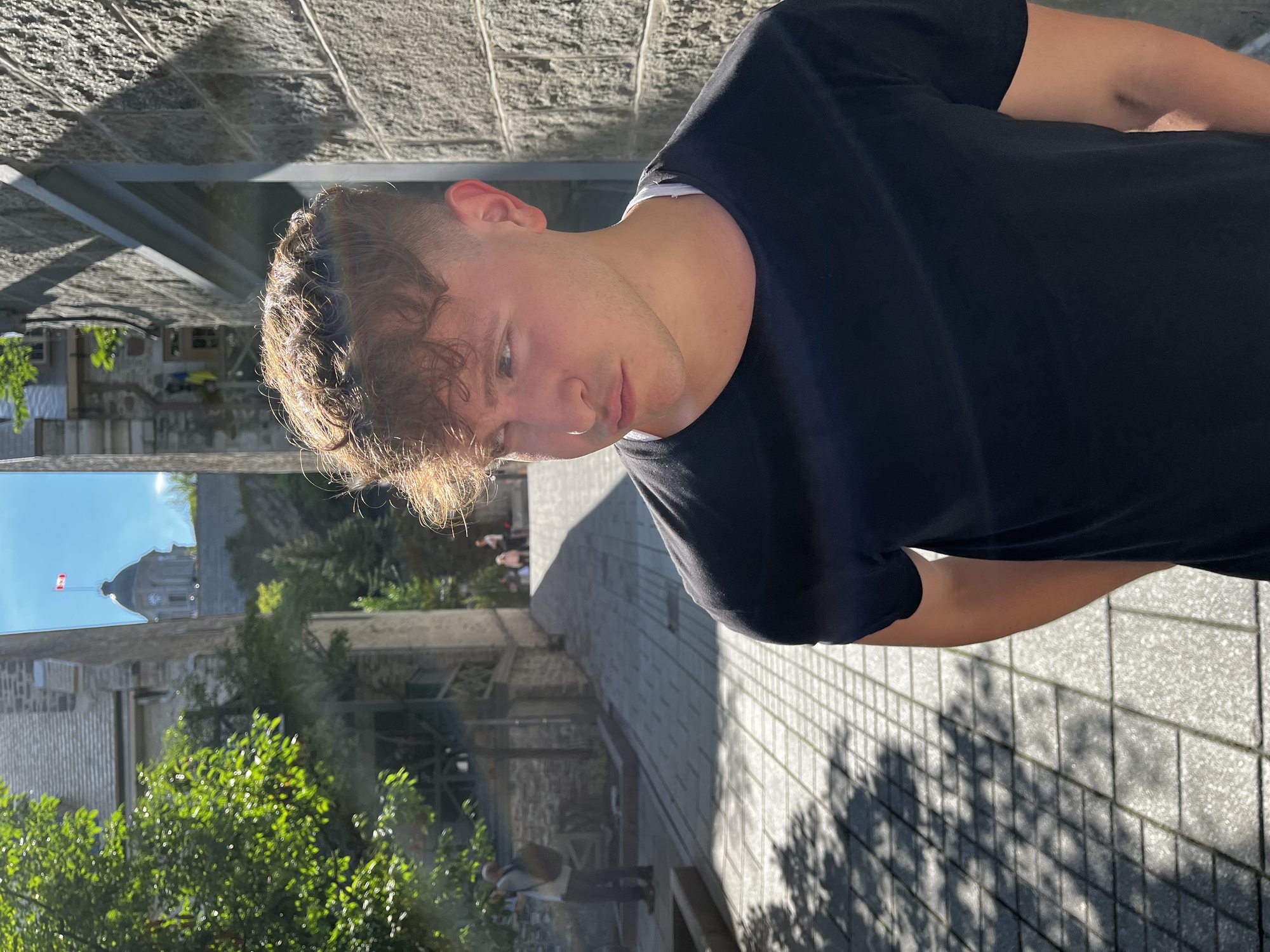
We ducked into a small tavern off Rue Saint-Paul to get out of the heat and to drink something cold. Inside was a vaulted stone room — the original cellar of a building built in 1750 — with brick arches, a long bar at one end, low lighting, and the kind of quiet that taverns have only when the people who go to them are not there to be seen on Instagram. We sat at the back. We ordered two beers. The bartender brought them over without asking if we wanted to order food. We sat for an hour. Nobody rushed us.
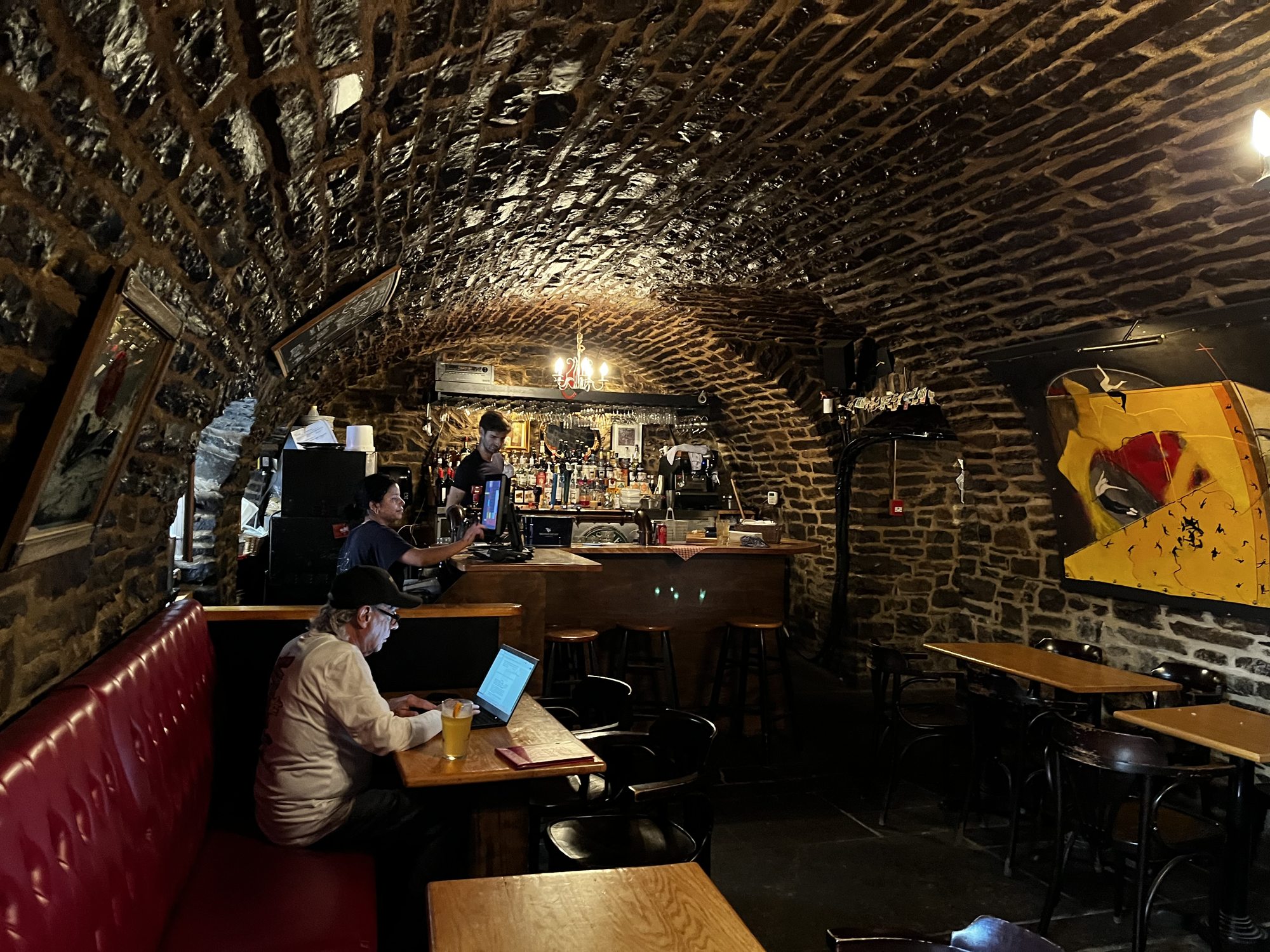
This is one of the underrated qualities of Vieux-Québec — the taverns. Not the bars meant for tourists, with English menus and Instagram backdrops, but the small, dark, low-ceilinged places that have been pouring beer in the same room since the French Regime. There are maybe a dozen of them in the Old City. They are not loud about themselves. You find them by walking past a half-open wooden door and noticing it does not look like a tourist trap. Go in. Order something local. Stay an hour.
The terraces — and the aperitif you do not have at home
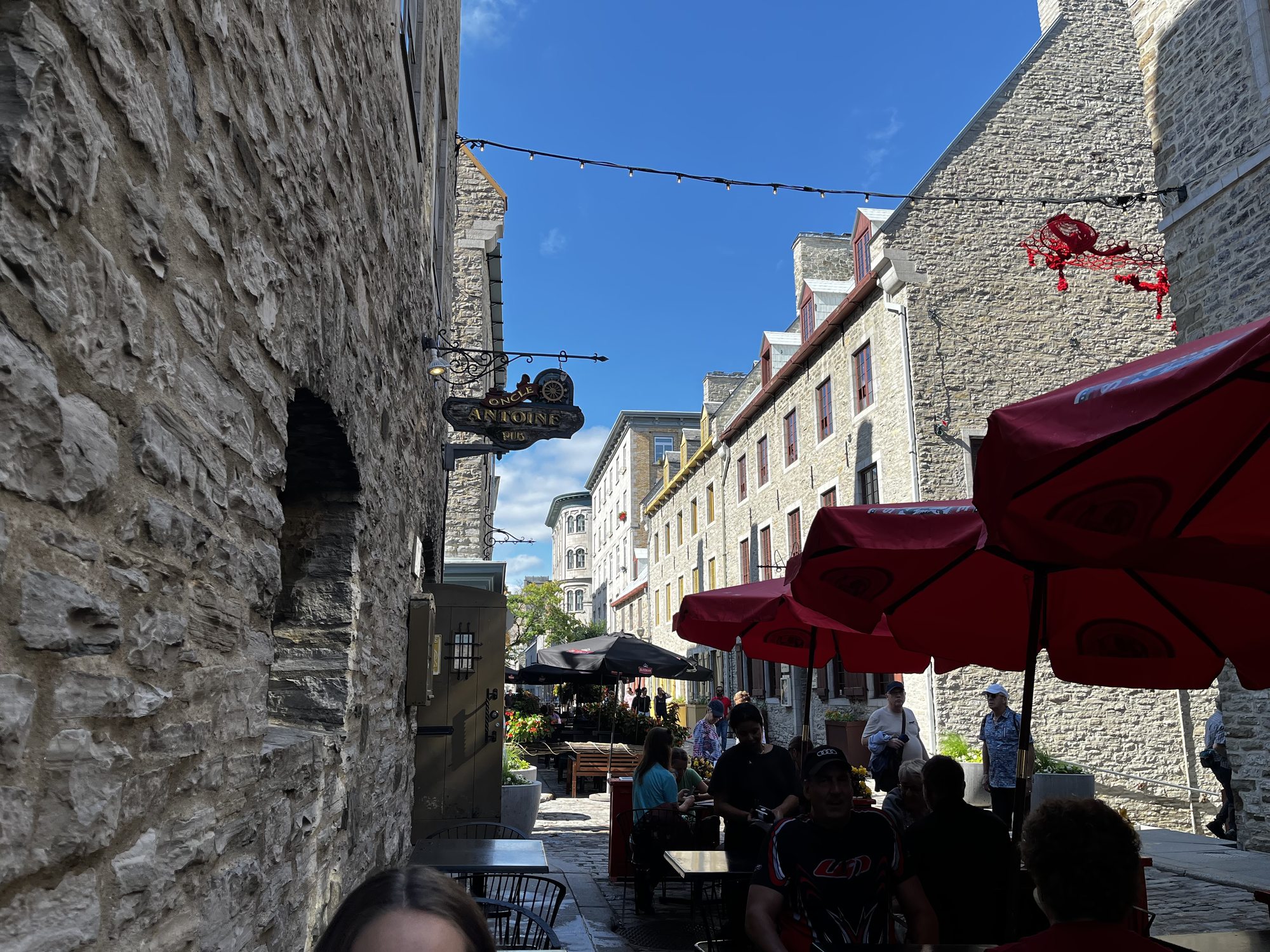
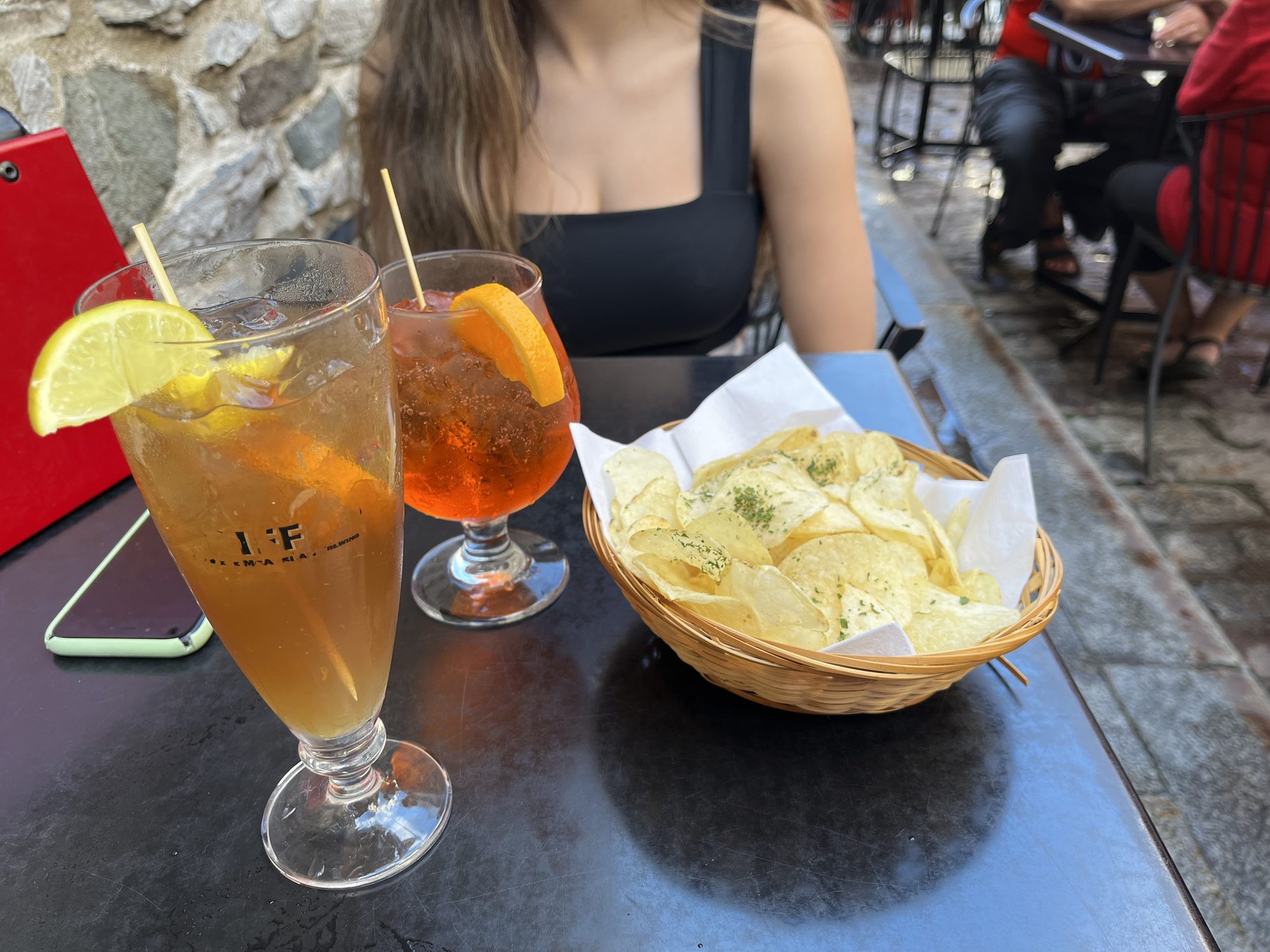
This is the European-ness most explicitly. The sitting-down for an hour on a terrace with a single drink in front of you and an unhurried waiter is not a North American behaviour. It is something Quebec City does naturally because the city's grandparents did it. Order an Aperol Spritz. Order a beer. Order a glass of cider — there is a strong local apple culture, the cider list at any decent terrace is real. Sit for ninety minutes. Watch the street. This is one of the things you are paying for when you come here.
The art — and the gallery that doesn't quite advertise itself
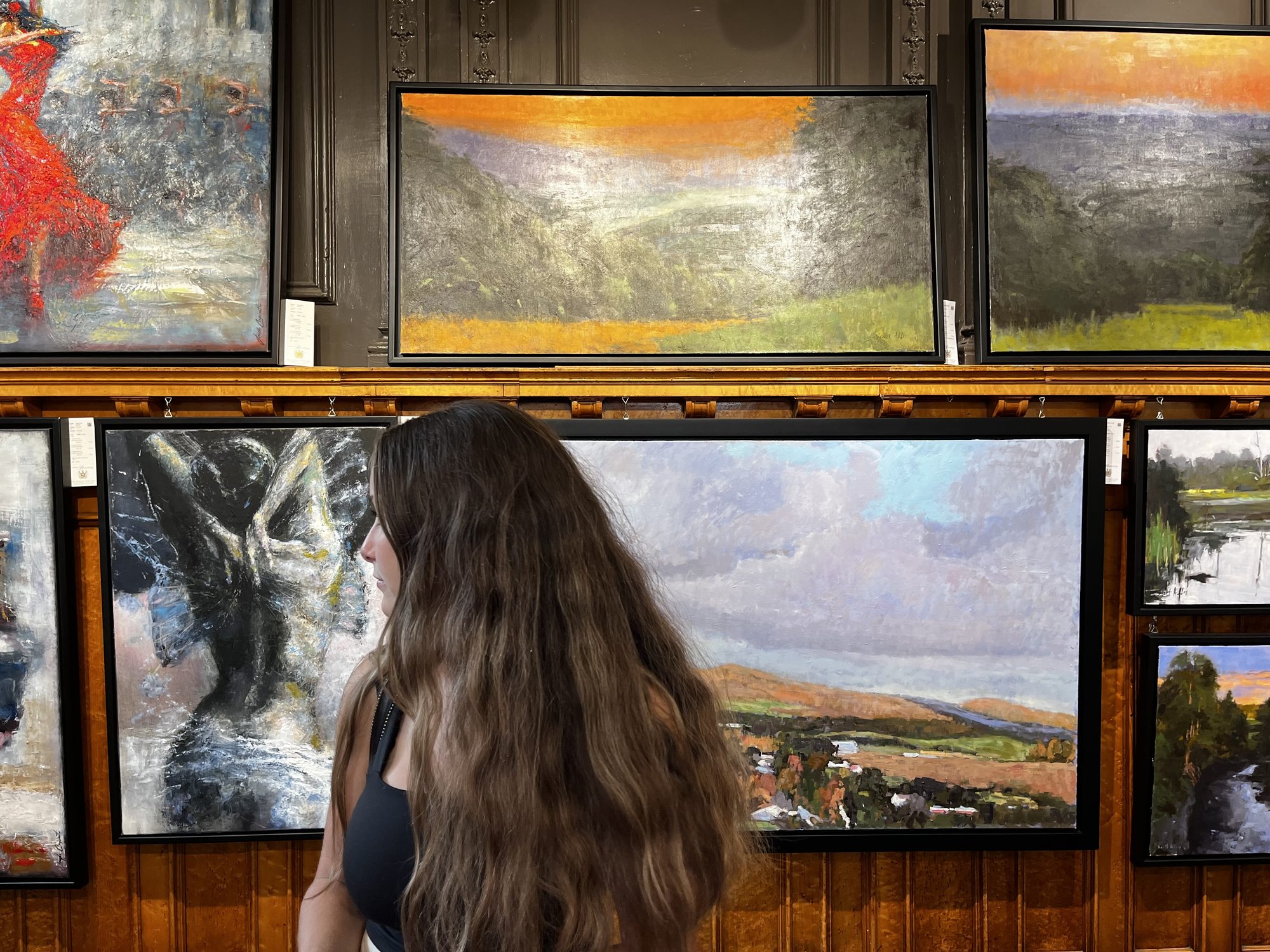
One of the quiet pleasures of Vieux-Québec — the kind nobody puts in a guidebook — is the density of small galleries and ateliers in the lower town. You will pass three or four per block on Rue du Petit-Champlain alone. Most show Quebec landscape work, Quebec figurative work, Inuit prints from the north, glasswork from the south shore. Most are free to walk into. None of them feel like a museum. They are more like very nice living rooms with paintings on the wall and someone reading at a desk in the corner.
Up the hill — Dufferin Terrace, Chateau Frontenac, Notre-Dame
From Petit Champlain you take the funicular — or you climb the Escalier Casse-Cou (the "Break-Neck Stairs," which lives up to the name) — up to Dufferin Terrace. This is the long wooden boardwalk along the cliff edge at the foot of the Chateau Frontenac, with a panoramic view over the Saint Lawrence, the lower town, and on a clear day the south shore of the river. It is one of those views you have to see in person to understand. The river is wider here than most lakes you have ever seen. The lower town spreads out below you in copper roofs and chimneys. The horizon goes on for fifty kilometres.
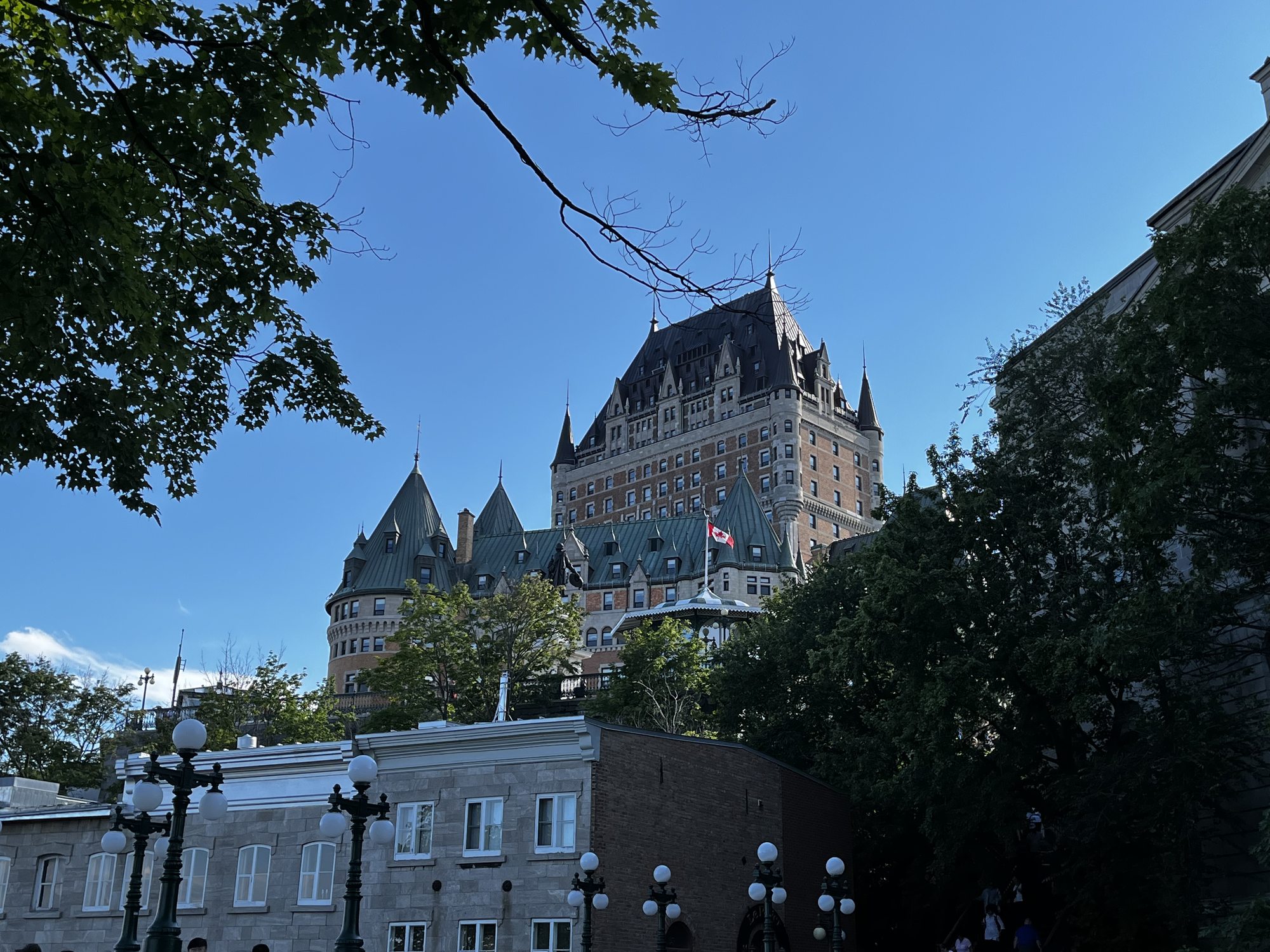
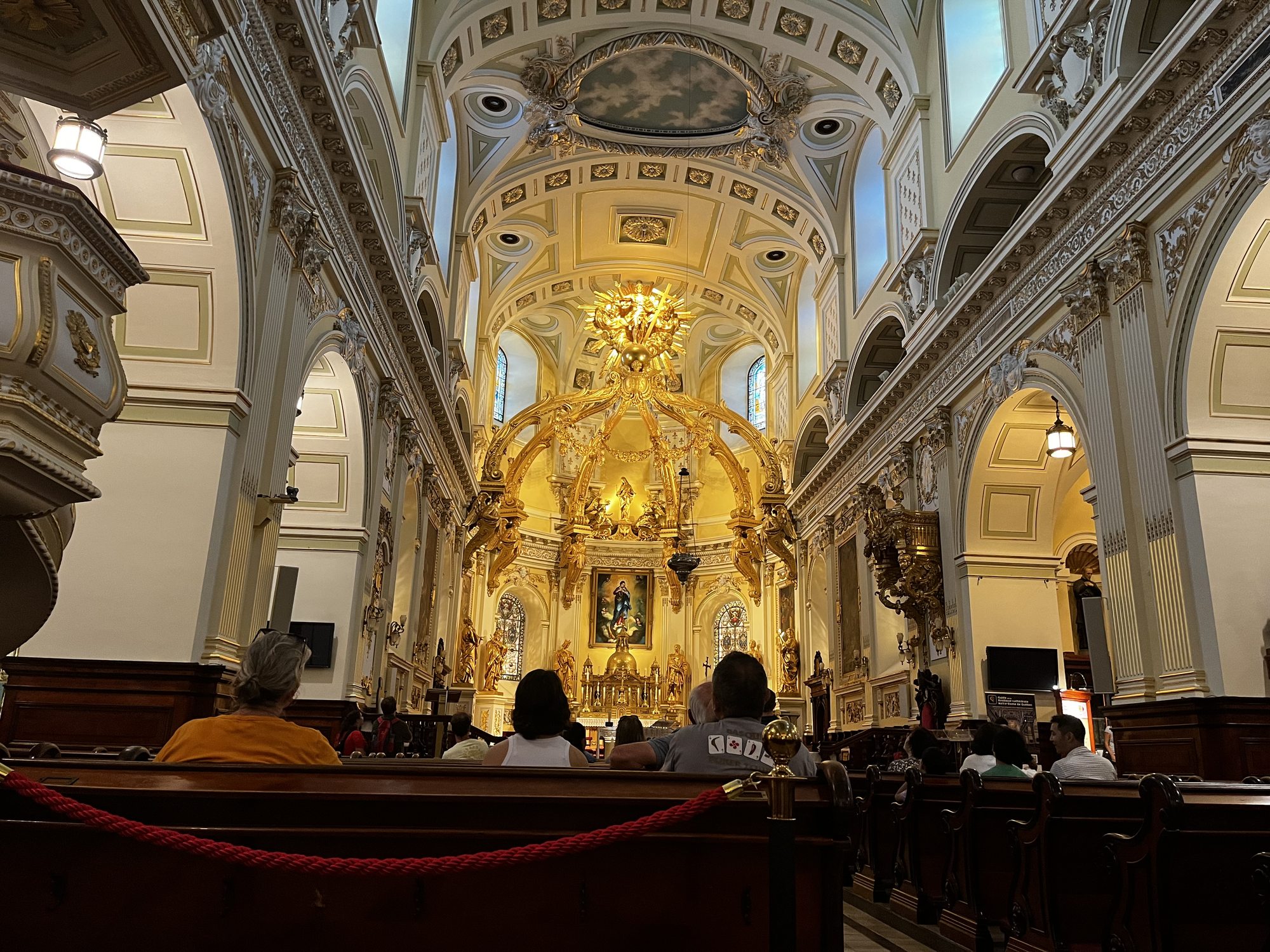
Past the Chateau, walk west and you find yourself, after about ten minutes, at the Basilique-Cathédrale Notre-Dame de Québec. From the outside it is a relatively restrained stone building. From the inside it is one of the most dramatic church interiors in North America — a fully gilded baroque altar piece that catches every bit of light from the high windows, ornate moulding, paintings, a deep barrel-vaulted ceiling. The Basilica was founded in 1647 and is the oldest parish church in North America north of Mexico. Most visitors do not bother. Most visitors are wrong. It is the same "I came for the cobblestones and got an entire piece of history I did not know about" surprise I wrote about in Is Pompeii Worth Visiting — once you stand inside the room, the rest of the trip rearranges itself around it.
The food argument — and the dinner you do not need to be fancy for
We did not eat a tasting menu in Quebec City. We did not have a Michelin meal. Some people will. Some people should. There are very good restaurants here at the high end — Le Saint-Amour, Légende, Battuto — and if a special-occasion dinner is part of your trip, the city will absolutely deliver that.
But the meal we keep coming back to in our memory was not the fancy one. It was a small place we found by accident off Rue Saint-Jean, with a red tablecloth and a chalkboard menu, where we sat between two locals and a young French couple and ate a homemade Bolognese pappardelle and a wood-oven pizza with prosciutto and basil. The pasta was wide and chewy. The sauce was deep red and slow-cooked. The pizza was charred at the crust. The whole meal was about fifty Canadian dollars for two — drinks included — and is the kind of meal you can absolutely find in any small French or Italian town and almost never find in North America at that price for that quality.
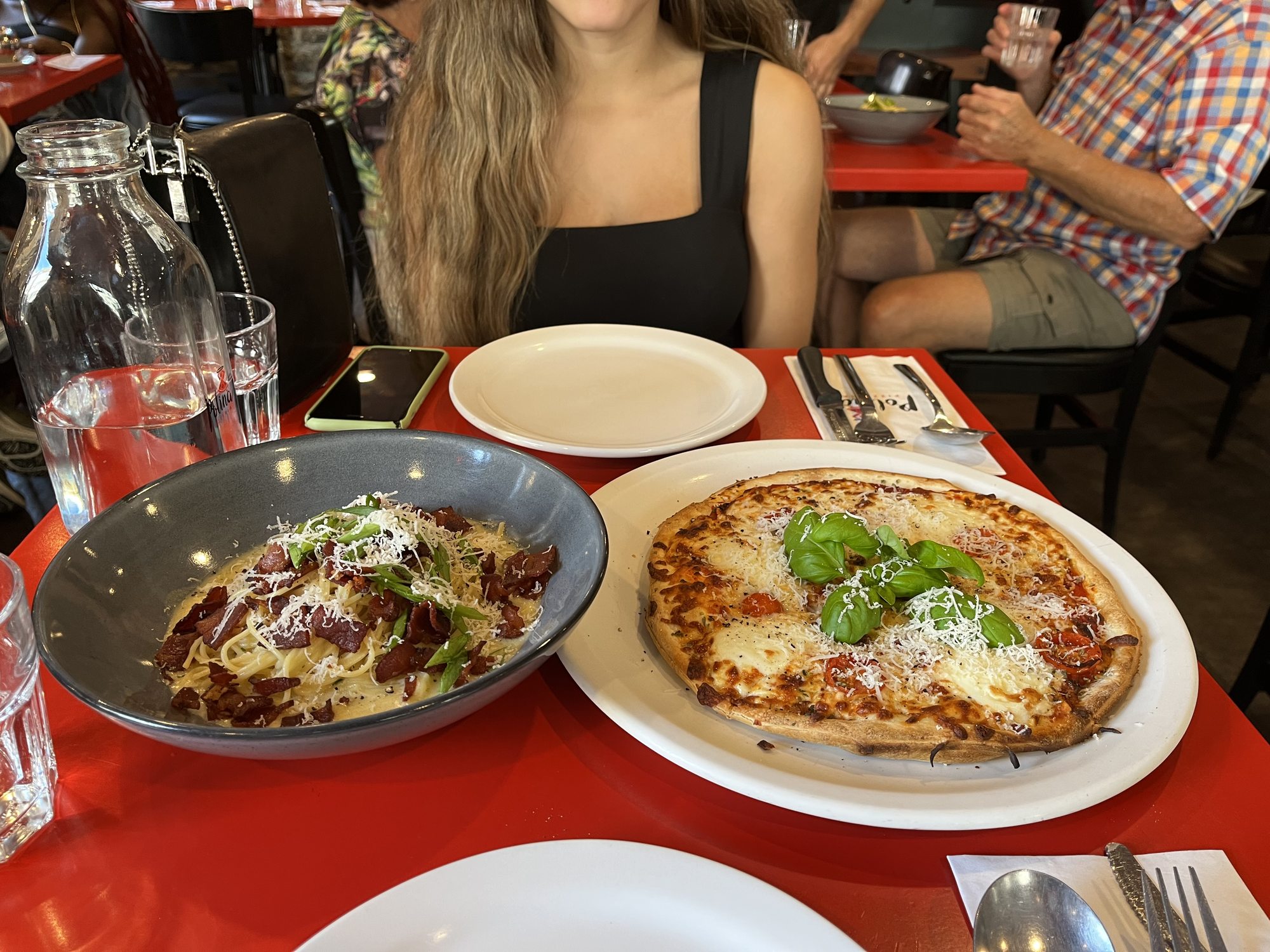
This is the food argument for Quebec City. The very high end exists if you want it. But the real argument is that the middle is also extremely good — better than the middle of any other Canadian city, including Montreal in most categories I would defend. You can walk into a small unknown place with a chalkboard menu and have a real meal. That is rare on this continent. It is normal here. The same is true of Santorini if you eat away from the caldera, and of Mykonos if you walk three blocks inland from the harbour — the famous places hide their best food the same way Quebec hides theirs.
Evening — when the day-trippers leave
The trick to Old Quebec — the thing nobody tells you — is what happens around six in the evening. The day-trippers leave. The big bus tours pack up. The cruise-ship crowd heads back to the ship. The restaurants empty for a quiet thirty minutes before the dinner rush. And the city, suddenly, is quiet.
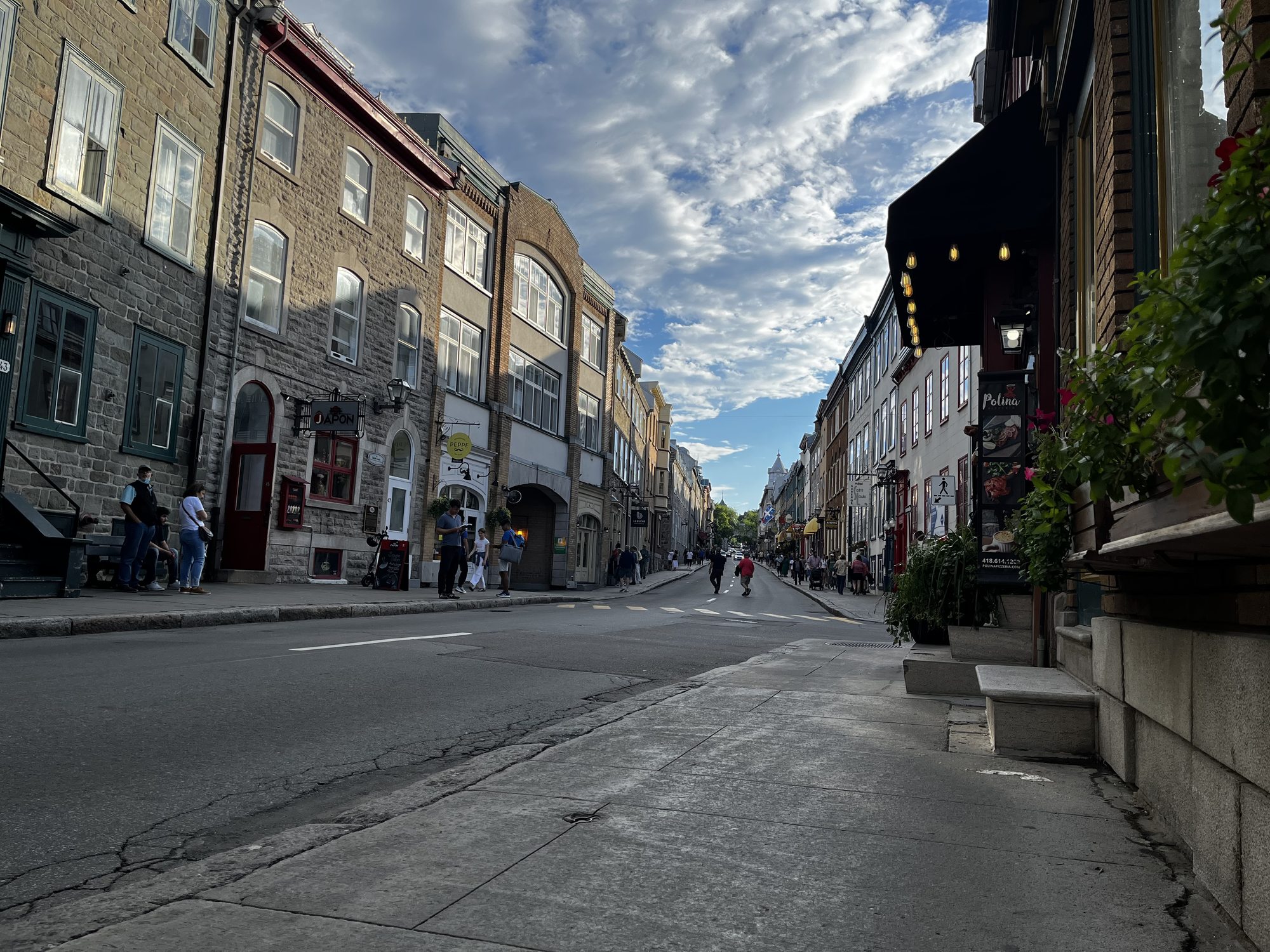
Walk the city now. Walk the streets you walked already. They look different. The light is golden, low, soft. The crowds are gone. The waiters at the terraces are setting up for dinner service. The boutique owners are pulling in their sandwich boards. This is the Old Quebec the locals know — and it is, by a long stretch, the best Old Quebec to walk.
"Old Quebec is two cities. The afternoon one. And the evening one. The evening one is the better trip."
The Practical — the things you actually need to know
Quebec City is two cities depending on when you go. Summer (June–August) is the busy version — warm, full of tourists, every terrace is open. Fall (mid-September–mid-October) is the version most locals will tell you is the best — leaves are turning, crowds drop by 50%, the food is still at full strength. Winter (January–February) is the version that includes the Carnaval de Québec, snow-covered cobblestones, ice sculptures on Dufferin Terrace, and a city that looks like a Christmas card.
Avoid the high July–early August window unless you have to. The crowds are real and the heat is real.
afternoon
full day
half day
Getting there: Two hours from Montreal by car or train (the Via Rail train is genuinely good). Six hours from Toronto. Seven hours from New York. Direct flights from most North American cities are available but the drive is usually faster door-to-door for anyone within 500 km.
Where to stay: Inside the walls of the Old City, always. The point of this trip is to wake up and walk out onto a cobblestone street. Auberge Saint-Antoine and Hôtel Manoir Victoria are good mid-range options. The Chateau Frontenac itself is the splurge.
Driving: Useful for the Montmorency / spa day, optional otherwise. The Old City is walkable end-to-end in twenty minutes. Parking inside the walls is a small headache; most hotels have valet.
Language: French is the working language. Almost everyone in the tourist economy speaks excellent English. A few words of French — bonjour, merci, l'addition s'il vous plaît — go a very long way and are warmly returned.
How long: Two days minimum. Three days is the sweet spot. A long weekend is enough to fall for the city; a full week would let you do the South Shore, Île d'Orléans, and Charlevoix as well.
The Verdict — Go
If you live in North America and you have been telling yourself you'll save for a European weekend one day, you can stop waiting. Quebec City is the European weekend. It is two hours from Montreal. It is six hours from New York. It is the cheapest, fastest, easiest shot any North American gets at four hundred years of continuous European stone, language, and food culture without crossing an ocean. It is not Europe. It is the closest your continent will give you. And it is, more than enough, worth the drive.
Go for the cobblestone of Petit Champlain. Go for the vaulted tavern off Rue Saint-Paul. Go for the funicular and the view from Dufferin and the Chateau lit up at night. Go for the dinner with the red tablecloth where the waiter does not know you and brings you a basket of bread anyway. Go for the falls thirty metres taller than Niagara that almost nobody outside Quebec has ever heard of. Go, most of all, for the hour at the spa overlooking the river with your phone in a locker and your shoulders in the hot water and the wind coming off the Saint Lawrence.
Go because, more than anywhere else in North America, this is what walking around feels good for its own sake.
Stay inside the walls. Walk Petit Champlain twice — once in the afternoon and once at six. Climb to Dufferin. Eat in one small place with a chalkboard menu. Drink in one stone-vaulted tavern. Drive out for the falls and the spa — do not skip the spa. Order an Aperol Spritz on a terrace. Visit the Basilica. Go in fall if you can. Drive home embarrassed it took you this long.
"Europe is not the only place that did Europe."
Common questions — answered honestly
Is Quebec City worth visiting?
Yes — and more emphatically than most travel guides will tell you. Quebec City is the closest thing to a European weekend you can do without leaving North America. Four hundred years of continuous European architecture, the only walled city north of Mexico, cobblestone streets that look closer to Lyon or Bruges than to anywhere else on the continent, and a serious food culture. Two days minimum. Three if you want time to drive out for Chutes Montmorency and a thermal spa overlooking the Saint Lawrence.
Should you visit Quebec City?
If you live in North America and you have been waiting to do a European weekend but have not had the time or the budget to fly across the Atlantic — yes. Quebec City is the answer. It is a two-hour drive from Montreal, a six-hour drive from New York, and the cheapest direct shot any North American can take to a fully European-feeling old city. It is not Europe. But it is the closest your continent will give you, and that turns out to be a much higher bar than it sounds.
Is Quebec City like Europe?
Closer than anywhere else in North America — by a wide margin. The Old City (Vieux-Québec) was founded in 1608, is a UNESCO World Heritage site, and is the only fortified city north of Mexico with walls still standing. Petit Champlain, the lower-town cobblestone quarter, is regularly ranked one of the most beautiful streets in North America. The architecture is French. The food is French. The language is French. It is not Lyon. But for a North American weekend, it is genuinely the closest your continent has to it.
How many days do you need in Quebec City?
Two days minimum. Day one for the Old City — Petit Champlain, the Chateau Frontenac, Dufferin Terrace, Notre-Dame Basilica, one long tavern dinner. Day two for outside the walls — Chutes Montmorency, a Nordic spa overlooking the Saint Lawrence, maybe the bridge to Île d'Orléans for cider and strawberries. Three days is generous and you will not be bored. A long weekend from Montreal or the northeast US is the sweet spot.
What are the best things to do in Quebec City?
Walk Petit Champlain in the late afternoon when the day-trippers thin out. Climb (or take the funicular) up to the Dufferin Terrace for the view over the Saint Lawrence and the Chateau Frontenac. Step inside the Notre-Dame Basilica — the gold altar is genuinely extraordinary. Eat in a vaulted stone tavern in the Old City. Drive 15 minutes out to Chutes Montmorency — taller than Niagara. Book a Nordic spa — thermal pools outdoors, view of the Saint Lawrence, no phones.
Is Chutes Montmorency worth visiting?
Yes. Chutes Montmorency is 30 metres taller than Niagara Falls — about 84 metres tall — and almost nobody outside Quebec knows that. It is a 15-minute drive from the Old City. You can stand at the lookout above the falls, cross the suspension bridge over them, or take the cable car down. Combine it with a Nordic spa nearby — the thermal pools overlook the Saint Lawrence and it is genuinely one of the best three hours a visitor to Quebec can have.
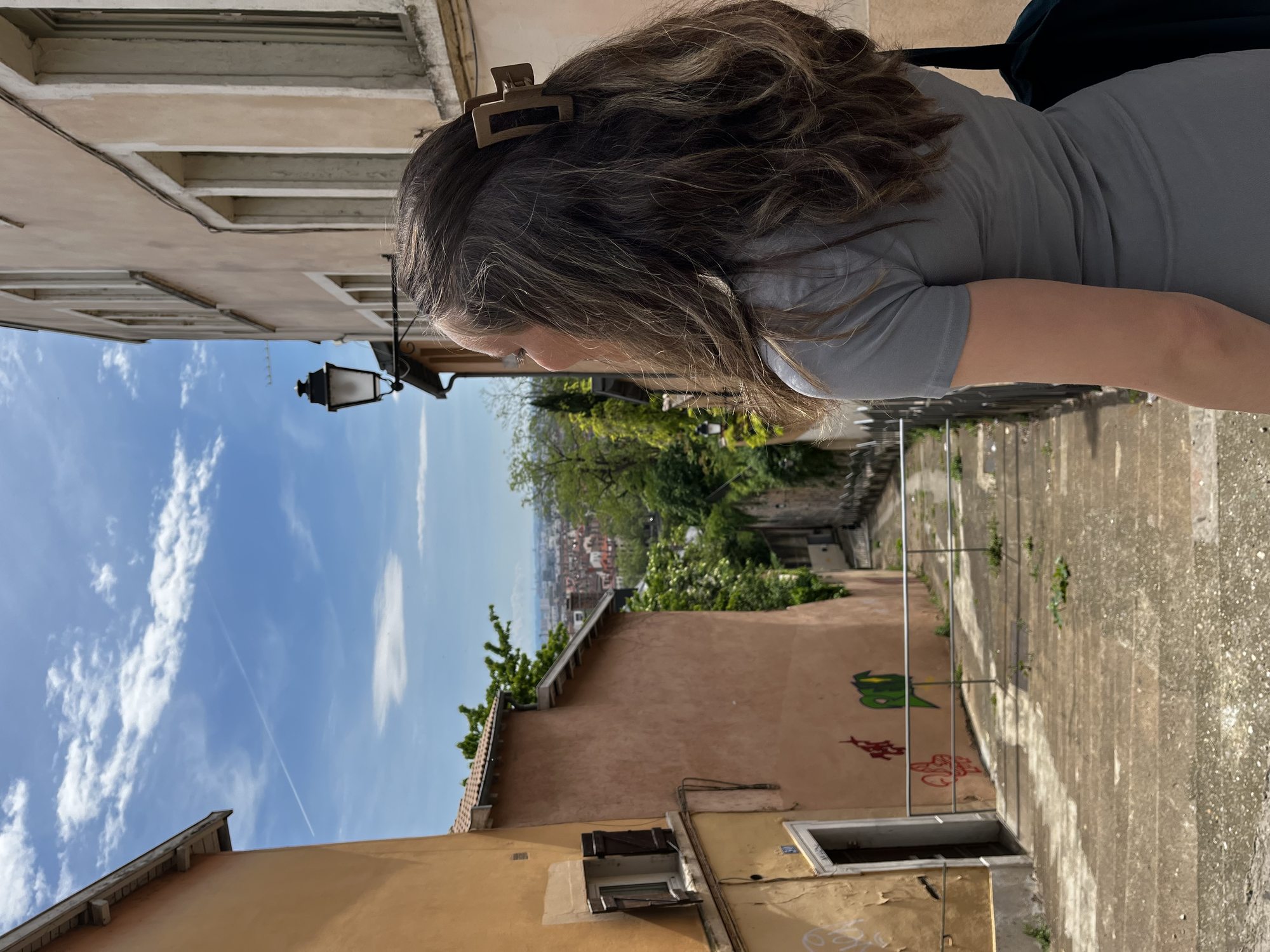
If you want the same instinct pointed at a city in France — a place most travel guides skip in favour of the obvious capital — read my Lyon piece. Quebec City is Lyon's North American cousin, in spirit and in food.
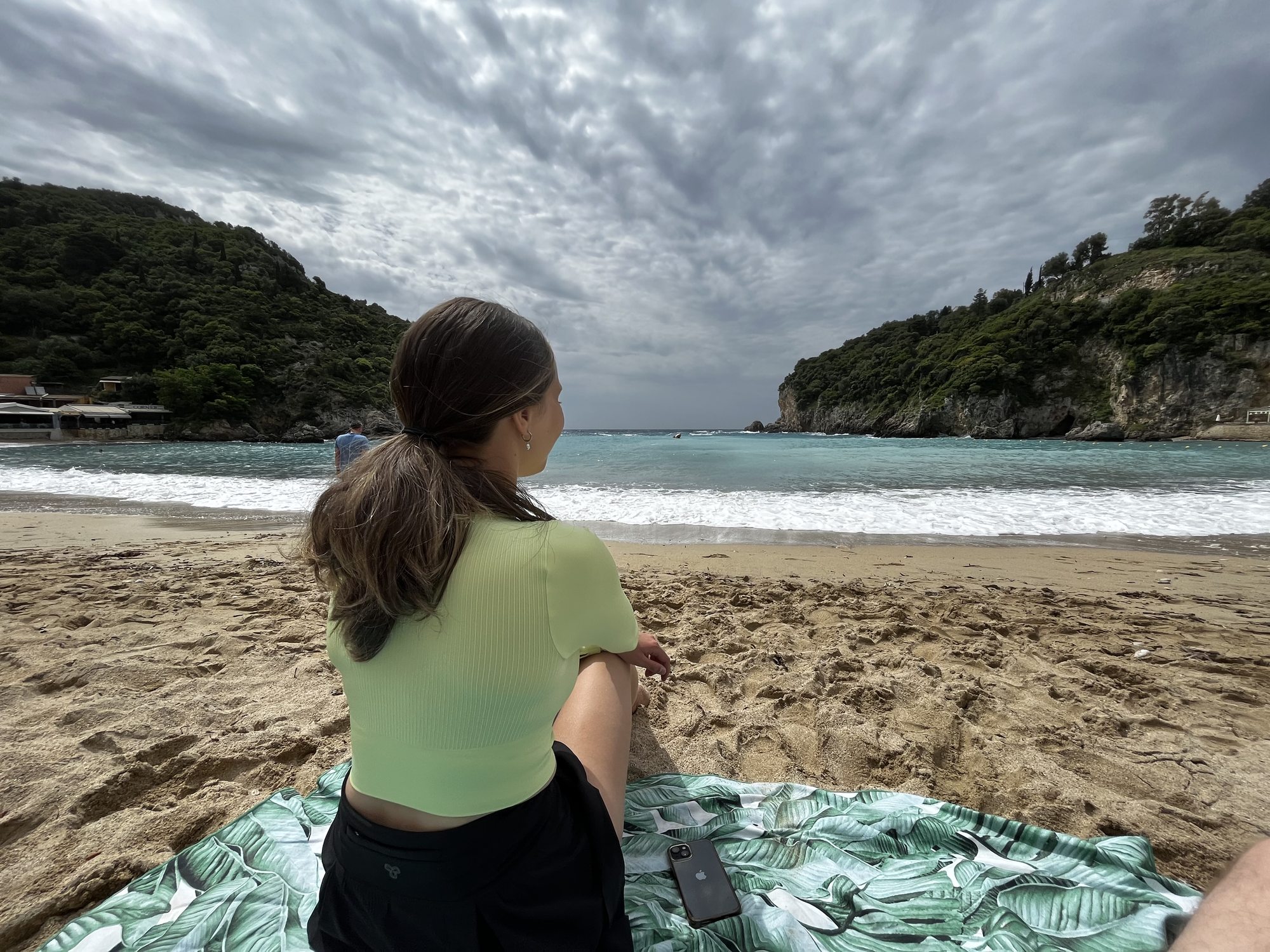
And if you want the Greek version of the same argument — the island that breaks every assumption people have about its country — read Corfu — the Greek island that doesn't feel Greek. The pattern repeats. The place that "doesn't feel like" its country is almost always the more interesting place to spend the weekend.
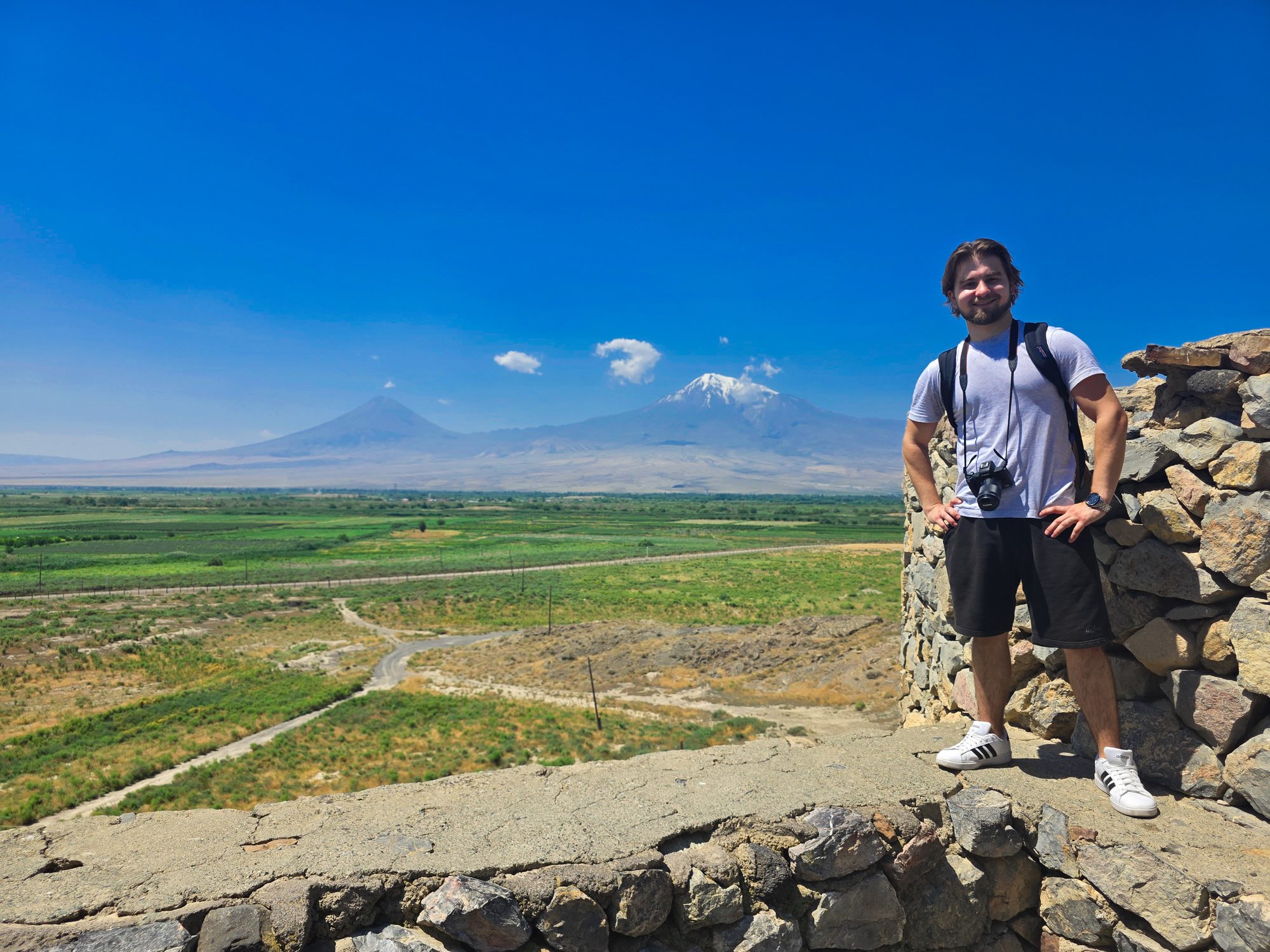
For a piece that lives entirely outside this North American–European conversation — the kind of trip nobody is selling and everyone should take — read I'm Armenian. I Just Visited Armenia for the First Time, by my friend Nishan. It is the closest spiritual relative to this piece on the site, and the most honest "what nobody tells you" article we have published.
One practical aside before you book. Old Québec’s hotels fill and climb every summer, and most of that price is set by the two companies that own the booking sites. Read who actually owns online travel — and why it costs you first.
If you read this all the way down, there's a fair chance you've been somewhere too — and you have your own version of what just happened in this piece. I want to read it. I read every story that comes in, and I write back. The pieces that earn it go live here with your name on them, your photographs, your verdict.
This is what PONTUS
is built for.
A long weekend in Quebec City. A small hotel inside the walls. Two hours from Montreal. A Nordic spa overlooking the Saint Lawrence on a Friday afternoon. This is the kind of trip that should be a long weekend, not a once-a-decade investment. PONTUS members access pricing on hotels, vacations and travel experiences that the public booking platforms cannot match — through a closed travel club that has been in place for over a decade.
See How It Works