Sorrento as your base, for the food and the day trips. Positano for the view and the honeymoon.
The full verdictYou should choose Sorrento. Here's why.
Let me tell you something that most Amalfi Coast travel guides are too polite to say. Positano is the cover of the brochure. Sorrento is the experience inside it. One of them exists primarily to be photographed. The other one exists to be lived in. And the moment you understand that distinction — really understand it — the choice between them becomes simple. And if your real question is bigger — the whole Italian coast against the Greek islands — a contributor takes it on in Italy vs Greece.
I have been to both. I based myself in Sorrento, which gave me the time to understand it properly. Positano I experienced as it is designed to be experienced: arriving, being dazzled, and leaving. What follows is the honest case for both — and my verdict.
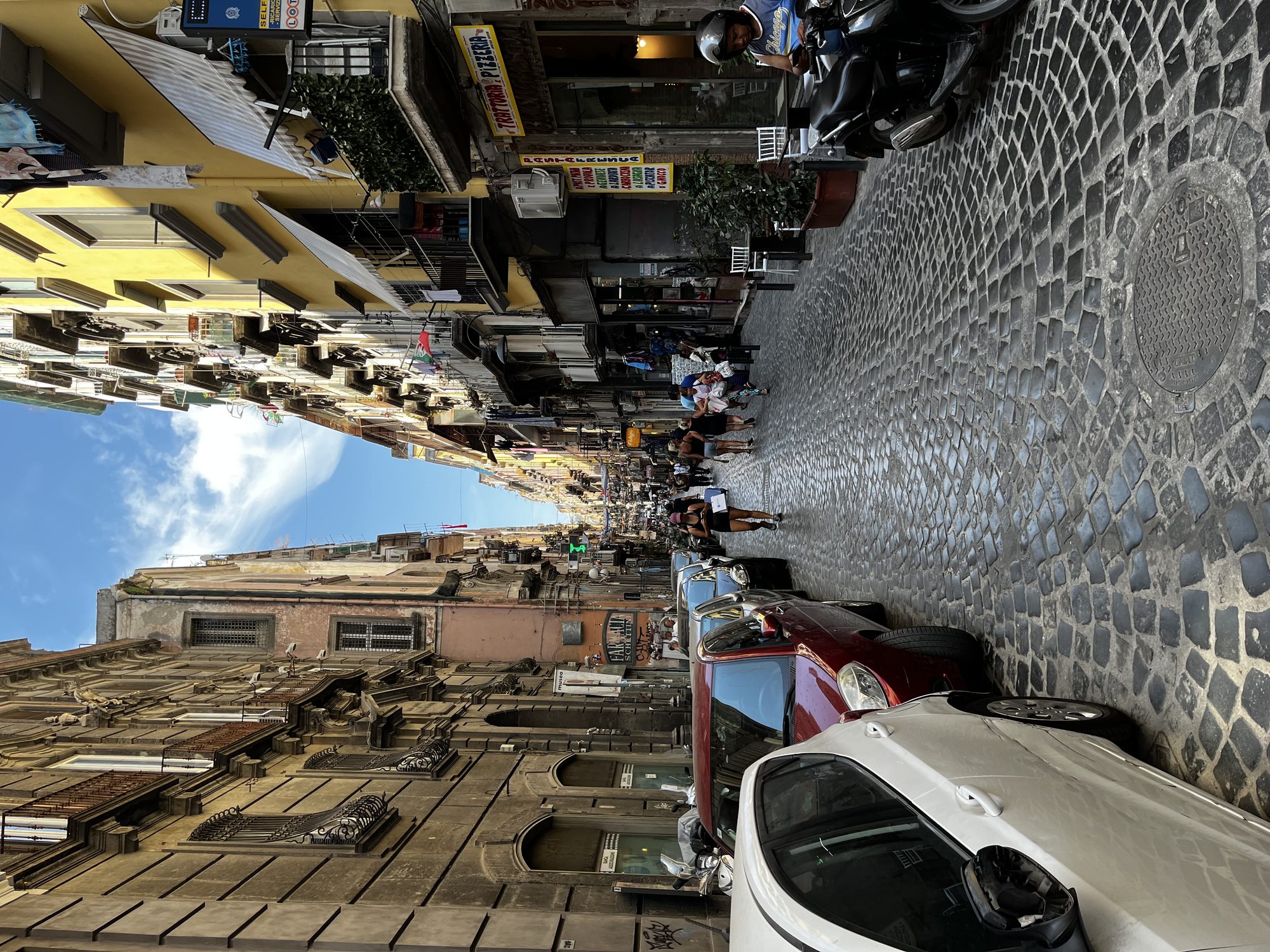
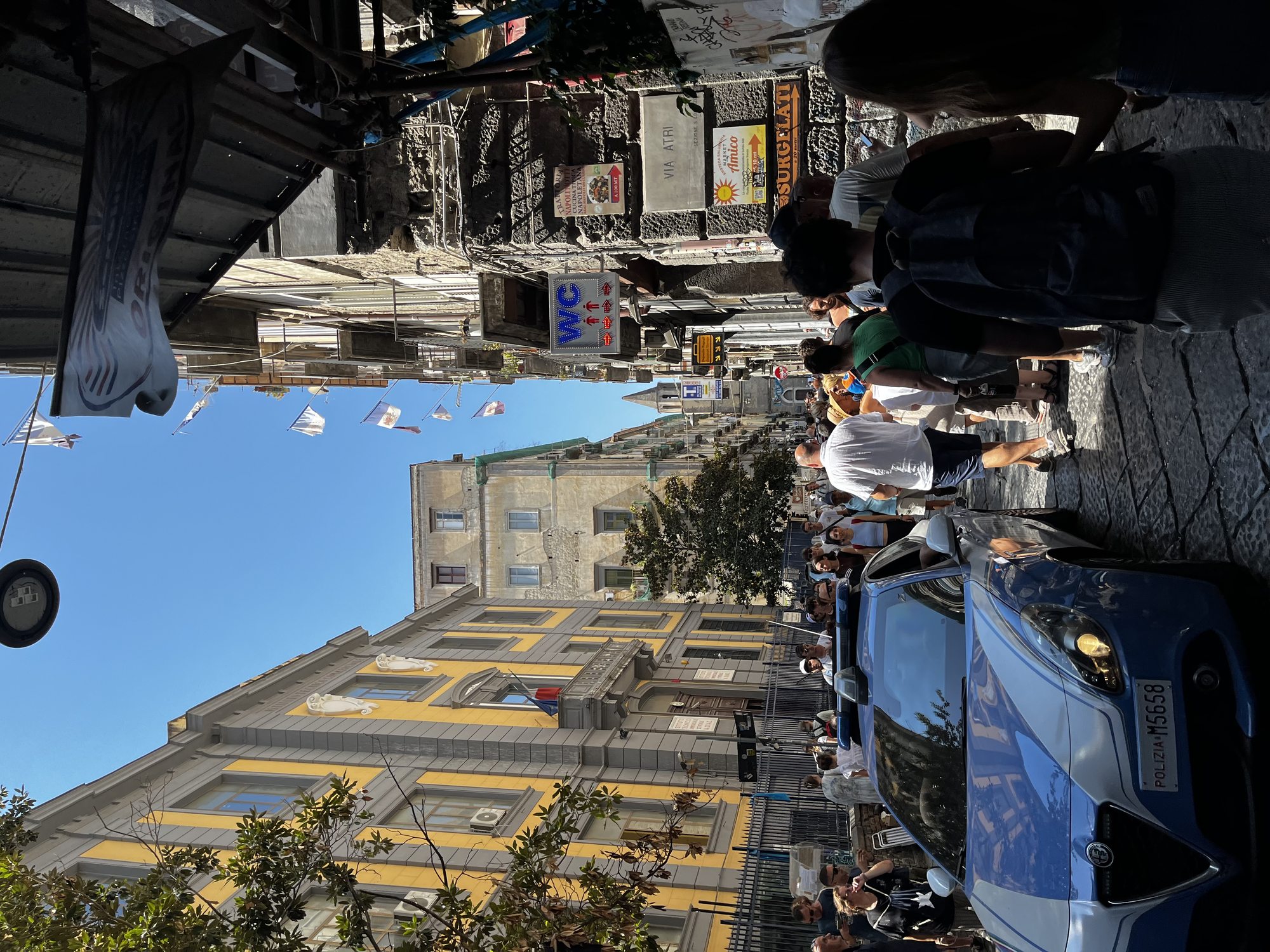
My cousin and I arrived in Sorrento by train in the early afternoon. The train ride itself was incredible. Two guys from Montreal who had never seen a train ride with such spectacular views — luscious green hills on one side and the Gulf of Naples on the other. As people disembark, Sorrento opens up. Smell of adventure in the air. Which way you go is all up to you.
The two sit about 16 km apart, roughly 50 minutes by road and longer in summer traffic. Positano is one of the most genuinely beautiful places I have ever seen. But Sorrento — less photographed, less hyped, and a fraction of the price — gave me something Positano, for all its spectacle, could not. The lines above tell you which one is for you. If you are still weighing your Amalfi base against Naples instead, the Naples as Amalfi Coast base piece is the deeper version of that argument; and the Pompeii or Herculaneum verdict covers the Vesuvius-cities day you should build into the trip.
Every piece here ends with an honest call on where to actually go. New verdicts land in your inbox first. One email. No noise.
Positano — The Spectacular Argument
There is a particular kind of travel snobbery that dismisses any place that has become famous. I want to resist it here, because the case for Positano is genuinely strong and it deserves to be made at full strength before I argue against it.
Positano is built on the rim of a mountain that falls directly into the Tyrrhenian Sea. The houses — ochre, terracotta, cream, the occasional faded blue — tumble down the cliff face in layers, as if someone tipped a bucket of painted cubes down the mountain and they landed just like that. The Byzantine dome of Santa Maria Assunta catches the morning light from the sea. The water below shifts from green to deep blue depending on where the sun sits. Nothing else looks like this. Not Santorini. Not Cinque Terre. Nowhere.
The arrival by ferry — early morning, before the day-trippers — is one of the genuinely great arrival experiences in European travel. The boat moves along the coast, stopping at small places you will never have time to visit, and then Positano appears all at once, revealed in a single turn of the coast, complete and extraordinary. You see it the way it is meant to be seen: from the water, before you have touched it.
"Positano bites deep. It is a dream place that isn't quite real when you are there and becomes beckoningly real after you have gone."
Steinbeck was not easily impressed. Neither were Picasso, Paul Klee, Mick Jagger, or the generations of artists who kept returning to this narrow stretch of Campanian cliff. A place that holds serious creative people across a century has something genuine to offer.
The honest Positano downsides
The road from Sorrento is barely wider than a car. The bus, which is the standard approach, takes 45 minutes to cover about 16 kilometres of coast road because it allows almost no overtaking and the coaches pass within centimetres of oncoming traffic. Once you arrive, the town's famous verticality — every building connected by steps cut directly into the rock — means that navigating Positano is a significant physical effort in the heat of a southern Italian summer.
The beach — Spiaggia Grande — is the most photographed part of Positano. In reality, it is a beach of dark pebbles, covered almost entirely by paid sun-loungers that cost €30 to €50 per person before you have ordered anything. The water near the main beach is murky from boat traffic in high season. The restaurants charge what the setting will bear.
More than anything: Positano is essentially one thing. It is a view. An extraordinary, unique, genuinely unmissable view. But once you have seen it from the sea, from the streets, from a terrace at the end of the afternoon — the town does not offer much else. It is a place to arrive at, be dazzled by, and then genuinely wonder: now what?
Is Positano worth visiting just for a day?
Yes — and a day is genuinely all most people need. The Positano you came for is a morning ferry arrival, a slow walk down the cliff to Spiaggia Grande, a long lunch on a terrace with the cliff face in front of you, and the 5pm light on the buildings before the day-trippers leave. That is the whole town at its best. Spend the night there and the only thing that changes is the price tag on the hotel. Spend the week there and you start asking yourself why you weren't based somewhere with a train station. A single well-planned day from Sorrento gives you ninety percent of what Positano has to offer, for a fraction of the cost. Take the ferry both ways. Skip the SITA bus.
Sorrento — The Town That Earns It
Sorrento does not ask to be photographed. This is either its greatest weakness or its most underrated quality, depending entirely on why you travel.
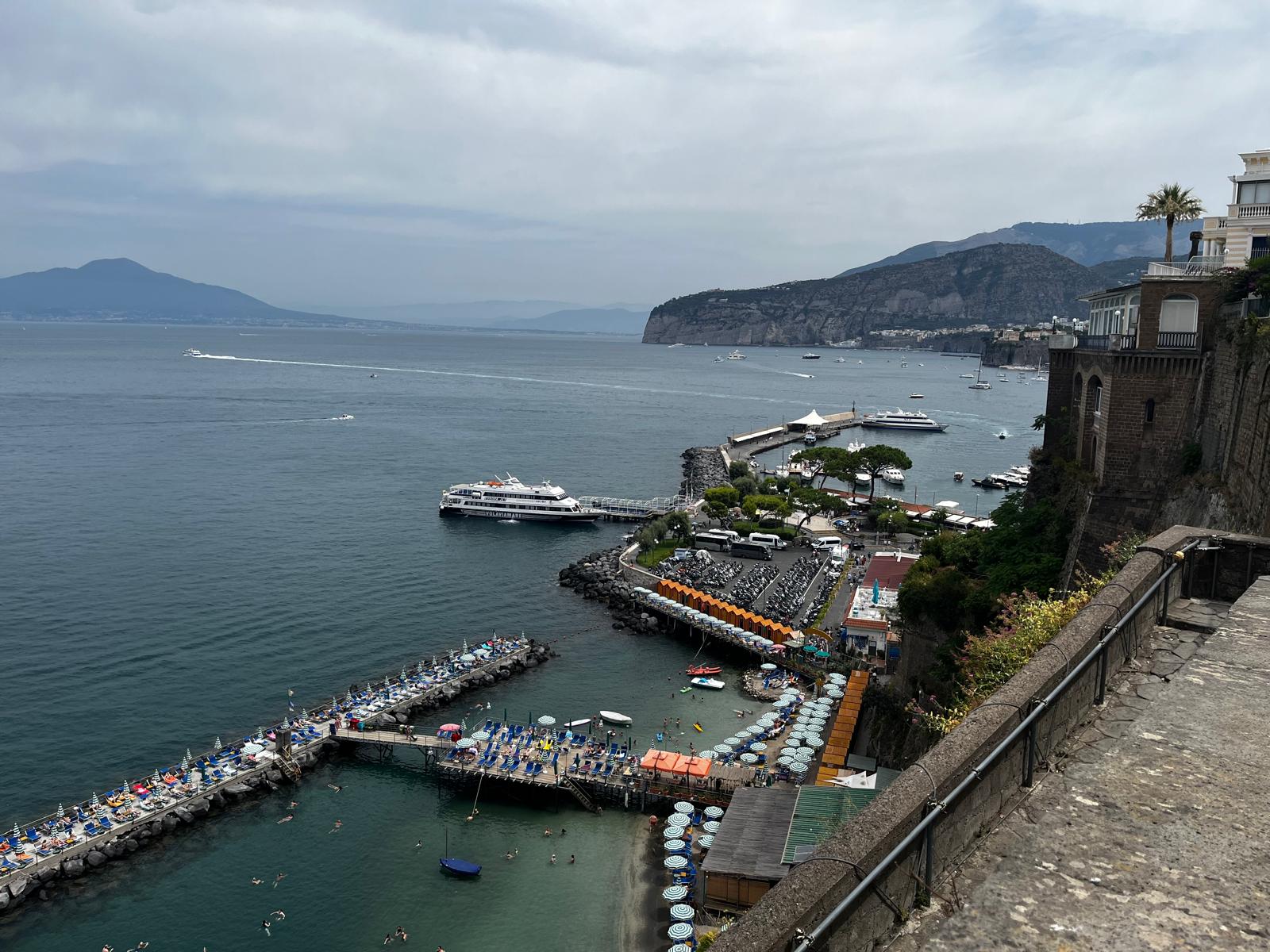
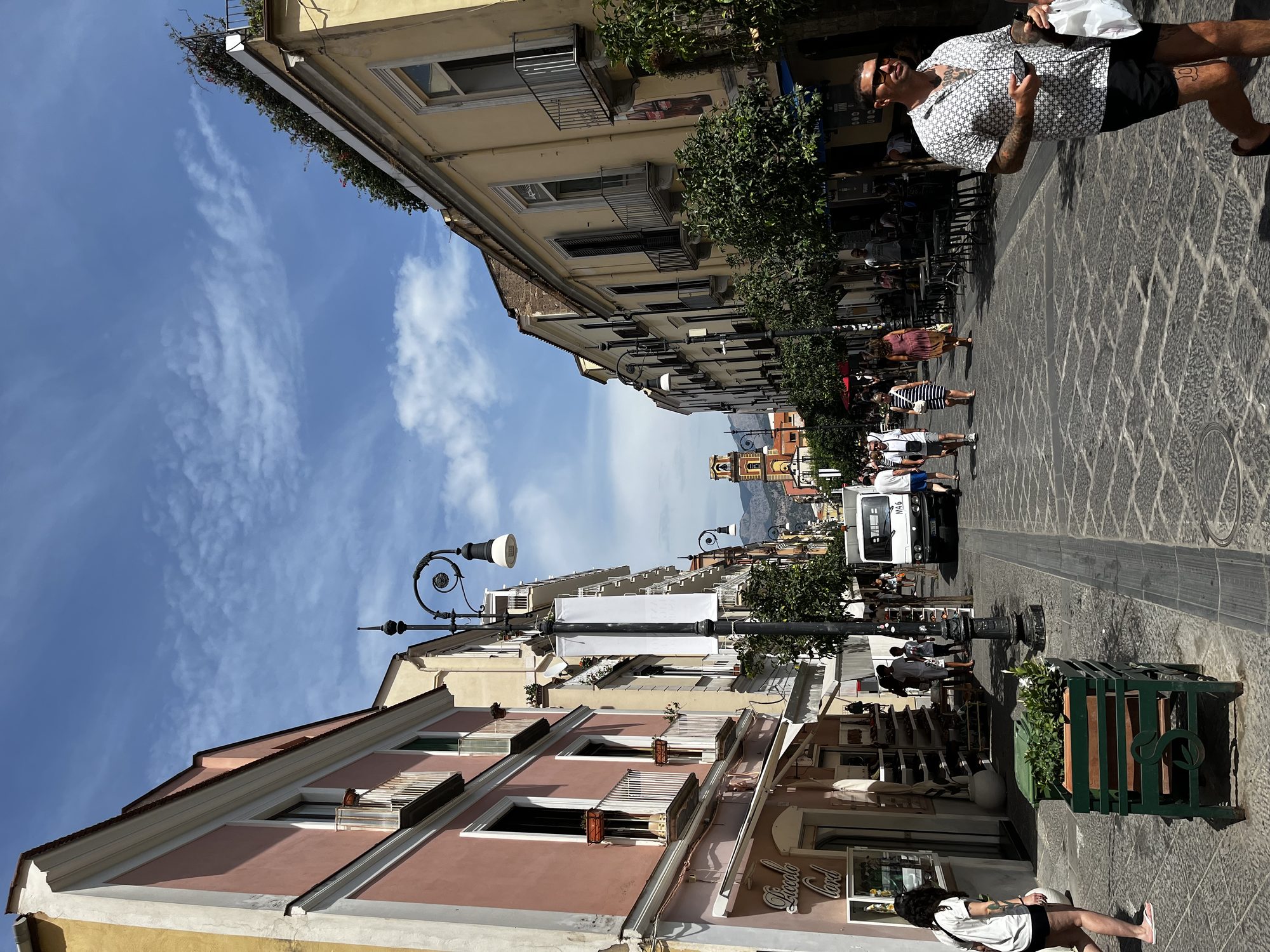
The town sits on a cliff above the Bay of Naples, looking out toward Vesuvius and, on clear days, toward Capri. The old centre is small enough to walk in twenty minutes, generous enough to spend three days in without repeating yourself. The streets are real streets — bars and bakeries and hardware shops alongside the restaurants and tourist shops — because Sorrento is a functioning town that happens to also be one of the most beautiful places in southern Italy.
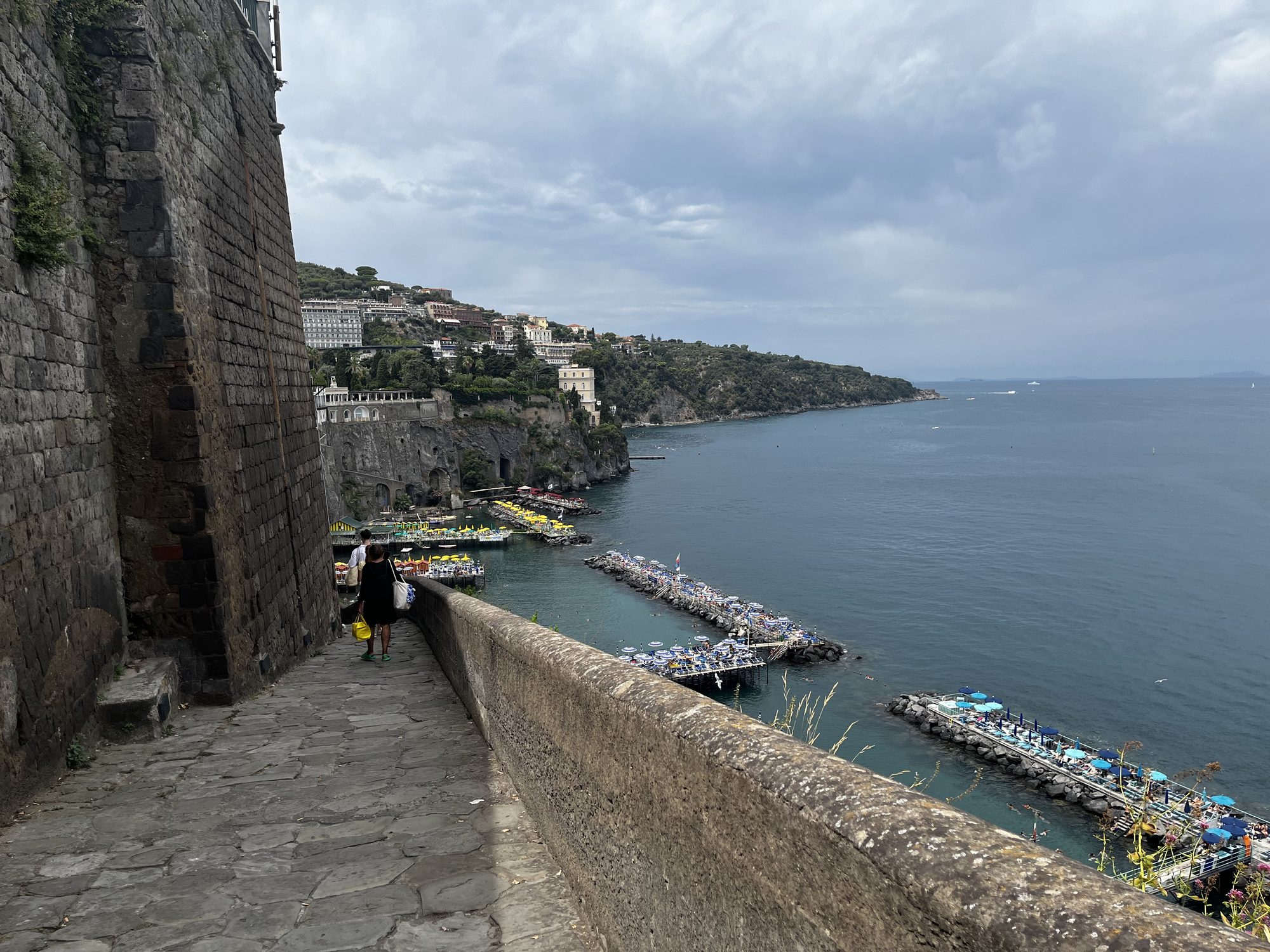
Positano gets a lot of the visual credit — but my goodness, Sorrento is spectacular. Every direction you look you are newly taken aback, always feeling the need to pinch yourself as a reminder that all this is real.
The slow-base argument I am making here — pick the working town, let the famous town be a day trip, let the small things accumulate — is the same one I made on the other side of the Adriatic in Corfu, the Greek island that doesn't feel Greek. Base on the cove. Drive to the historic capital for a day. Eat the homemade plate. Let a beach dog choose you. The trip you remember is almost never the one that runs the fastest. The same instinct, applied closer to home: Quebec City. Base inside the walls. Drive out for the falls and the spa. Let the European weekend happen to you.
The food — and why it matters more than the view
Once we disembarked the train upon arriving in Sorrento, the day was up to us. Having not had breakfast and after that 45-minute to an hour train ride, we exited the station feeling quite hungry. We walked away from the station a maximum of two minutes and, lo and behold, a restaurant. We didn't look up reviews. We didn't ask people if the place was good or not. We were simply hungry and we followed our noses.
Turns out, this random restaurant we chose — Spizzichiamo — was a 4.9 star rated restaurant. We didn't quite know what to get, so we asked the server. By the way, all, or nearly all, servers in Italy understand quite a lot of English. The server recommended an Aperol Spritz and their sausage and mozzarella sandwich.

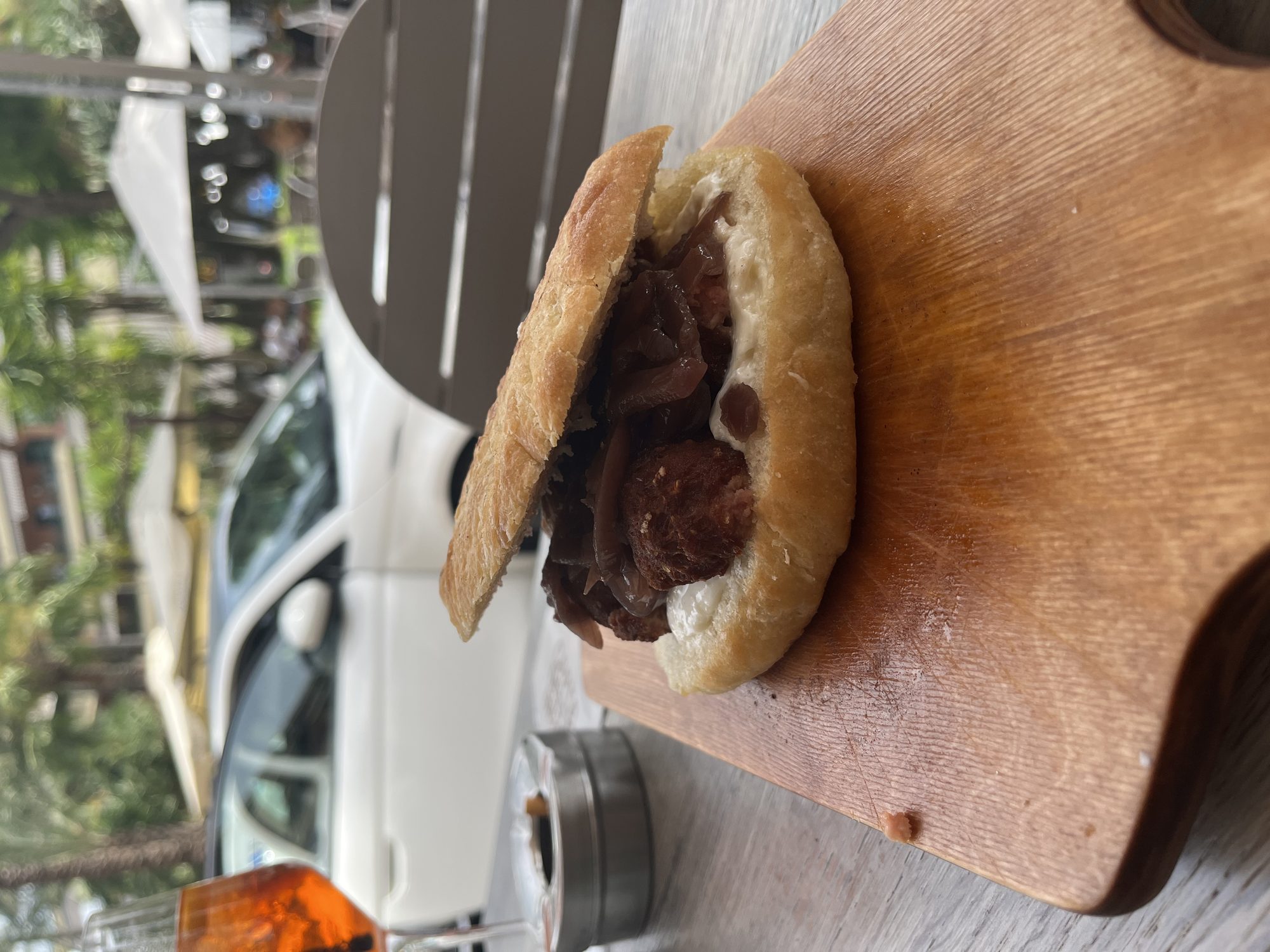
You guys — just go there. Get that sandwich. After every single bite my cousin and I would look at each other, put the sandwich down, and say "I mean… that's unreal." Holy goodness was it delicious. Highly recommend.
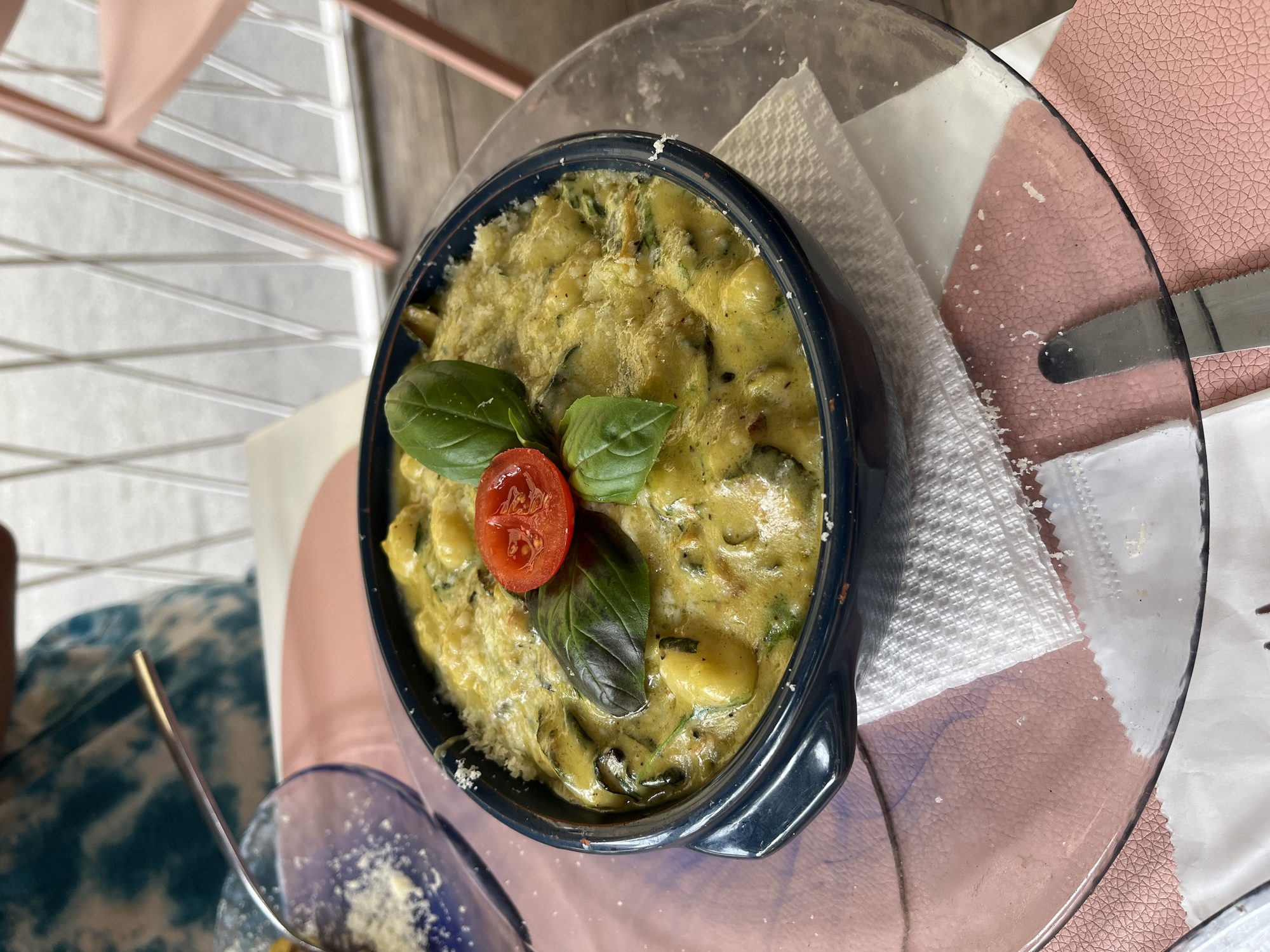
The food in Sorrento is one of the most underrated arguments for basing yourself on this coast. The town is not a tourist trap in the way that Positano is — it has enough local life to support restaurants that cook for Italians, not just for visitors passing through for an afternoon. The prices reflect this. You will eat better, for less, than anywhere else on the Amalfi Coast.
Lemons are everywhere in Sorrento — the famous sfusato amalfitano, a lemon the size of a fist, grown in terraced groves on the hillsides above the town. Limoncello here is not a souvenir. It is something people actually drink, made from those specific lemons, in the specific way that the families who live here have been making it for generations. This difference — between the thing and the tourist version of the thing — is what Sorrento offers that Positano cannot.

The Real Reason Sorrento Wins — Location
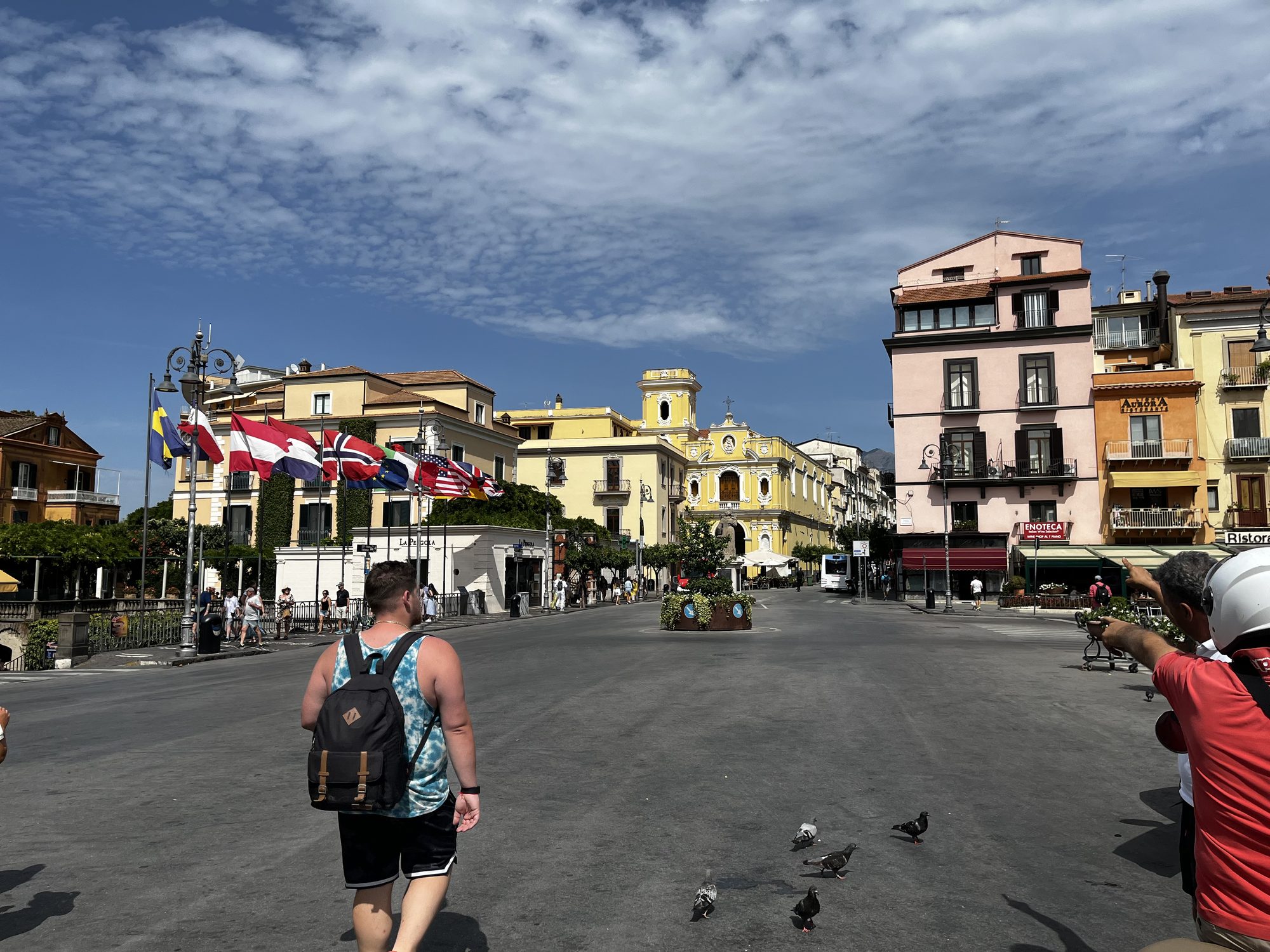
Location. This is the argument that closes the case, and it is the one that Positano simply cannot answer.
Sorrento sits at the end of the Circumvesuviana railway line from Naples. This makes it the most practical base on the entire Amalfi Coast — a fact that sounds mundane until you understand what it means in practice. From Sorrento, you can reach Pompeii in 35 minutes by train. You can be in Naples in 65 minutes. You can take the ferry to Capri in 25 minutes. You can catch the SITA bus along the coast to Amalfi, Ravello, or — yes — Positano, and return in the evening. You can be in Rome by late morning.
Positano offers none of this. It sits in the middle of the coast road with limited transport connections, no train station, and the kind of logistical complexity that turns every day trip into an expedition. Beautiful as it is, Positano traps you. Sorrento liberates you.
I visited Pompeii from Sorrento. I did a full day on the Amalfi Coast from Sorrento. I went to Naples for an afternoon from Sorrento. And then I visited Positano as a day trip from Sorrento — arriving by ferry, spending the afternoon, watching the light on the cliff face at 5pm, and returning to Sorrento for dinner at a fraction of the cost of eating in Positano. This is the correct relationship between the two towns. Sorrento is the base. Positano is the day trip.
My cousin and I arrived in Sorrento without a plan. Without an itinerary. We had heard it was a cool place and got on a train. Upon arriving, we simply went where we wanted to go. The greatest places were undoubtedly the beaches. Absolutely magnificent. The locals are fun, knowledgeable, and open to tourists. They genuinely want you to have a great time. When you're in Sorrento — just go with it. You will have a great time.
"Positano is the photograph. Sorrento is the trip."
How to do Sorrento and Positano in one trip
Base in Sorrento. Day-trip Positano. That is the entire itinerary, and it is the right one. The Circumvesuviana train from Naples Centrale to Sorrento takes about 65 minutes and costs under five euros. From Sorrento, Positano is a 25-minute ferry in summer or a 45-minute SITA bus year-round. The ferry is dramatically better — slower in clock terms, faster in experience, and the arrival into Positano from the water is the moment the trip is selling you. Take it both ways. The bus on that road is a small piece of motion sickness most travellers wish they had skipped.
Timing and where to stay: May, June, September, or early October are the sweet spots — warm enough to swim, cool enough to walk, half the August crowds. In Sorrento, stay inside the old centre on the cliff side of Corso Italia — walking distance to the station, the harbour, and the cliff walk. Avoid the resort-strip hotels along the main road if you want to feel like you are somewhere real. Four nights is the minimum to do the day trips properly. Five is better. Positano accommodation, if you genuinely want to spend one night there, books out three to six months ahead in peak season and the price is roughly triple Sorrento for an equivalent room.
How Far Is Sorrento From Positano — and How to Travel Between Them
This is the single most-asked question about these two towns, so here is the plain answer before the nuance. Sorrento and Positano are about 16 kilometres apart by road — a little under 10 miles along the Amalfi Coast. It does not sound far, and on a map it isn't. The coast road is what turns that short distance into a real decision.
| How you cross | Time | Cost (2026) | The honest verdict |
|---|---|---|---|
| Ferry | 30–40 min | ~€20 each way | Runs year-round — more than fifteen crossings a day from April to October, down to two or three through the winter. The arrival that sold Positano to every artist who ever painted it. Take it — both ways. |
| SITA bus | 45–60 min | €2.60 (24h pass €10) | Year-round, roughly hourly, and cheap — also 50 winding minutes of motion sickness. Buy tickets at a tabacchi before boarding; you can't pay the driver. |
| Car / taxi | 45–75+ min | Taxi ~€90–120 | No overtaking, nowhere to park. The worst of the three in summer traffic. |
How long does it take to get from Sorrento to Positano?
By ferry: about 30 to 40 minutes. It runs year-round — more than fifteen crossings a day between April and October, dropping to two or three a day through the winter, so check the timetable rather than assuming the boat is closed for the season. By SITA bus: about 45 to 60 minutes depending on summer traffic, year-round and roughly hourly from early morning until late at night. By car or private transfer: 45 minutes to well over an hour in peak season, because the road allows almost no overtaking. The clock says the bus and the ferry are close. The experience says they are not.
Ferry or bus from Sorrento to Positano?
Take the ferry, both ways. It is the same journey that sold Positano to every artist who ever painted it — you arrive from the water, and the town reveals itself in a single turn of the coast. The SITA bus covers that same 16 km clinging to the cliff edge, and for most people it is 50 minutes of motion sickness they wish they had skipped. The ferry costs more. It is worth it for the arrival alone. Book the early boat and beat the day-trippers.
Can you day-trip Positano from Sorrento?
Yes — and you should. A morning ferry over, the walk down to Spiaggia Grande, a long lunch on a terrace, the 5pm light on the cliff face, and the ferry back to Sorrento for dinner is the whole of Positano at its best — for a fraction of the price of staying. The same ferry network reaches Amalfi, Capri, and the rest of the coast, which is exactly why Sorrento wins as the base.
Sorrento — What to Know Before You Go
Getting there: Take the Circumvesuviana train from Naples Centrale — about 65 minutes, cheap, and direct. From Rome, take the high-speed Frecciarossa to Naples first, then the Circumvesuviana. The whole journey from Rome is around 2.5 hours. The views on that train are worth the trip alone.
Where to stay: The old centre puts you within walking distance of everything and gives you the best access to the cliff-top views. Avoid the big chain hotels along the main strip if you want to feel like you are somewhere real.
The lemons: Buy a bottle of local limoncello and a bag of Sorrento lemons from a market stall rather than a tourist shop. The difference in quality — and price — is significant.
The ferry vs the bus: For Positano and the Amalfi Coast, the ferry is slower but infinitely more pleasant than the SITA bus. Worth the extra cost for the arrival experience alone.
How long: Four days minimum. Sorrento works as a base, not just a stopover — you want enough nights to do the day trips properly and still have a full day in the town itself.
For travellers who’d like to extend their relationship with the place — and with the people who write about it — the PONTUS community runs a private travel membership. Read about the community side →
Positano’s rates are famously steep. A good part of that is the booking system itself — see who actually owns online travel before you pay it.
The Verdict — And Why It Matters
The answer to Sorrento vs Positano is not which is more beautiful. Positano is more beautiful — in photographs, from the sea, in the golden hour. That argument is not even close.
The answer is which one gives you more. And on that question, Sorrento is not even in the same conversation. Sorrento gives you location, practical freedom, a functioning town with real food and real prices, and the ability to spend your days on the Amalfi Coast the way it should be spent — moving through it, not marooned in one spectacular corner of it. You can visit Positano from Sorrento. You cannot visit Sorrento from Positano with anything like the same ease.
Base yourself in Sorrento. Take the ferry to Positano on your second or third day. Arrive early, before the day-trippers. Walk down to the beach. Have a coffee on a terrace above the sea. Watch the light on the cliff face in the afternoon. Then get the ferry back to Sorrento and eat well for a fraction of the price. This is the correct itinerary. This is how you have both without choosing.
"The best view of Positano is from the sea. The best base on the Amalfi Coast is Sorrento. These two facts, taken together, tell you everything you need to know."
If you read this all the way down, there's a fair chance you've been somewhere too — and you have your own version of what just happened in this piece. I want to read it. I read every story that comes in, and I write back. The pieces that earn it go live here with your name on them, your photographs, your verdict.
See also: Positano is a case study in a place that's overrated as a base but not as a sight — part of our honest look at the most overrated destinations.
Everyone should get to
experience this.
This is why I started PONTUS. We all live one life — and everyone should have the chance to take that train from Naples, walk two minutes from the station, and stumble into a 4.9-star restaurant they'd never heard of. That moment is what travel actually is. We are a community of people who believe it should be a way of life, not a luxury reserved for the few.
- For those who want to be part of a community of like-minded people
- For those who don't want to break the bank just because they want to see the world
- For those who are ready to put the effort in and build their own income from the travel industry
Whatever you want, whatever you choose — PONTUS is here.
Join the Community