Santorini for a first trip, a honeymoon and the sunsets. Mykonos for the beaches and the nightlife.
The full verdictThe second I told people I was going to Greece, the questions arrived almost instantly. "Are you doing Santorini? What about Mykonos? Have you decided between them yet?" Asked as if the two are interchangeable — a simple either-or. Two flavours of the same Greek island experience, differing mainly in which photographs you end up posting.
It's just… not that simple. Choosing between them without understanding their differences is how people end up deeply disappointed.
Honest answer? Santorini — and here's why.
"I came to Santorini expecting a picturesque but simple island — good for pictures and beautiful sunsets. I instead discovered an island with 4,000 years of ancient history and so much more to give."
They sit two to three hours apart by fast ferry, close enough to pair in one trip. The caldera is genuinely as dramatic as the photographs suggest — and Mykonos, for the right person, is not a consolation prize. It is a different product entirely. The lines above tell you which one is for you. If your trip is a honeymoon specifically, the more detailed argument is in Santorini or Mykonos for your honeymoon; for a 7-day Greek trip with both islands plus Athens, the structural answer is in the 7-day itinerary.
Every piece here ends with an honest call on where to actually go. New verdicts land in your inbox first. One email. No noise.
Mykonos — The Honest Case
Mykonos is honest about what it is, and that is one of the things I respect about it. It does not pretend to offer tranquility. It does not position itself as an off-the-beaten-track discovery. Mykonos is Greece's most famous party island, one of the most celebrated nightlife destinations in the world — and it knows it. If you arrive expecting something else, that is your misunderstanding, not Mykonos's failure.
But calling it just a party island is reductive. The people who dismiss it on those grounds are missing something real. The town of Mykonos — Hora, the locals call it — is a genuine wonder of Cycladic architecture. A labyrinth of narrow whitewashed streets, bougainvillea-covered walls, blue-domed churches, one shop or bar or bakery after another. Unlike Santorini, which sits on a cliff and requires constant navigation between its villages by bus, Mykonos Town is walkable and generous. You get lost in it pleasantly, on foot.
Little Venice is worth any amount of hype. A row of medieval buildings built directly over the sea, their balconies hanging above the water, sundowner drinks served as the waves brush the foundations below. It is one of the most genuinely beautiful neighbourhoods in the entire Greek islands. The windmills above it at sunset, silhouetted against an Aegean sky, are one of those views that makes you understand immediately why Greece became a destination in the first place.
The beaches are Mykonos's other significant weapon — and they are significantly better than Santorini's for anyone who actually wants to use a beach. The water is clear and swimmable. The sand is fine and golden. Paradise Beach and Super Paradise Beach are world-famous for their beach clubs and energy. Even the quieter beaches — Agios Ioannis, Ornos — are proper Mediterranean beaches in a way that Santorini simply is not. And if you want Greek beaches that look less Cycladic and more like Sardinia or the Croatian coast — green cliffs, cypress instead of bare rock — that is a different island entirely, and I made the case for it in Corfu — the Greek island that doesn't feel Greek. For the same "do not just do the obvious" argument applied to North America, see Quebec City — Europe without the flight. And for how these islands measure up against the Italian mainland on a single trip, a contributor makes the call in Italy vs Greece.
The honest Mykonos downsides
The price. Mykonos is expensive — often more so than Santorini, when you factor in beach clubs, nightlife, restaurants, and the sheer volume of things being charged for. A cocktail in Little Venice can reach €18. A beach club lunch with sunbed: €60 before you have ordered a single thing. The island charges what the market will bear, and the market bears a great deal.
The crowds in peak season are real, though different from Santorini's. Mykonos's crowds are horizontal — spread across beaches and bars — rather than funnelled into a single viewpoint. This makes them easier to navigate but harder to escape entirely.
And if nightlife does not energise you, Mykonos can feel hollow after a day or two. The architectural beauty is genuine. But once you have walked the town, done a beach day, and watched the Little Venice sunset, the island's remaining programme is heavily weighted toward parties and clubs. If that is not your world, three days in Mykonos may feel like two too many.
Is Mykonos worth visiting if you don't drink?
Yes — but only for two days, and with a different itinerary than the one the island sells you. The architecture of Mykonos Town is genuinely beautiful sober. Little Venice at sundowner hour is a quiet act, not a loud one — order a coffee, watch the waves, the windmills carry the rest. Delos is a serious archaeological site you can do without a single cocktail and most people on the boat will be hungover or absent. The Mykonos worth the trip for a non-drinker is the Mykonos most visitors never bother with.
What does not work sober is a five-day Mykonos trip. The island's commercial gravity pulls toward beach clubs and bars, and you'd be paying premium prices for an experience that is fundamentally not aimed at you. Two nights, well-spent: yes. Five: choose a different Greek island. Corfu is genuinely a better answer for that traveller.
Santorini — The View That Does Not Lie
I have written about Santorini at length elsewhere on this site — including my full Athens vs Santorini guide and my honest answer to whether Santorini is overrated — so I will not repeat everything here. But for the sake of this comparison, the essential case needs to stand on its own.
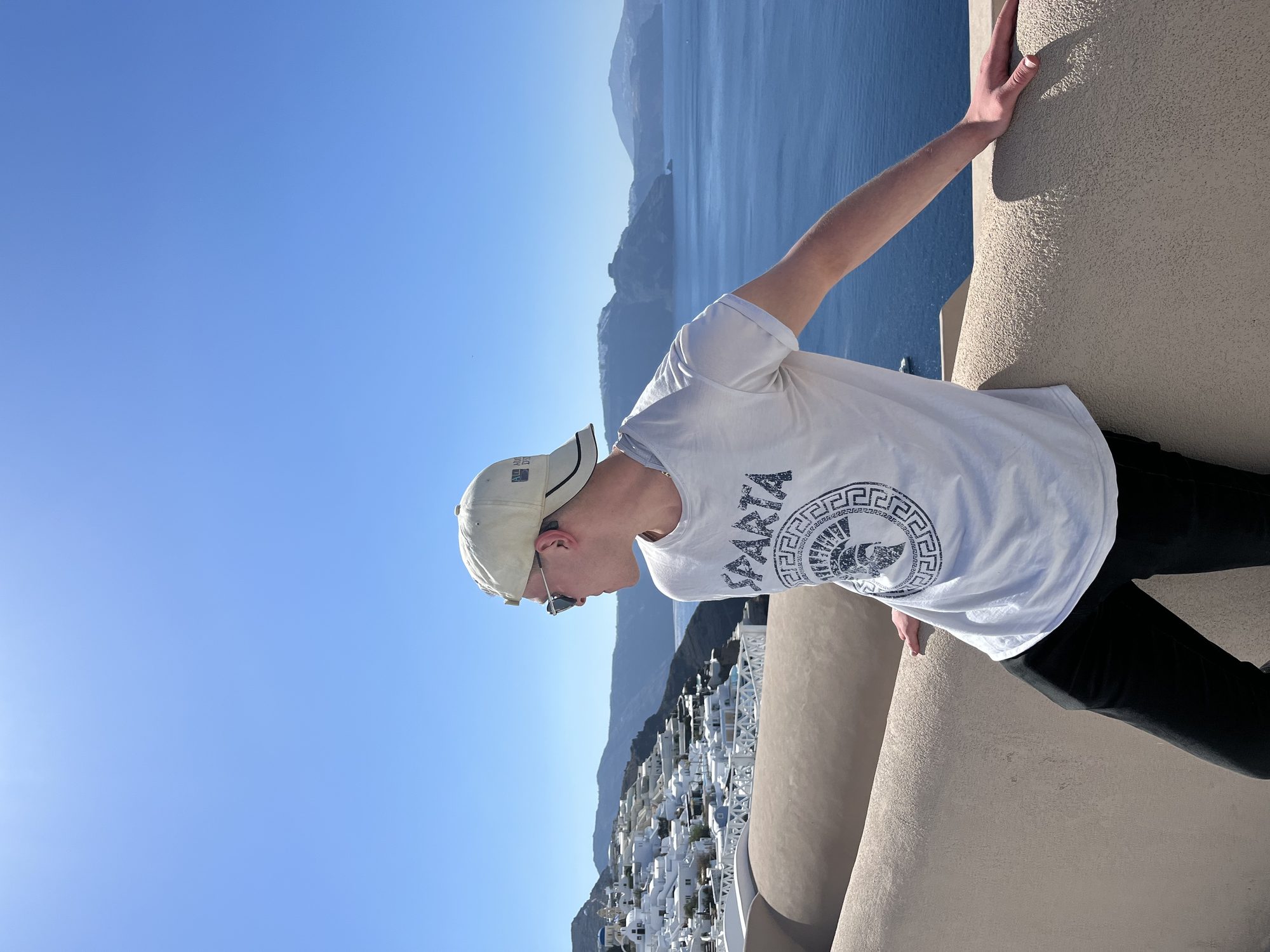
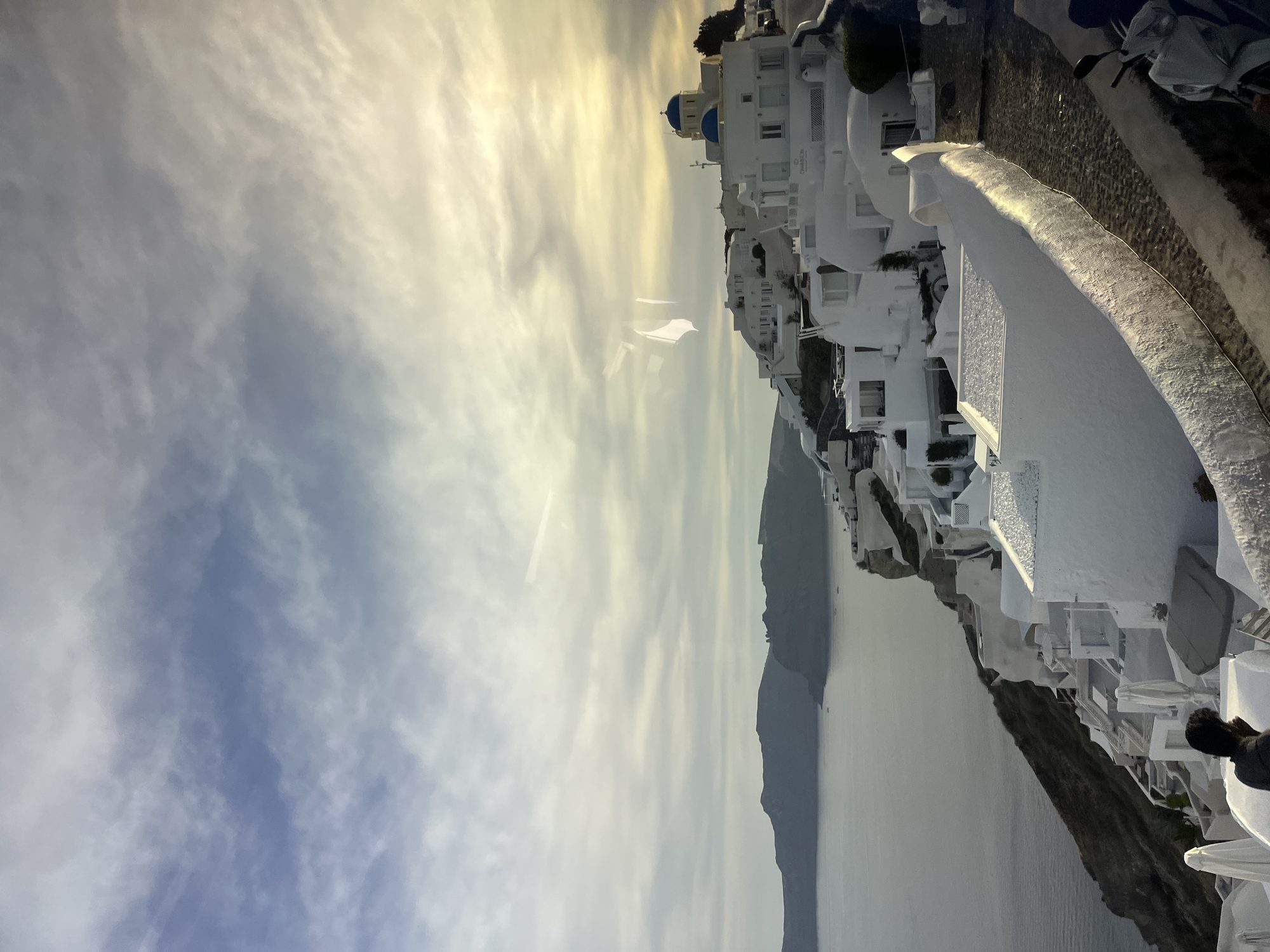
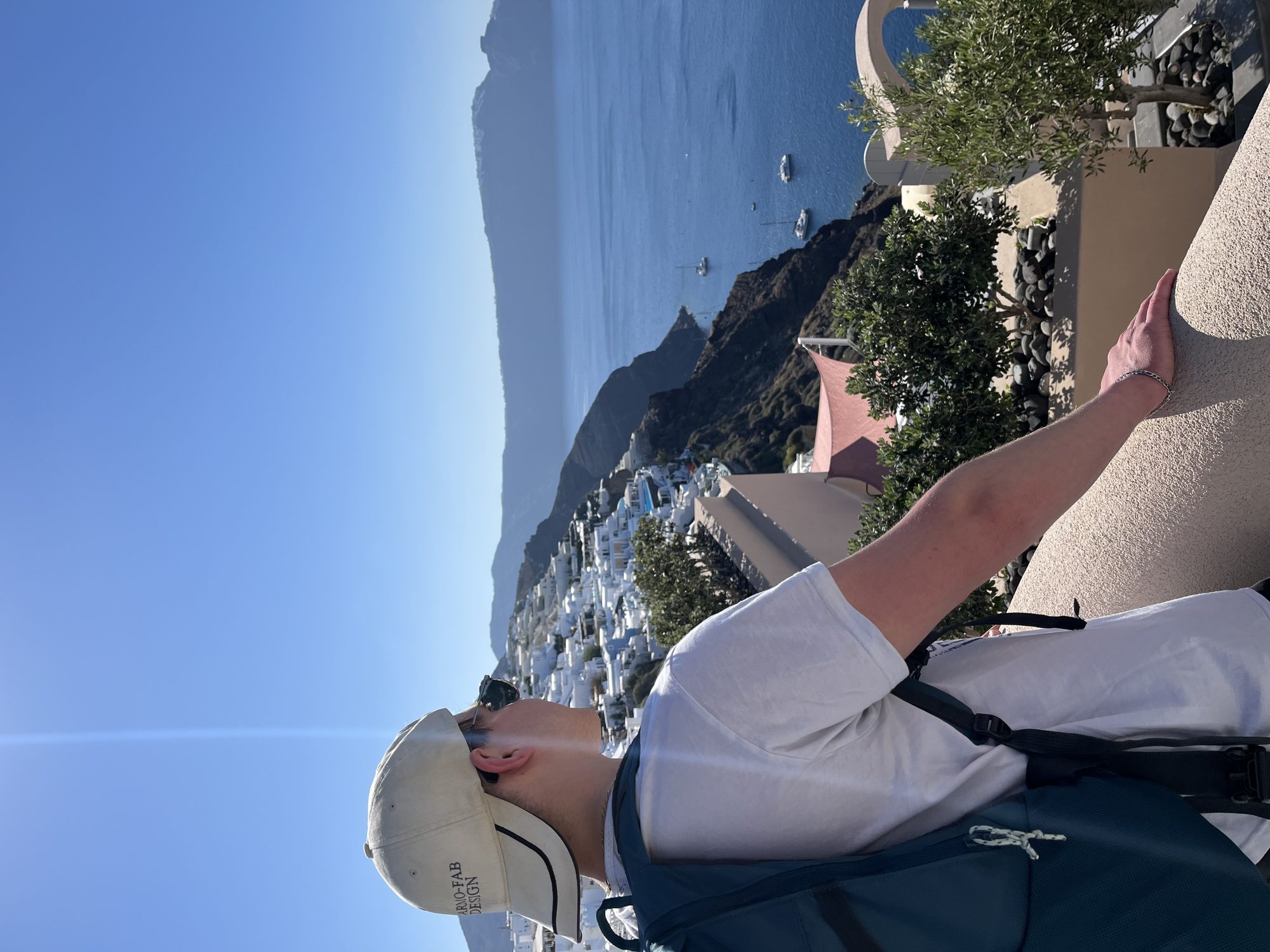
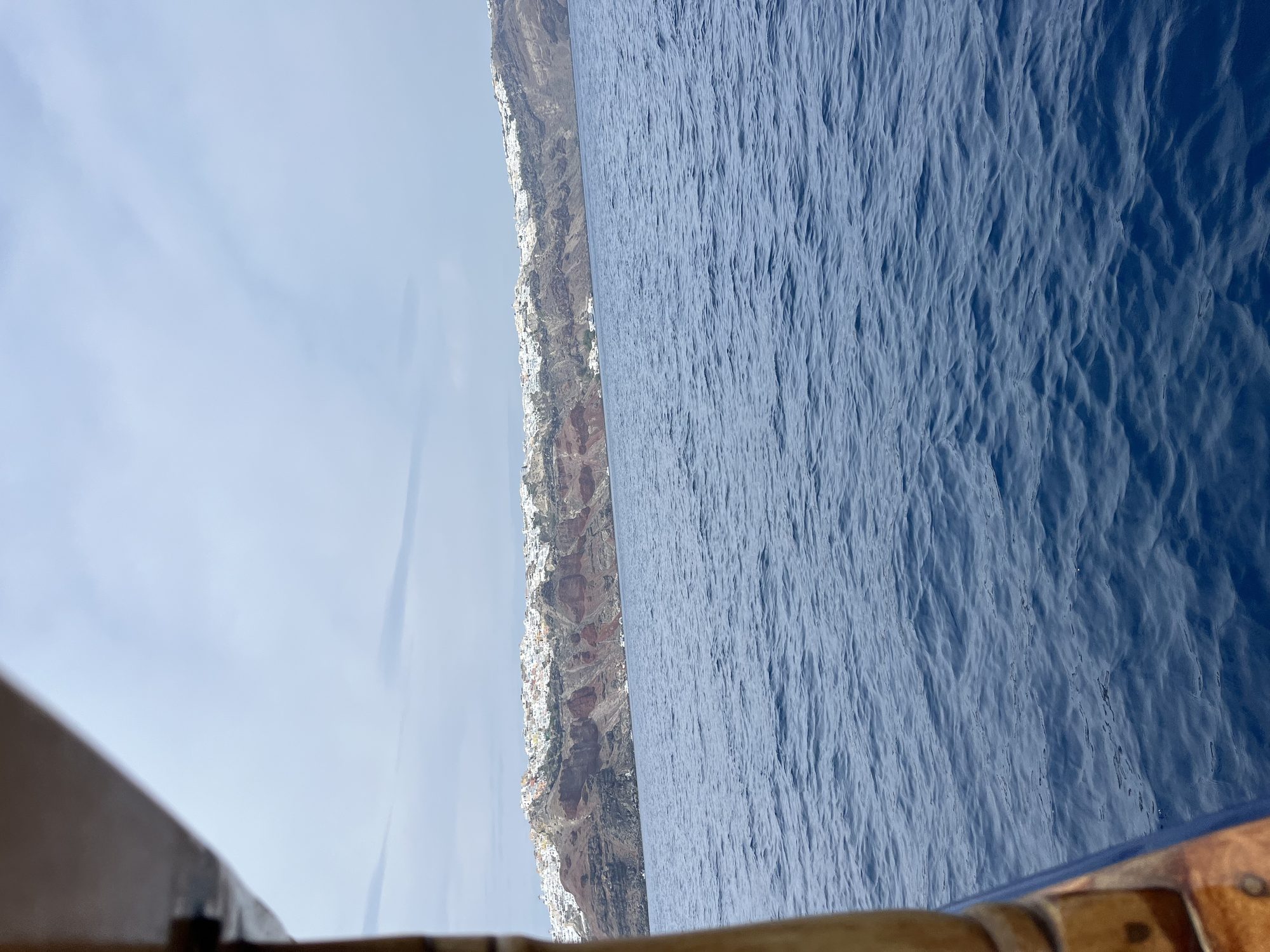
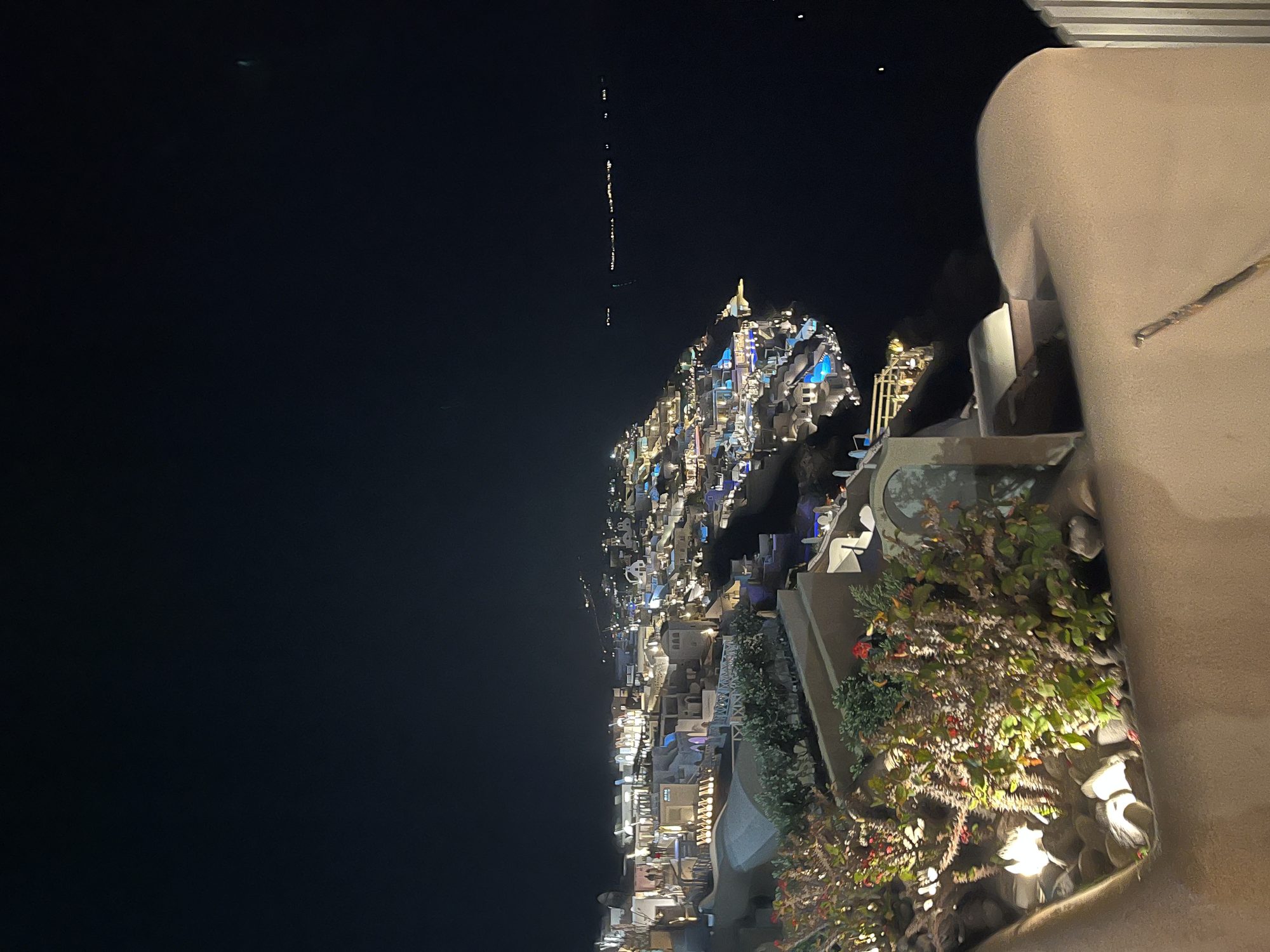
Santorini is built on the rim of a collapsed volcanic crater. The caldera — the interior of that crater, now filled with the Aegean Sea — is approximately 12 kilometres wide and up to 400 metres deep. The villages of Fira and Oia sit on the cliff edge, their white houses cascading down the rock face toward the water far below. The view you have seen in every photograph is real. It is that dramatic. The photographs, unusually for Instagram-famous destinations, do not lie.
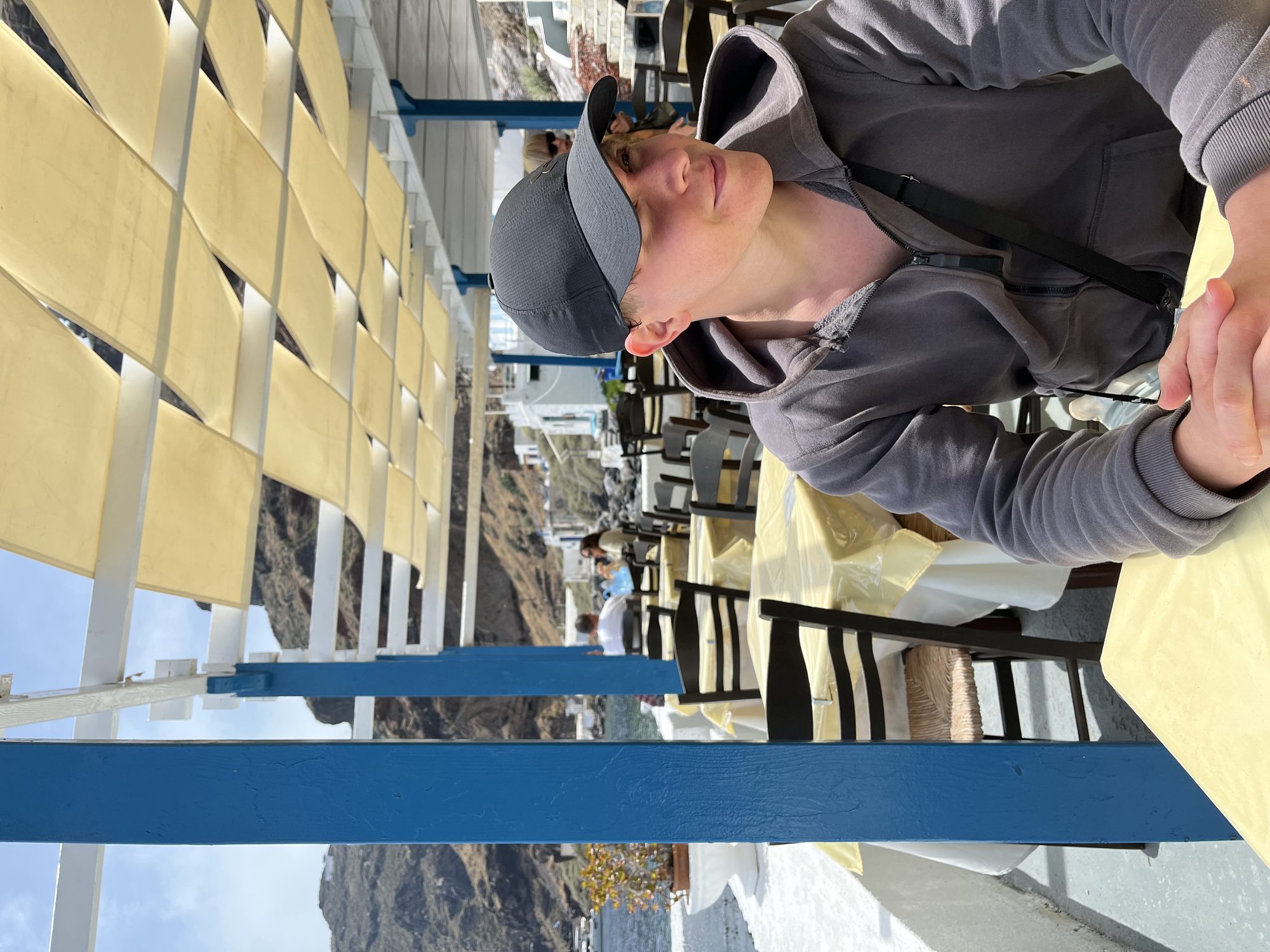
I arrived not knowing what to truly expect — not really. You see the pictures. You think you've prepared yourself. And then you step out in the early morning and the caldera is just… there. Enormous. Real. The kind of thing that makes your brain momentarily refuse to process what your eyes are looking at.
The hike nobody should skip
The Fira to Oia hike is 9 kilometres along the caldera rim — one of the finest walks in Europe. Three to four hours on foot, the sea below you on one side and the island stretching out on the other. Ancient ruins appear as you walk. Windmills. Churches. A village you did not know was there. At the end of it: Oia and the most famous sunset in Greece.
It costs nothing. It is the best thing on the island. Most people skip it because they are on the bus between towns. Do not be most people.
The food is expensive, but the wine is exceptional. Santorini's Assyrtiko — grown in volcanic soil in a vineyard training style found nowhere else on earth, the vines wound into low wreath shapes to protect against the Aegean wind — is one of Europe's great white wines. It has been produced here for over 3,500 years. A wine tasting at a caldera-edge winery at sunset costs under €30. It is not a tourist novelty. It is a serious wine from a serious tradition.
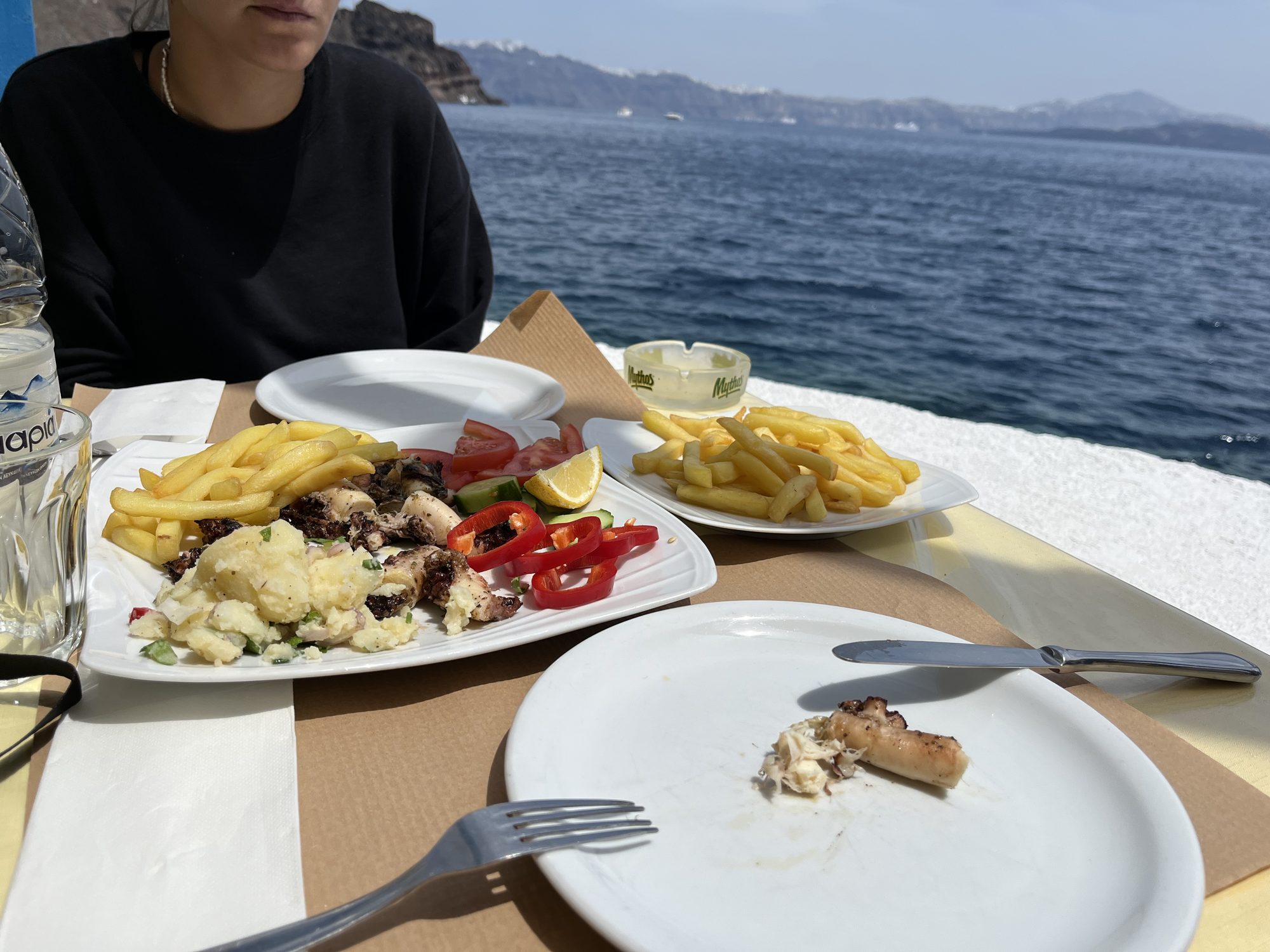
And the food itself — eaten with that view — is something else entirely. Grilled octopus with the caldera stretching out behind it. Fresh seafood at a waterfront table that costs less than you'd expect. The setting does something to the flavour. Or maybe the flavour just earns the setting. Either way — it works.
The secret most visitors miss entirely
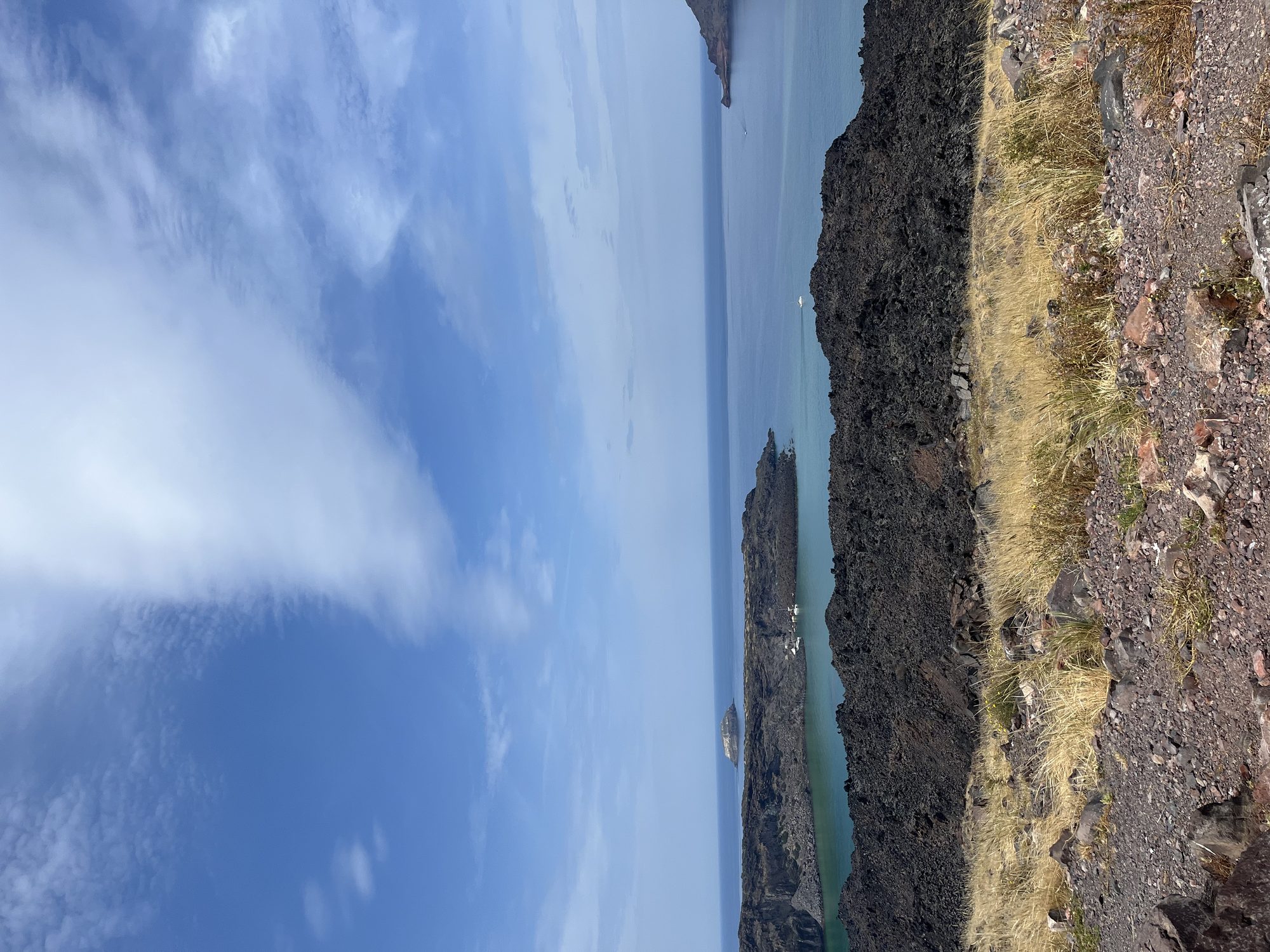
Then there is Akrotiri. A Minoan city, preserved by the volcanic eruption of approximately 1600 BCE, excavated from beneath the southern end of the island. Archaeologists have called it the Pompeii of the Aegean. You can walk through it. See the frescoes. Understand the civilisation. It may have inspired the legend of Atlantis. Most people who visit Santorini every year never go near it.
This is not Santorini's failure. It is the failure of the Instagram itinerary — which reduces an island with 4,000 years of extraordinary history to a single viewpoint and a sunset. The island is offering you far more. Most visitors simply do not collect it.
The honest Santorini downsides
The crowds and the cost. On July 23rd, 2024, 11,000 cruise ship passengers disembarked in Santorini in a single day. The island has a permanent population of around 20,000 people. The municipality issued a warning for residents to remain indoors. That is the island at its worst — and it happens regularly in peak season.
Accommodation with a caldera view starts at €400 a night. The Instagram version — the private pool, the cave suite, the sunrise in perfect solitude — starts at €800. This is the experience sold to the world. It is not the experience of most visitors. Including me. And I still found the island extraordinary.
How many days do you actually need in Santorini?
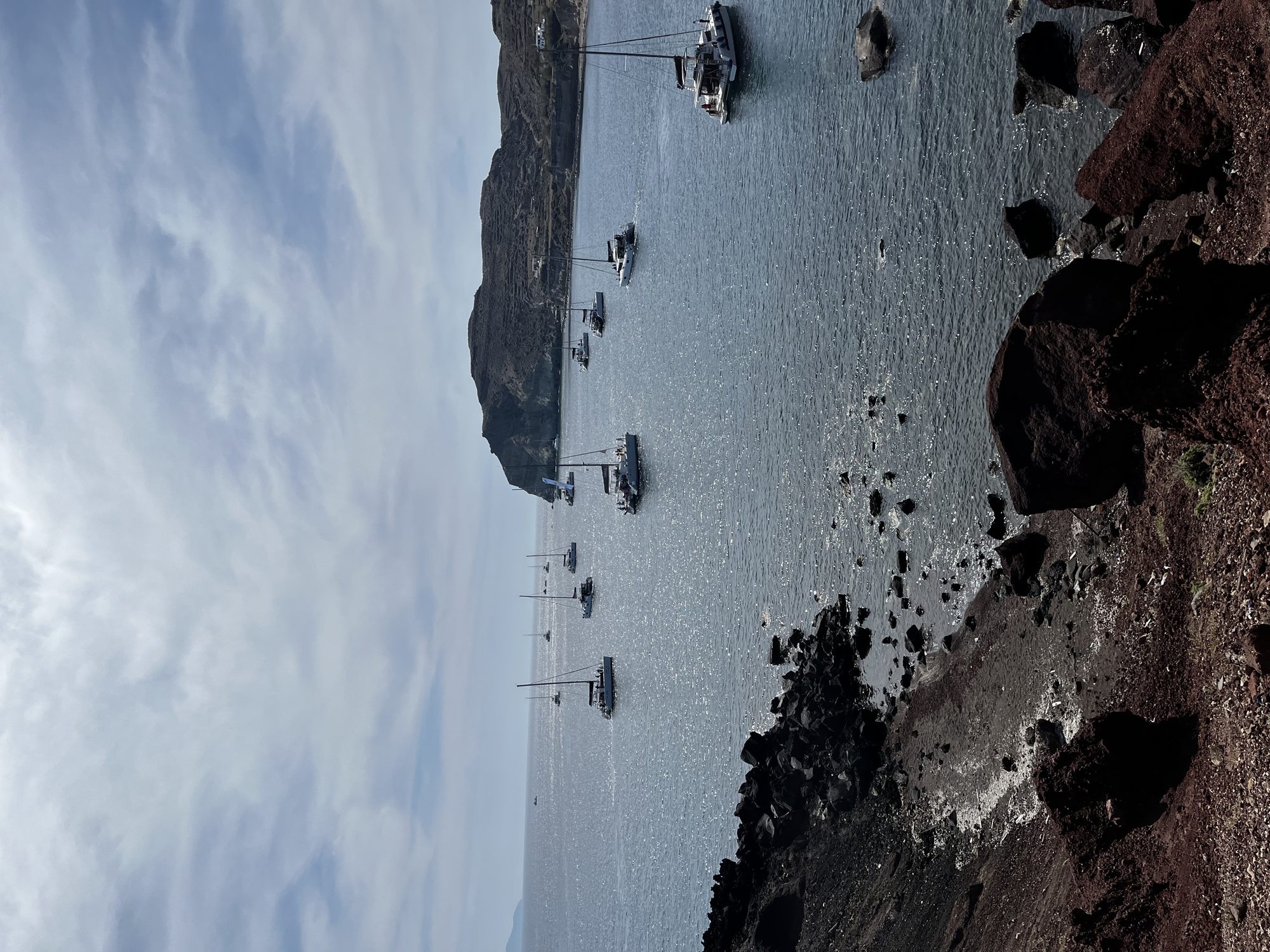
Three nights is the minimum. Four is better. Five is the upper limit for most people. Day one is your arrival shock — the ferry into the caldera, the first walk along the rim, the Oia sunset that earns its hype. Day two is the Fira-to-Oia hike, which is the single best thing on the island and which most visitors skip entirely. Day three is Akrotiri, a winery at sunset, the Red Beach if you have the legs. By day four you're either taking the ferry to another island or letting the rhythm slow down on purpose — which Santorini, surprisingly, lets you do.
Anything past five nights and the romance starts to flatten. Santorini is not built for slow living. It is built for the moment you arrive, the day you walk it, and the night you sit at the caldera with a glass of Assyrtiko and think about your life. Stretch it past that and you start noticing the cruise ships more than the cliffs. Three to four nights. Then go.
The Real Comparison: Five Honest Categories
Who Should Choose Which
Choose Santorini if this is your first trip to Greece. If you want one image — one feeling — that stays with you for the rest of your life. If romance is the goal. If you hike. If wine matters to you. If you are the kind of person who wants to understand a place, not just photograph it. Santorini is irreplaceable for all of these people. And there will always only be one Santorini.
Choose Mykonos if you have been to Greece before and want something different. If nightlife energises rather than drains you. If beach days are the whole point. If you are travelling with a group that wants different things — the beaches and the architecture keep everyone happy. If you want to feel cosmopolitan rather than awe-struck.
Choose both if you have a week and a budget that stretches. The ferry between the two takes three to four hours and they complement each other almost perfectly. Santorini for the first two or three days. Mykonos for the last two or three. Start with beauty. End with energy. You will not regret either.
"Mykonos sells you energy. Santorini sells you beauty. Most people, if they're honest with themselves, know which one they need more."
How to combine Mykonos and Santorini in one trip
If you have a week and you're trying to do both — which you should, if the budget allows — the logistics are simpler than they look. The ferry between the two islands runs daily from May through October. Two operators worth booking: SeaJets for the fastest crossing (around 2 hours, more expensive, less stable in wind), and Blue Star for the slower conventional ferry (3 to 4 hours, cheaper, more reliable on rough days). Book ahead in July and August — the high-season boats sell out, and turning up at the port without a ticket is a way to lose half a day to a port hotel you didn't plan for. Bring motion sickness pills if you're sensitive. The Aegean is not always polite.
Timing and accommodation: aim for May or early October on both islands. Light is at its best, prices drop 20 to 30 percent versus August, and the cruise traffic eases. On Santorini, stay in Oia for the view, Fira for convenience and walkability, Imerovigli if you want the caldera at lower decibels. On Mykonos, stay in Mykonos Town if it's your first time and you want walkability and energy — Ornos or Platis Gialos if your trip is beach-focused and you don't mind a taxi into town for dinner. Book three to six months ahead in peak season. The best places fill first, and the worst places double their prices to fill in the gaps.
Both Islands — What to Know Before You Go
Santorini timing: May or early October. The light is extraordinary, crowds are manageable, and prices drop 20–30% compared to August. This alone can transform the experience.
Santorini arrival: Take the ferry, not the plane. Arriving into the caldera by sea is one of the finest arrival moments in travel. The view as you come in is worth every extra minute.
Santorini non-negotiables: The Fira-to-Oia hike. Akrotiri. A wine tasting at a caldera-edge winery. Skip these and you have not done Santorini — you have done the Instagram version of it.
Santorini food tip: Leave Oia and Fira for dinner. Head to the village of Pyrgos instead. The prices are a fraction of the famous spots and the food is genuinely better.
Mykonos getting around: Rent a car or scooter. The island has thirty-plus beaches and the best ones are not walkable from town. Without your own transport, you miss most of what Mykonos actually offers.
Mykonos non-negotiable: Visit Delos — the sacred island of ancient Greece, 30 minutes by ferry. One of the most significant archaeological sites in the Mediterranean, and almost always overlooked by people who came for the beach clubs.
For travellers who’d like to extend their relationship with the place — and with the people who write about it — the PONTUS community runs a private travel membership. Read about the community side →
Mykonos rates bite hardest in season. Much of that is the booking system, not the island — see who actually owns online travel before you pay it.
The Verdict — And Why It Matters
Here is what I know for certain. Santorini surprised me. I expected a beautiful island with a famous view. What I found was an island that made me feel something — something I did not expect and did not fully understand until I was back home trying to explain it to someone who had not been.
The caldera does something to you. Standing at the edge of it — looking out over this vast, ancient, geological thing that existed for thousands of years before any human ever looked at it and called it beautiful — something shifts. It is not just a view. It is perspective. And perspective, frankly, is worth every euro of the flight and every hour of the crowded bus.
Mykonos is not lesser for any of this. It is genuinely great at what it does. But what it does — beaches, nightlife, cosmopolitan luxury — can be found in other places. Santorini cannot. There is and will always only be one caldera. One Oia at dawn before the cruise ships arrive. One moment where you are standing 400 metres above the Aegean Sea on the rim of an ancient volcano and you simply cannot believe you are where you are.
If you can only go to one — go to Santorini. If you can do both — do both, but start with Santorini. End with Mykonos. Let the beauty come first. Let the energy be the celebration of having seen it.
"The question is not which island is better. The question is which island is better for you. But if you have never been to Greece — I will answer it for you. Santorini. Do not look back."
If you read this all the way down, there's a fair chance you've been somewhere too — and you have your own version of what just happened in this piece. I want to read it. I read every story that comes in, and I write back. The pieces that earn it go live here with your name on them, your photographs, your verdict.
See also: both islands turn up whenever "overrated" is argued — here's where they land in the most overrated destinations, an honest verdict.
Everyone should get to
experience this.
This is why I started PONTUS. We all live one life — and everyone should have the chance to stand at the edge of the Santorini caldera. Or dance until sunrise on a Mykonos beach. Or both. We're a community of people who believe travel should be a way of life, not a luxury reserved for the few.
- For those who want to be part of a community of like-minded people
- For those who don't want to break the bank just because they want to see the world
- For those who are ready to put the effort in and build their own income from the travel industry
Whatever you want, whatever you choose — PONTUS is here.
Join the Community