You should go to Lyon. Here's why.
If you only have one trip to France in you, the obvious answer is Paris — and Paris is fine. Paris is more than fine. Paris earns its reputation. But there is a particular kind of trip that almost nobody from outside Europe takes, and it is the one I would now argue for, hard, every time: skip a return visit to Paris and give those days to Lyon instead.
If you have already decided you are going — and you should — the day-by-day route is in Lyon in 3 days. What to walk, where to eat, what to skip. The piece you are reading now is the longer argument for why; that piece is the operational version. If you are still weighing Lyon against the obvious alternative, the head-to-head verdict is in Lyon vs Paris for a weekend.
Cobbled lanes. Old stone. Cafés that take their wine seriously and their tourists with a shrug. Three thousand years of history layered on top of each other inside walking distance. And — to settle the food argument once — the gastronomic capital of France. Not Paris. Lyon.
Every piece here ends with an honest call on where to actually go. New verdicts land in your inbox first. One email. No noise.
The Arrival — and the morning that decided it
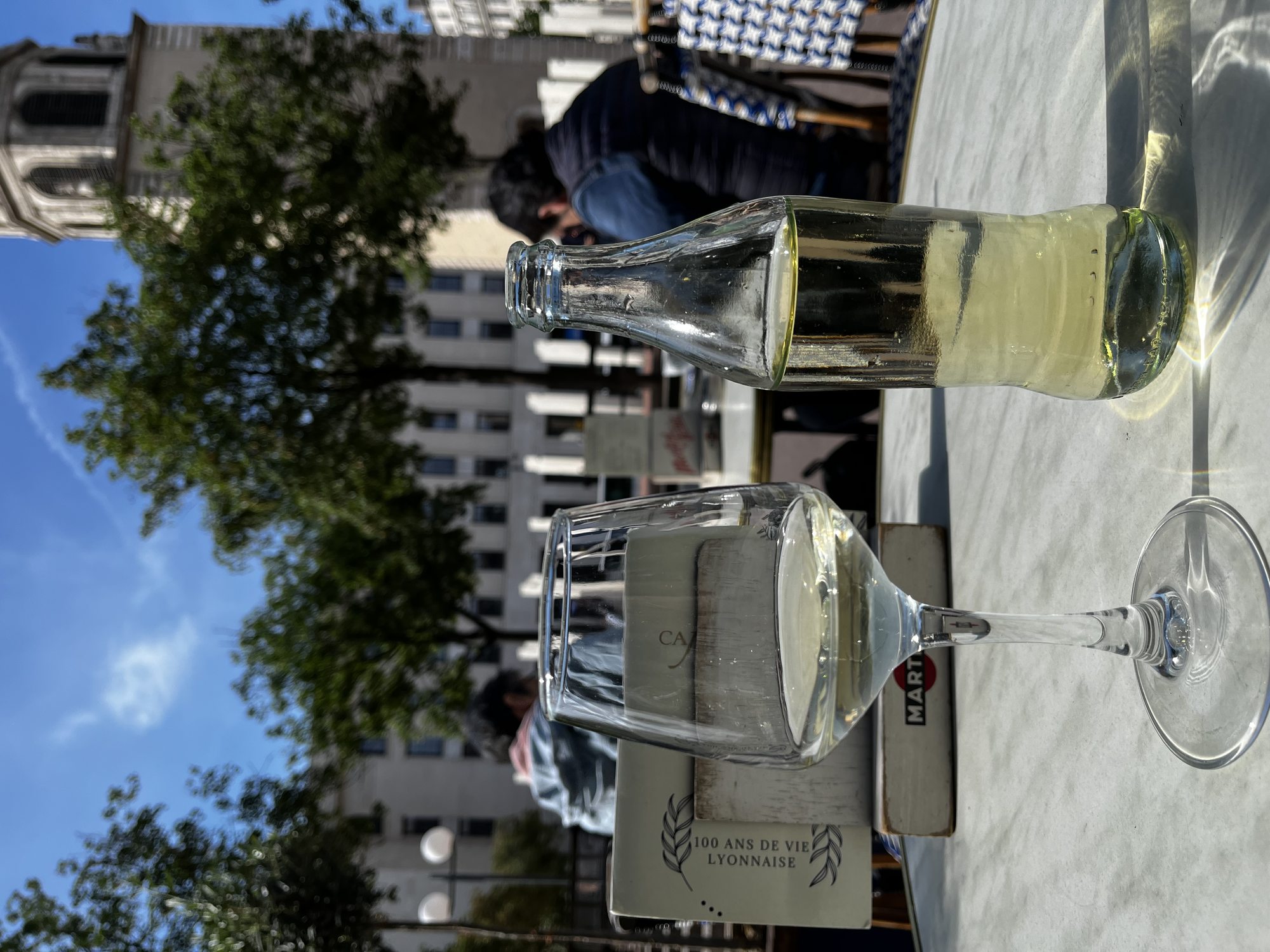
My girlfriend and I arrived on a Friday and went straight from the train station to a café terrace on the Presqu'île — the long peninsula between the two rivers that forms the heart of the city. By 8:52 AM we were sitting outside under the plane trees, the sun on the wooden table, the metro humming somewhere underneath us, a glass of something cold and bitter in front of me, and the whole weekend ahead of us.
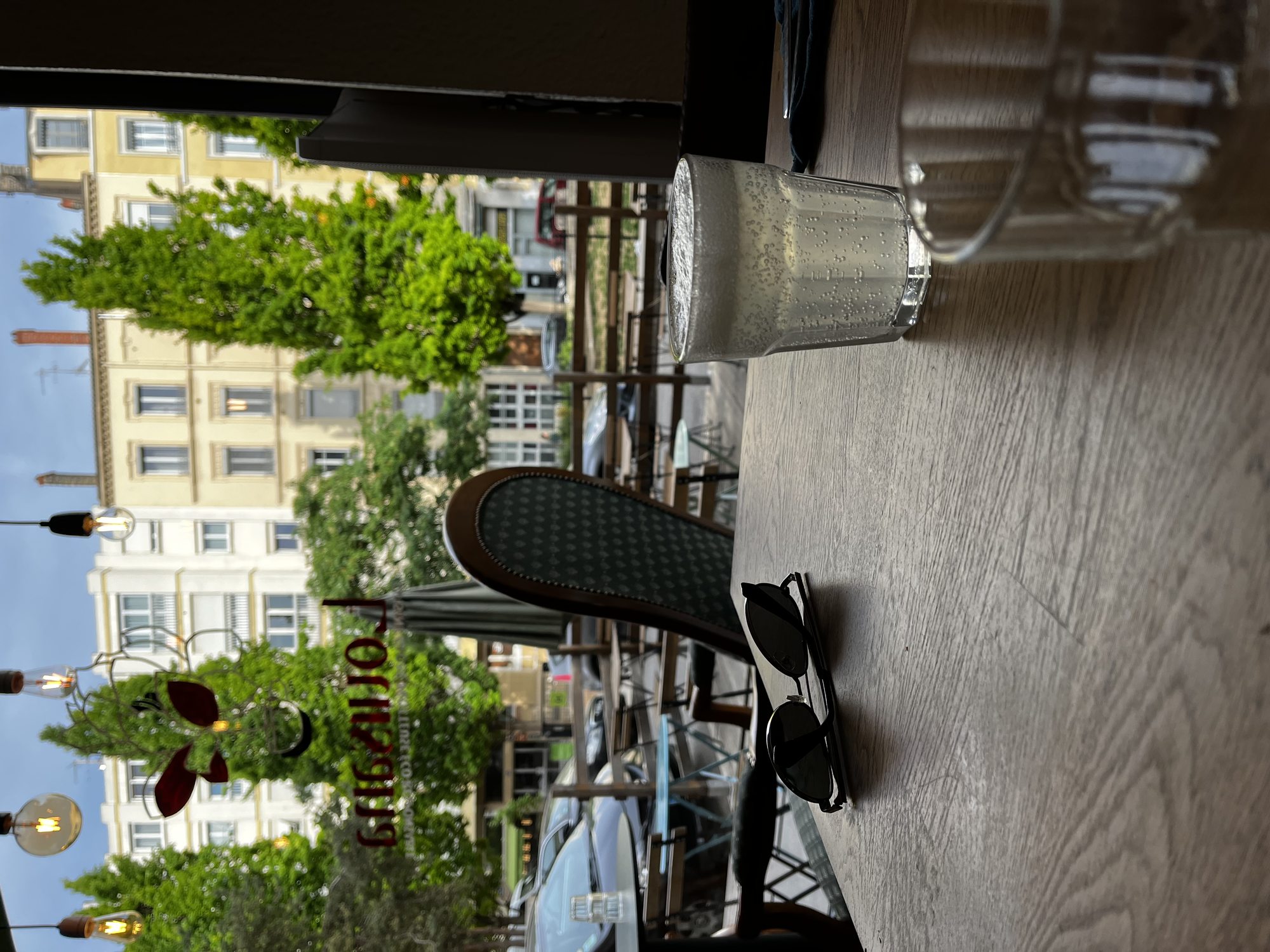
This is — to me — the entire argument for Lyon, compressed into a single morning. You can have a moment like this in Paris too, of course you can. But in Paris you will be paying €14 for that drink, the table next to you will be speaking English, and you will spend the whole sit-down very aware that you are in Paris. In Lyon nobody is performing. The waiter is not curating an experience for you. He is bringing you a drink. The drink costs €5. The square is yours.
The Honest Case Against Lyon
Let me give the argument its full credit first, because it deserves it.
Lyon does not have an Eiffel Tower. It does not have the Louvre. It does not have the Champs-Élysées. If your idea of France is the postcard list and you want to walk away with the postcard photographs, Paris is going to do that better and you should go to Paris.
The first impression is also less spectacular than Paris is. There is no equivalent to the moment you come up out of the metro at Trocadéro and see the Tower for the first time. Lyon's most beautiful views — the rooftops from the traboules, the Saône at golden hour, the basilica of Fourvière at night — make you work for them. You have to walk uphill. You have to find a passage that looks like a closed doorway and push through it. Nothing announces itself. The city does not stage anything for you.
And — full transparency — parts of the city are not pretty. The walk between the train stations is utilitarian. The eastern districts are concrete and quiet. The two airports each take an hour to reach the centre. None of that is a reason to skip Lyon. But it is a reason it is not the trip the brochures sell.
"Paris is the show. Lyon is the meal."
Now — what really matters.
Why Lyon Earns the Trip — the food argument
Lyon is officially, technically, and genuinely the gastronomic capital of France.
I know that sentence sounds like a tourism board wrote it. It was — by Curnonsky in 1935 — and it has been true ever since. The reason is not romantic, it is structural. Lyon sits at the meeting point of the dairy country to the north, the wine country to the south, the poultry of Bresse to the east, and the produce of the Rhône valley running through the middle. Paul Bocuse — the chef most responsible for modern French cuisine — was from a village ten kilometres north of the city. The first Michelin guide came out of nearby. This is the centre of gravity for serious French food and has been for a century.
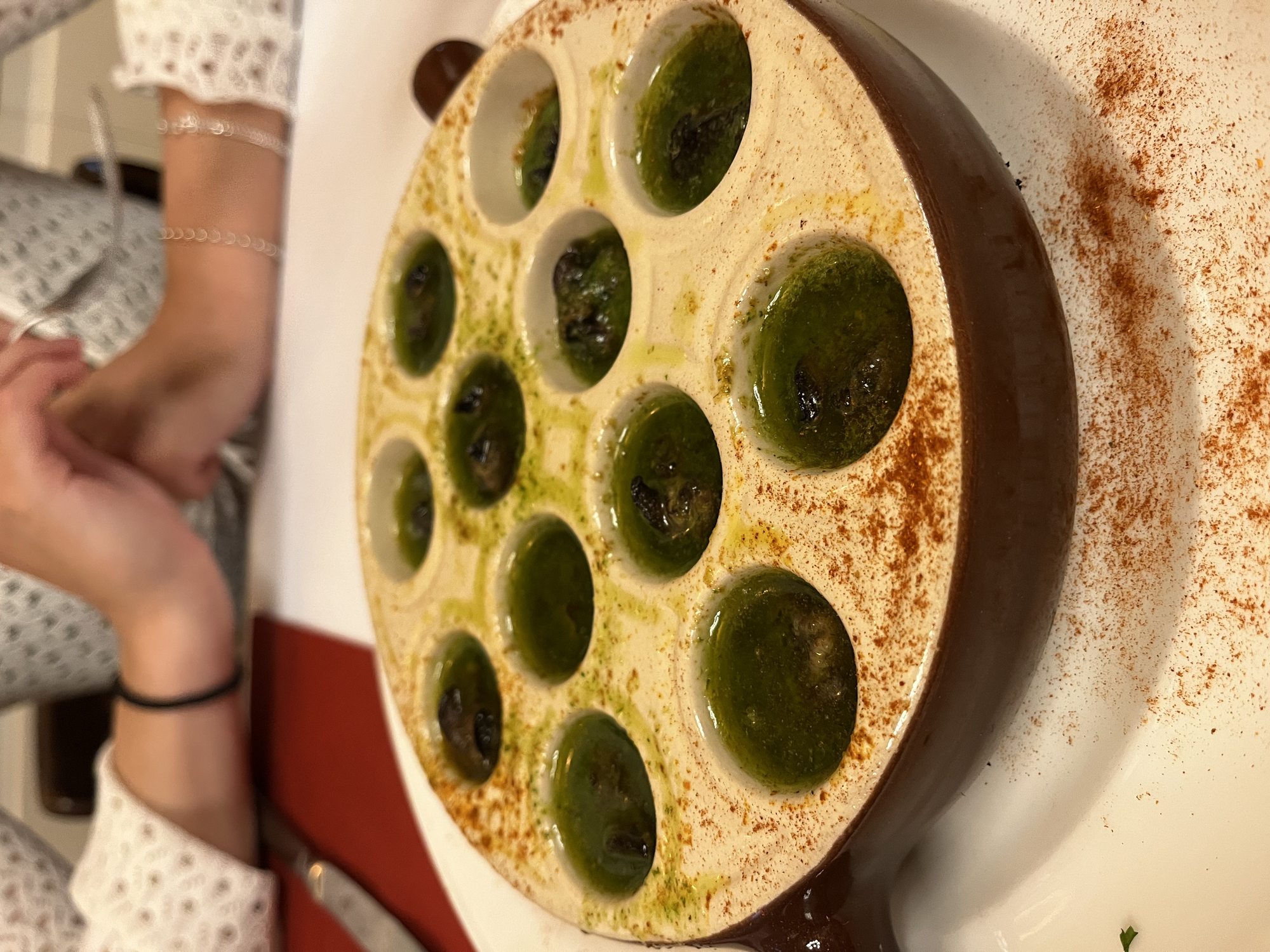
What this means in practice is that you can walk into a small, unmarked, slightly-too-warm restaurant called a bouchon — there are maybe two hundred genuine ones in Lyon — and have one of the best meals of your life for €30.
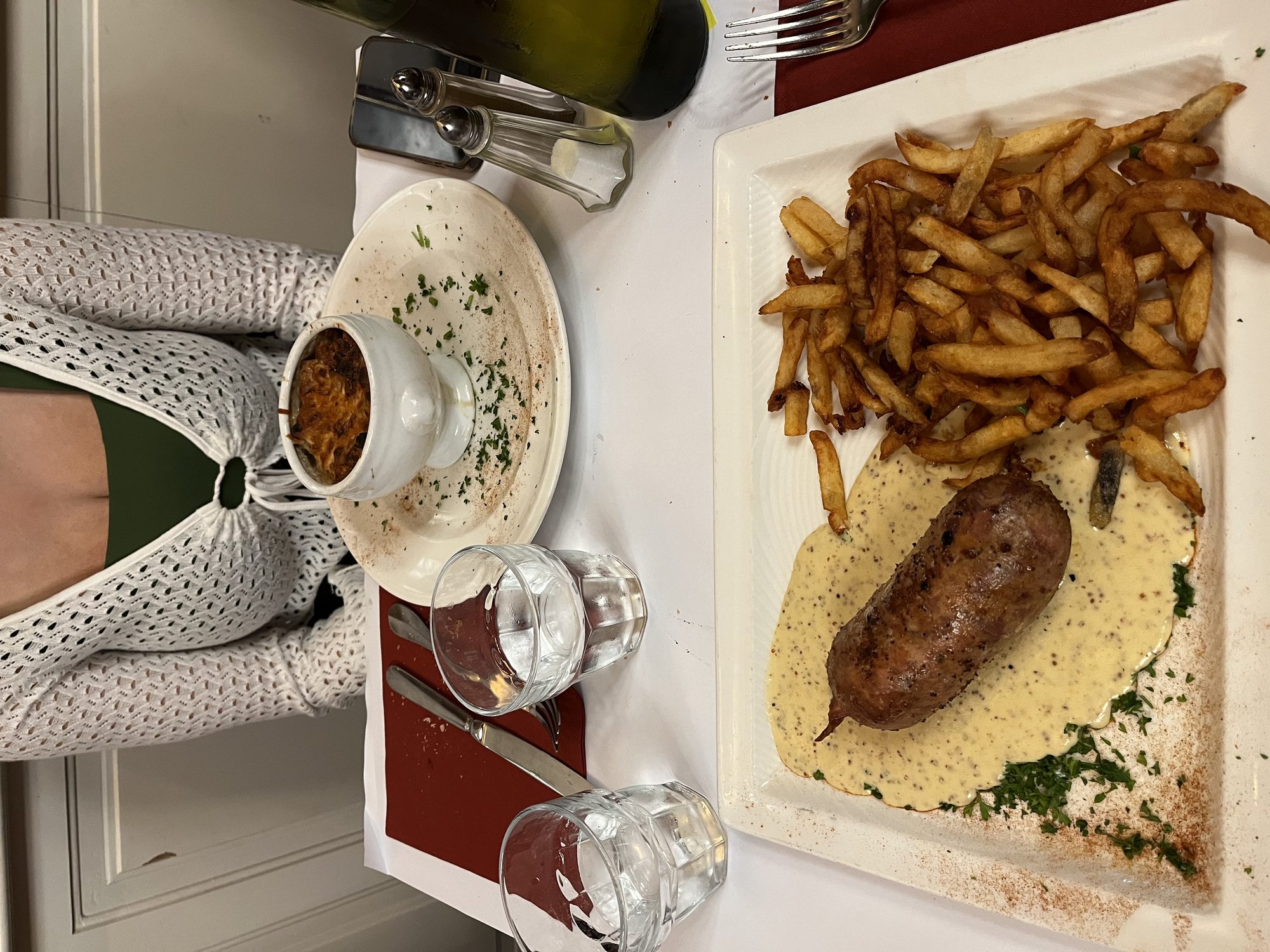
The bouchons are the soul of the city. The menus are short. The wines are local. The portions are absurd. The waiter will explain things to you in French and you will get the gist whether or not you have the language. Order the quenelle de brochet. Order the tablier de sapeur. Order the andouillette if you are brave. Order the salade lyonnaise — frisée, lardons, croutons, a poached egg you will break into the bowl yourself.
The Old City — and the passages most visitors don't find
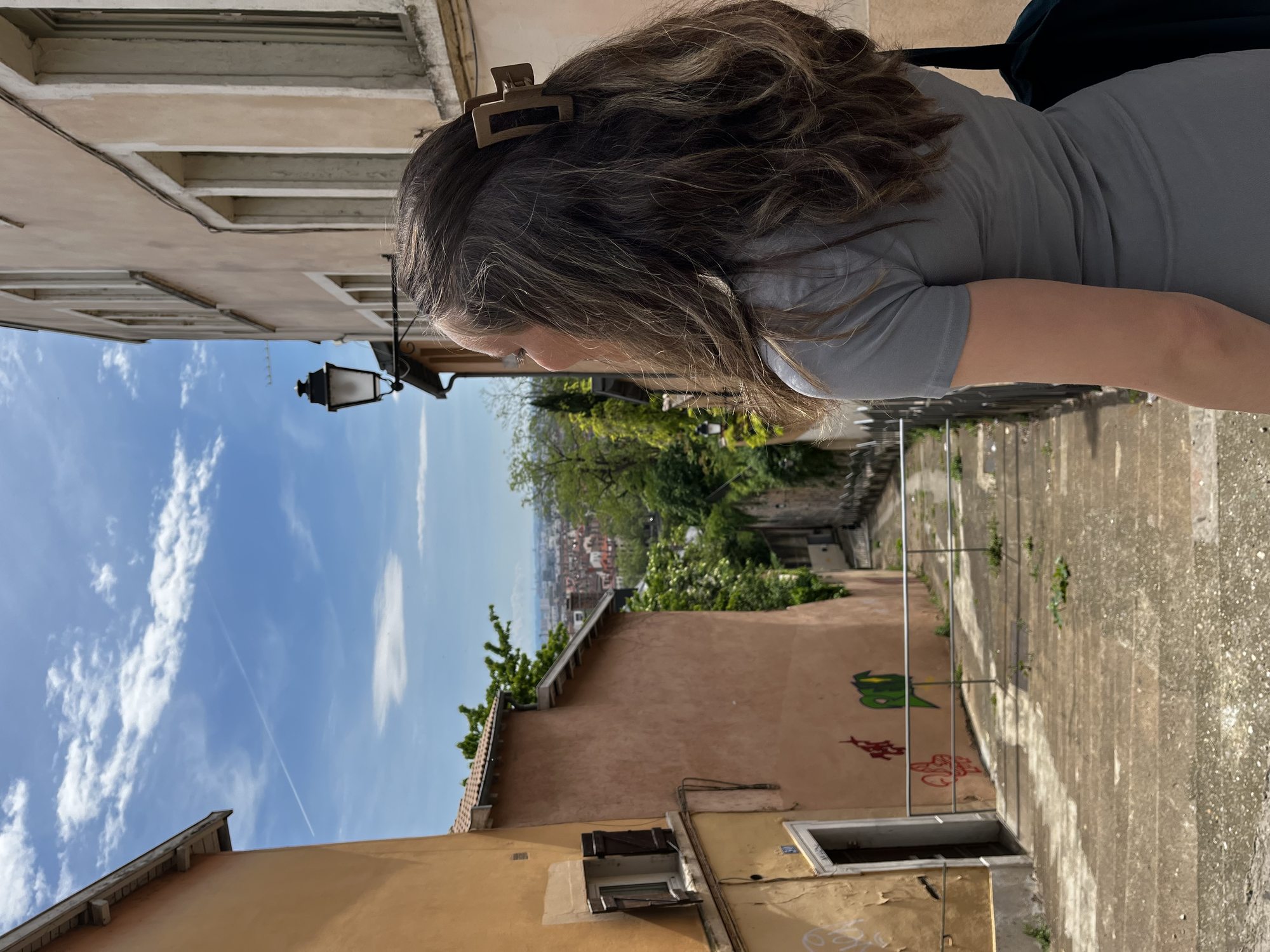
Cross the Saône and you are in Vieux-Lyon — the largest Renaissance quarter in Europe outside of Italy. UNESCO. Cobbled. Salmon-pink and ochre buildings stacked four storeys high above narrow streets. Tourists, yes, but not in Paris numbers. You can walk for ten minutes between two shops and have the lane essentially to yourself.
The thing nobody tells you about Vieux-Lyon, and the thing that makes the entire neighbourhood feel like a cheat code, are the traboules. Traboules are covered passageways that cut through the buildings — entrance on one street, staircase up, courtyard, second staircase, exit on the next street up the hill. They were built so the silk weavers of the Renaissance could move bolts of cloth between workshops without exposing them to the rain. They are still in daily use. Some are marked. Most are not. You push on a closed-looking door and find yourself in a 16th-century courtyard.
The cathedral and the astronomical clock
At the foot of the Vieux-Lyon hill is the Cathédrale Saint-Jean — a Gothic and Romanesque cathedral that took three hundred years to build, finished in 1480, and contains an astronomical clock from the 14th century that still works. The clock chimes at noon, 2pm, 3pm, and 4pm, and a small mechanical procession of saints rotates out of a panel above the dial. People stand silently around it for the four minutes the show takes. Then they go back to their day.
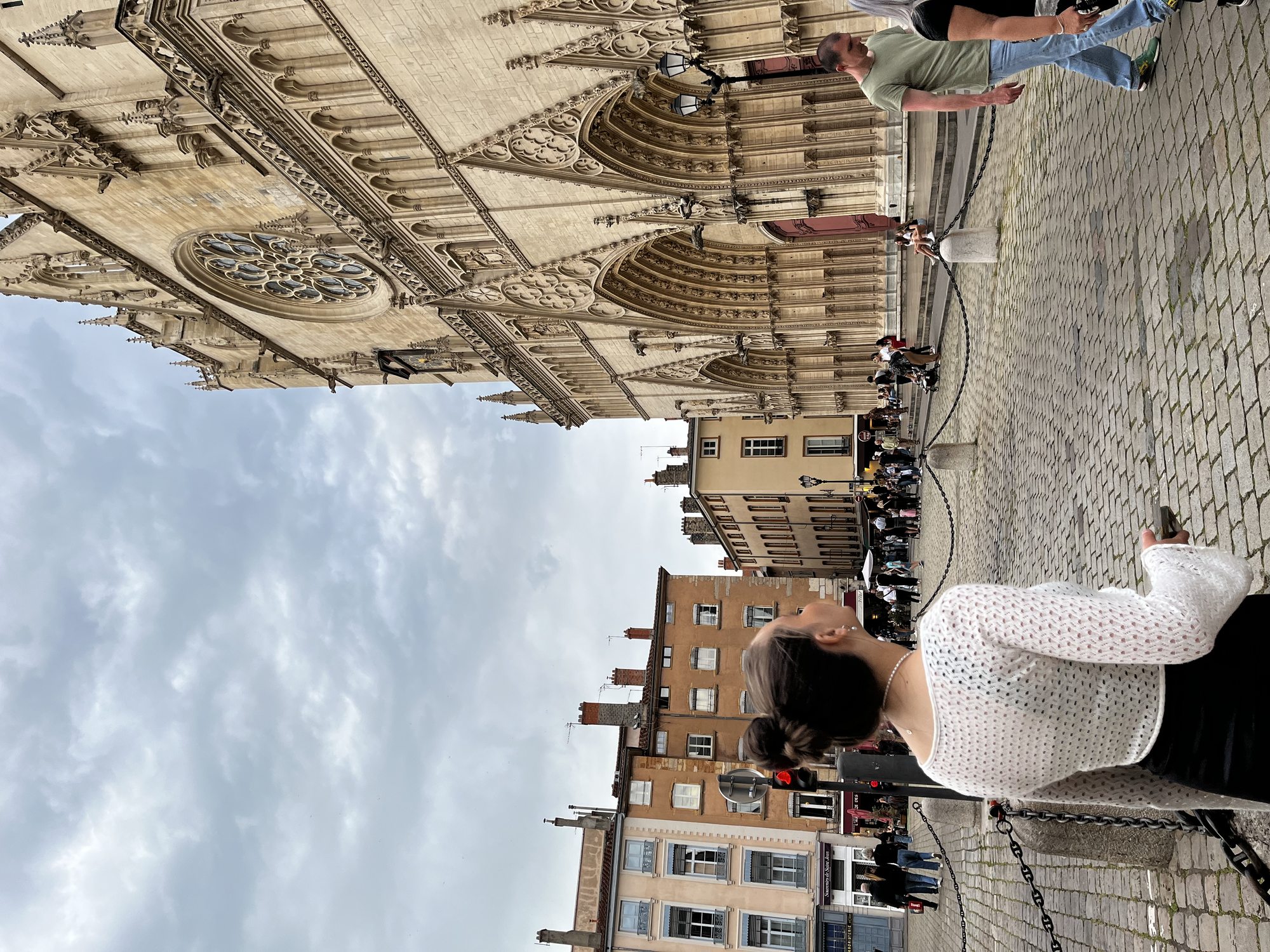
From the cathedral you can climb (the steep way) or take the funicular (the wise way) up to the Basilique de Fourvière at the top of the hill. The basilica is over the top in a way that French Catholicism rarely is — gold mosaics floor to ceiling — but the actual reason to go up is what is behind it: the panoramic view over the entire city, the two rivers meeting, the Alps on a clear day.
The bell tower most travellers walk past
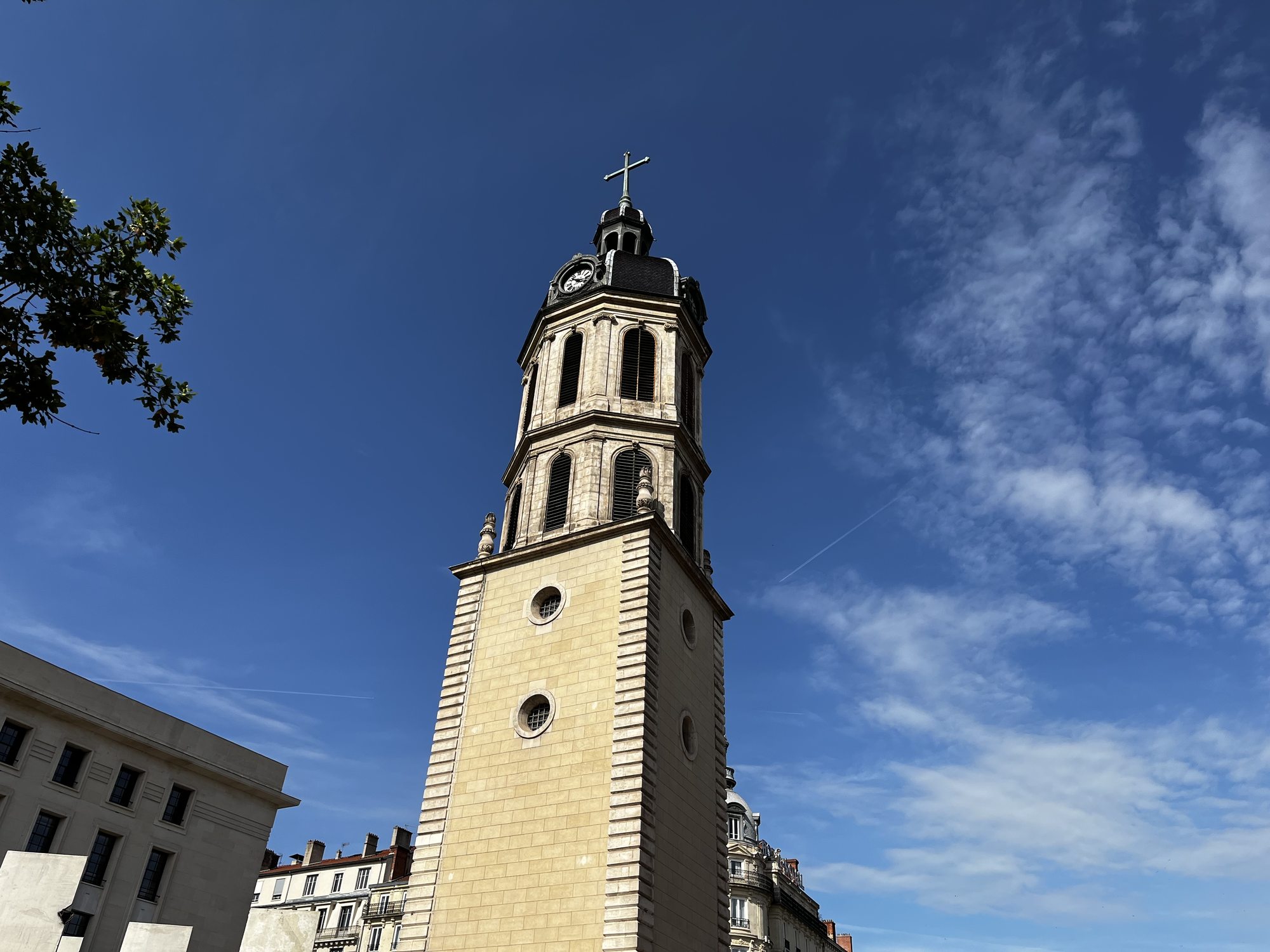
The Saône — the river you walk along
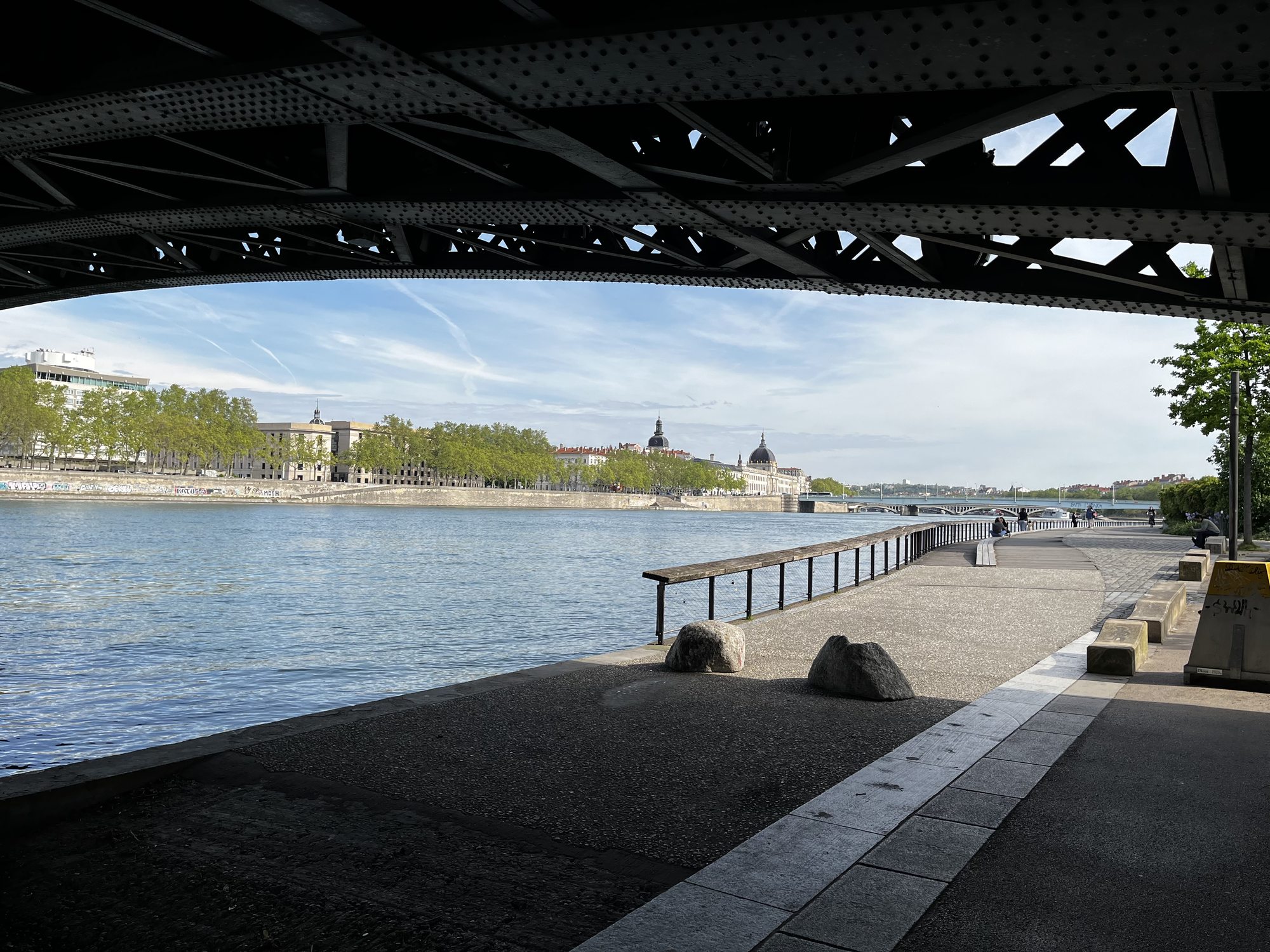
Lyon has two rivers. The Rhône is wide, fast, and lined with running paths and bars. The Saône is slower, older, prettier, and the one you should walk along at golden hour. The west bank gives you the view of the cathedral and the old town climbing the hill behind it. The bridges — and there are many — change colour as the light goes.
Parc de la Tête d'Or — and an afternoon you will not plan for
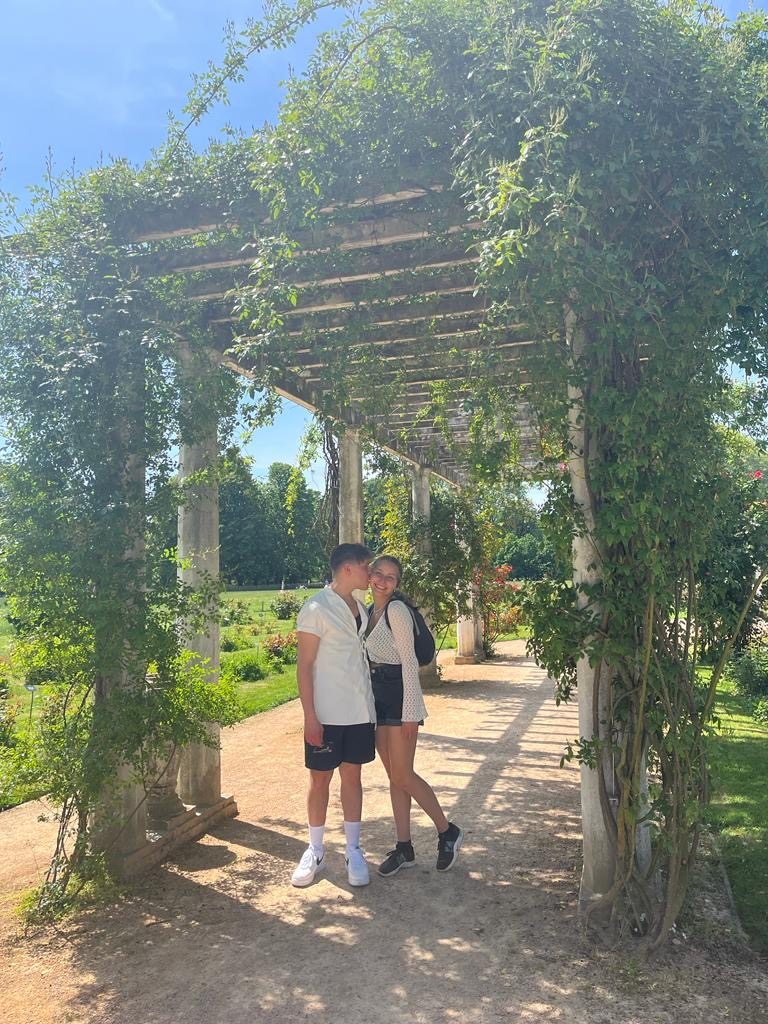
If the city wears you out — and it will — there is a 117-hectare park just north of the centre called the Parc de la Tête d'Or. It has a lake big enough to row on. It has a free zoo. It has a botanical garden. It has long pergolas covered in roses that are in bloom in May and June. It is the kind of park Parisians wish they had.
The Mid-Article Practical — the things you actually need to know
"Bouchon" gets used loosely. The real ones — the ones recognised by the Association des Bouchons Lyonnais — display a small label with a Gnafron puppet on the door. Look for it. The fake bouchons in the tourist core of Vieux-Lyon will charge you twice as much for half the food, with English-language menus and waiters waving you in from the street. Walk past them.
The real bouchons are mostly between Rue Mercière and Rue des Marronniers on the Presqu'île, and a handful in the upper Croix-Rousse. Reservations are smart on weekends. Most close on Sundays and Mondays.
The Ideal Lyon Trip — day by day
Getting there: The TGV from Paris is two hours. From Geneva, two hours. From Marseille, an hour and forty. The train is the way. Lyon's two airports both involve a one-hour transfer.
Where to stay: The Presqu'île is the most convenient base — within walking distance of everything that matters. Vieux-Lyon is the most beautiful but smaller and louder at night. The Brotteaux on the east side of the Rhône is quiet and where many locals actually live.
Cash: Most bouchons take cards now, but some smaller ones are still cash-only. Carry €100 in small bills.
Language: Less English than Paris. Learn five words. Use them. The waiters will warm up immediately.
How long: Three days minimum. Five is the sweet spot. A long weekend is enough to fall for the city; a week and you start treating it like home.
The Verdict — Go
I have been to a lot of cities in Europe. I will go back to Lyon before I go back to most of them.
It is not the obvious choice. It is not the trip your friends will be impressed by when you tell them. They will say "oh, why didn't you do Paris" and you will say "I did, three years ago, and I want to tell you about Lyon" and you will lose them halfway through because the bouchons mean nothing to them and the traboules mean less. Fine. They can keep going to Paris. Lyon is what people who go back to France a third or fourth time start to look for. It is the France that the postcards leave out.
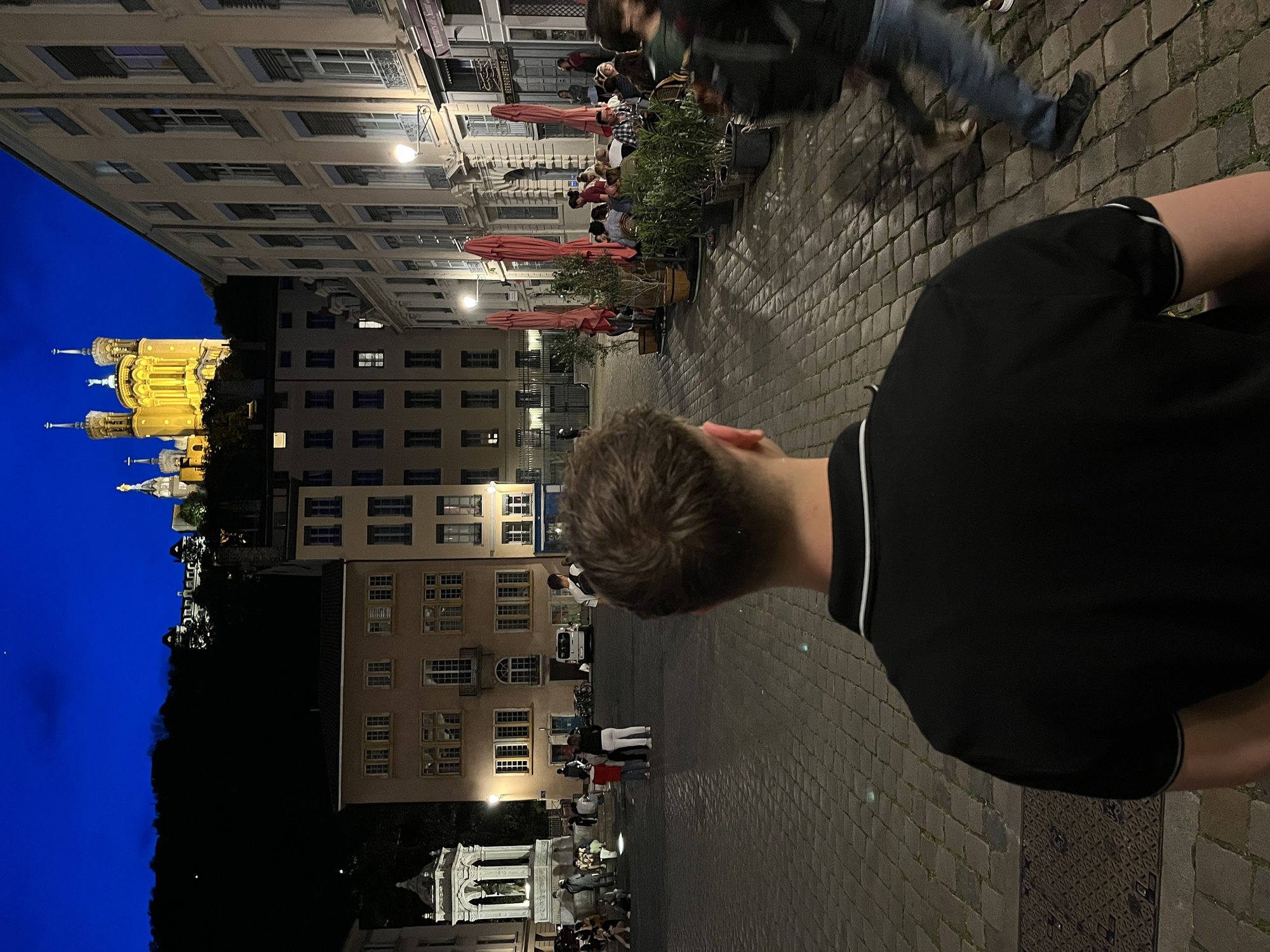
Stay on the Presqu'île. Eat at one bouchon a day. Climb the traboules. Walk the Saône at sunset. Time yourself for the cathedral clock at noon. Order the andouillette only if you are brave. Lose an afternoon at the Tête d'Or. End at Place des Terreaux. Go home and start planning the second trip.
"Paris is the show. Lyon is the meal."
If you want a comparison piece on the other side of European travel — the islands-versus-capitals problem — the Athens vs Santorini guide covers the same instinct in a Greek context. The pattern repeats. The capital is always the trip. The famous photo destination is always the dessert.
And for the version of this argument that lives entirely outside the obvious European circuit — a place most travel itineraries never reach — read I'm Armenian. I Just Visited Armenia for the First Time. It is the most honest "what nobody tells you" piece on PONTUS and it is the closest companion to this one in spirit.
And if you want the Greek version of the "France isn't only Paris" argument — the island that nobody puts on the postcard, that turns out to be the more interesting trip — read Corfu — the Greek island that doesn't feel Greek. Same instinct. Different sea.
And if you cannot fly to Lyon this year, the closest your continent has to a Lyon — the small French old city, the cobblestone, the unhurried terrace, the chalkboard menu — is sitting two hours from Montreal. I wrote about it in Quebec City — Europe without the flight. Lyon's North American cousin, in spirit and in food.
One practical note before you book. Lyon’s best hotels are small and independent, and what they charge on the big sites is shaped by the two companies that own those sites. Read who actually owns online travel — and why it costs you first.
If you read this all the way down, there's a fair chance you've been somewhere too — and you have your own version of what just happened in this piece. I want to read it. I read every story that comes in, and I write back. The pieces that earn it go live here with your name on them, your photographs, your verdict.
This is what PONTUS
is built for.
A weekend in Lyon. A boutique hotel on the Presqu'île. Two-hour TGV from Paris. Andouillette and Beaujolais on a Friday night. This is the kind of trip that should be a weekend, not a once-a-decade investment. PONTUS members access pricing on hotels, vacations and travel experiences that the public booking platforms cannot match — through a closed travel club that has been in place for over a decade.
See How It Works