Yes — without question. Give it 4–6 hours, and in July or August go at sunrise.
The full verdictYes, it is. But please, be mindful of a couple of things.
Pompeii is a complete Roman city, buried whole by Vesuvius in 79 AD, dug out of the ash centuries later. You walk through it on the same stones the citizens walked. There is nothing else like this anywhere in the world. The lines above tell you how to actually do it without ruining the experience for yourself. If you are choosing between Pompeii and its quieter sibling under the same volcano, the Pompeii or Herculaneum verdict covers the comparison in detail — and the broader case for basing in Naples to reach both is in the Naples as your Amalfi Coast base piece.
Every piece here ends with an honest call on where to actually go. New verdicts land in your inbox first. One email. No noise.
My cousin and I got an Airbnb to the south of Naples, in the small town of Torre Annunziata. The town is right on the doorstep of the ancient city of Pompeii. The walk from our Airbnb to Pompeii was about 15 minutes — so one morning we decided to visit the whole thing. We set off early and walked to the archaeological park.
The way it works there is that you are given a cell phone which serves as your own digital guide. It shows you where the various checkpoints are in the old city, and for each of those checkpoints you can click on them when you're there and read up on the history. This way, you can take as much time as you want and explore Pompeii at your own pace.
Before my little dive into what I loved about it — here's what you should be mindful of when visiting Pompeii.
Before You Go — Read This First
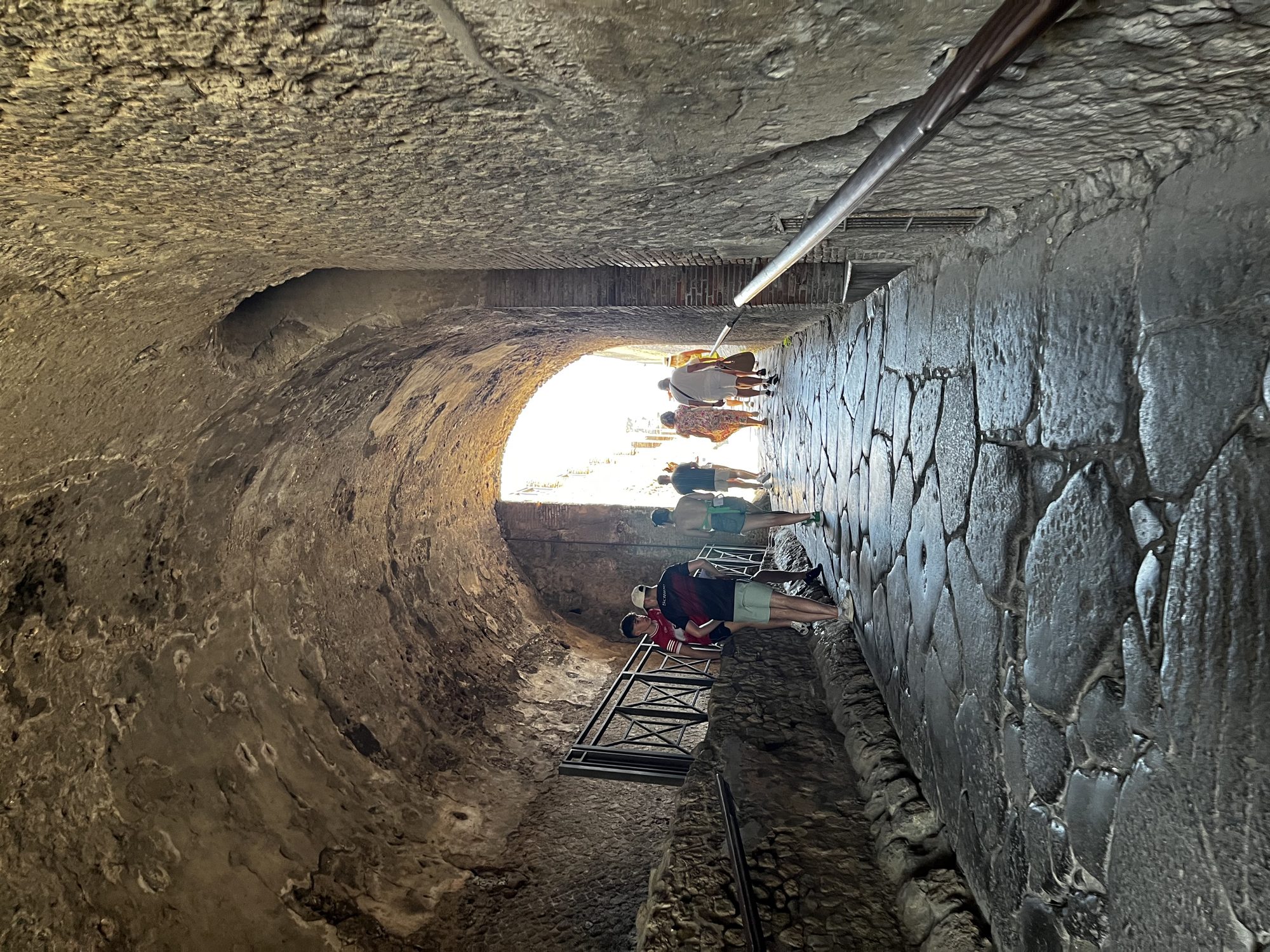
Going in the summer is rough. Summers in Italy are hot — I mean very hot. My cousin and I were there in late July and even as two fit men, after 6 hours of walking in the ancient city, we were absolutely destroyed.
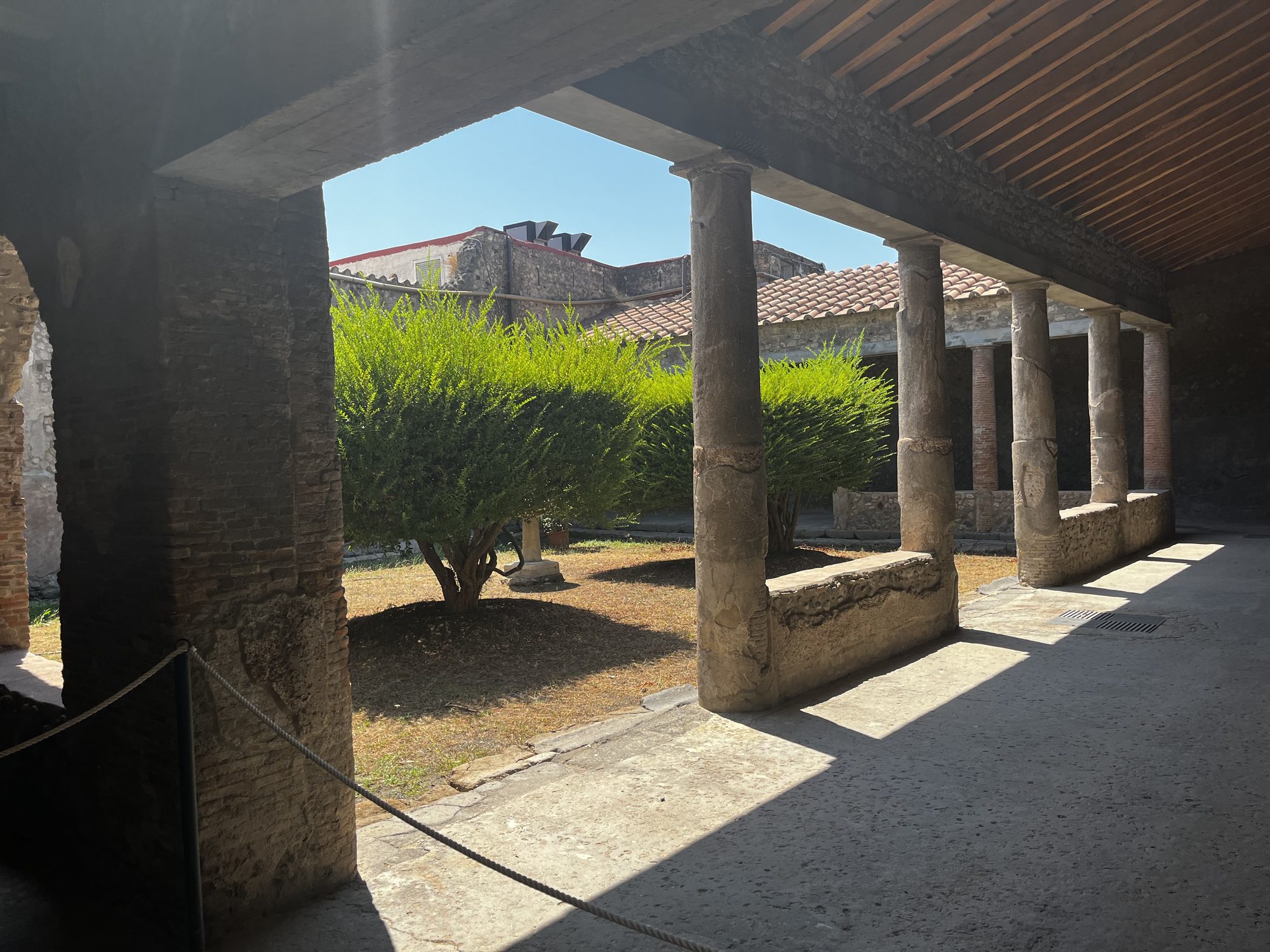
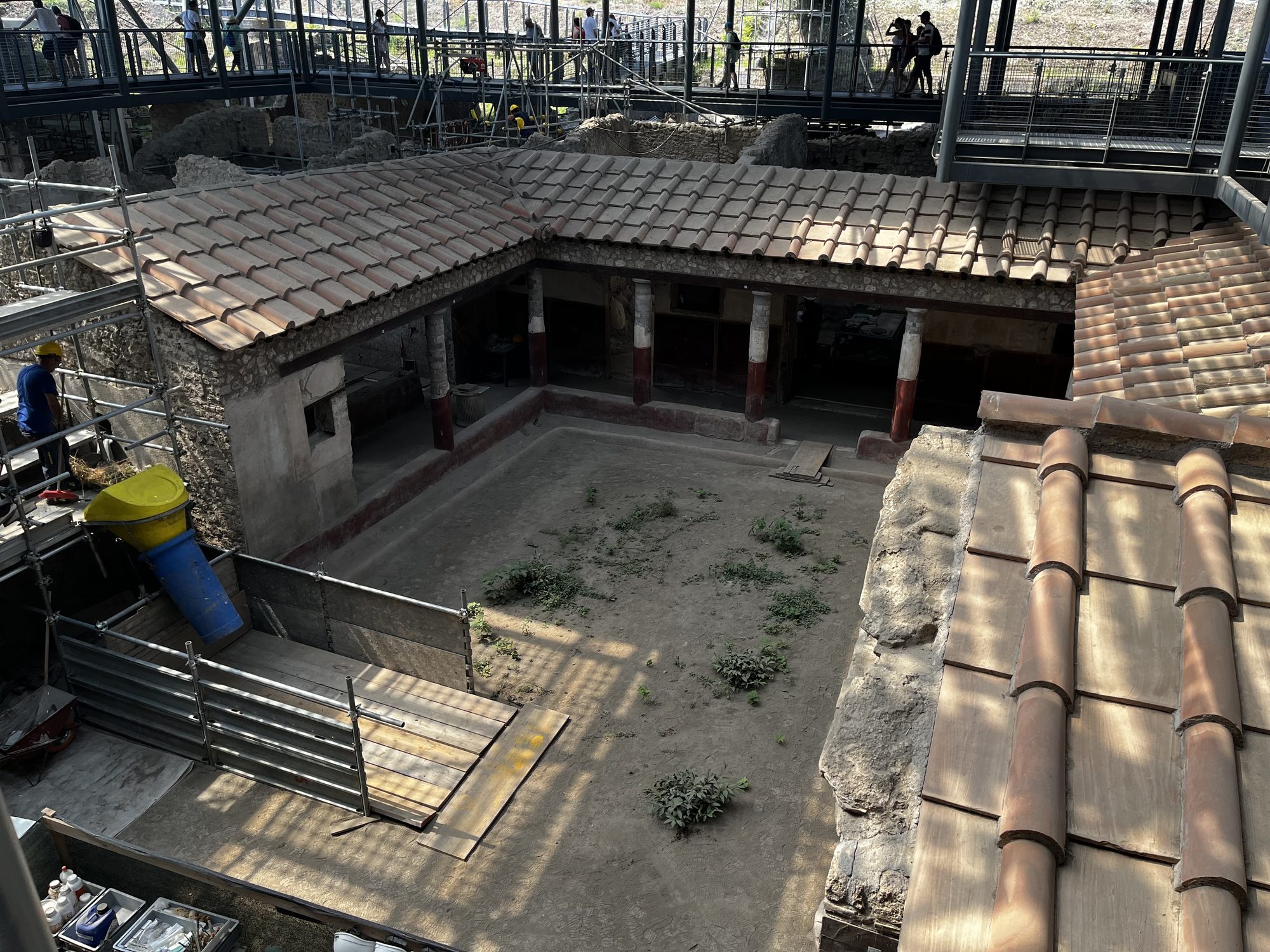
Which ties into the next point. You are visiting the ruins of Pompeii. Ruins. As in, most of it is collapsed — roofless. When you are under blazing sun and intense heat, your instinct is to find shade and recover some energy. That's the problem with visiting ruins — there's no real shade.
Most of the blame is on my cousin and I. We decided to go to Pompeii in late July. We decided to see all of it. We decided to maybe not wear the best hats during our visit.
If you go to the ruins of Pompeii in the summer with no sunscreen, you will be as ruined as the city is. The sun is unforgiving. The heat will be too much — and it will take away from your experience.
Also — you don't need to look nice for anybody. You're walking among the ruins of an ancient city, not at a gala. Dress for rough terrain. You won't be walking on straight, level roads. I have seen people get intense cramps to their legs and feet because they dressed for looks rather than for comfort or sport.
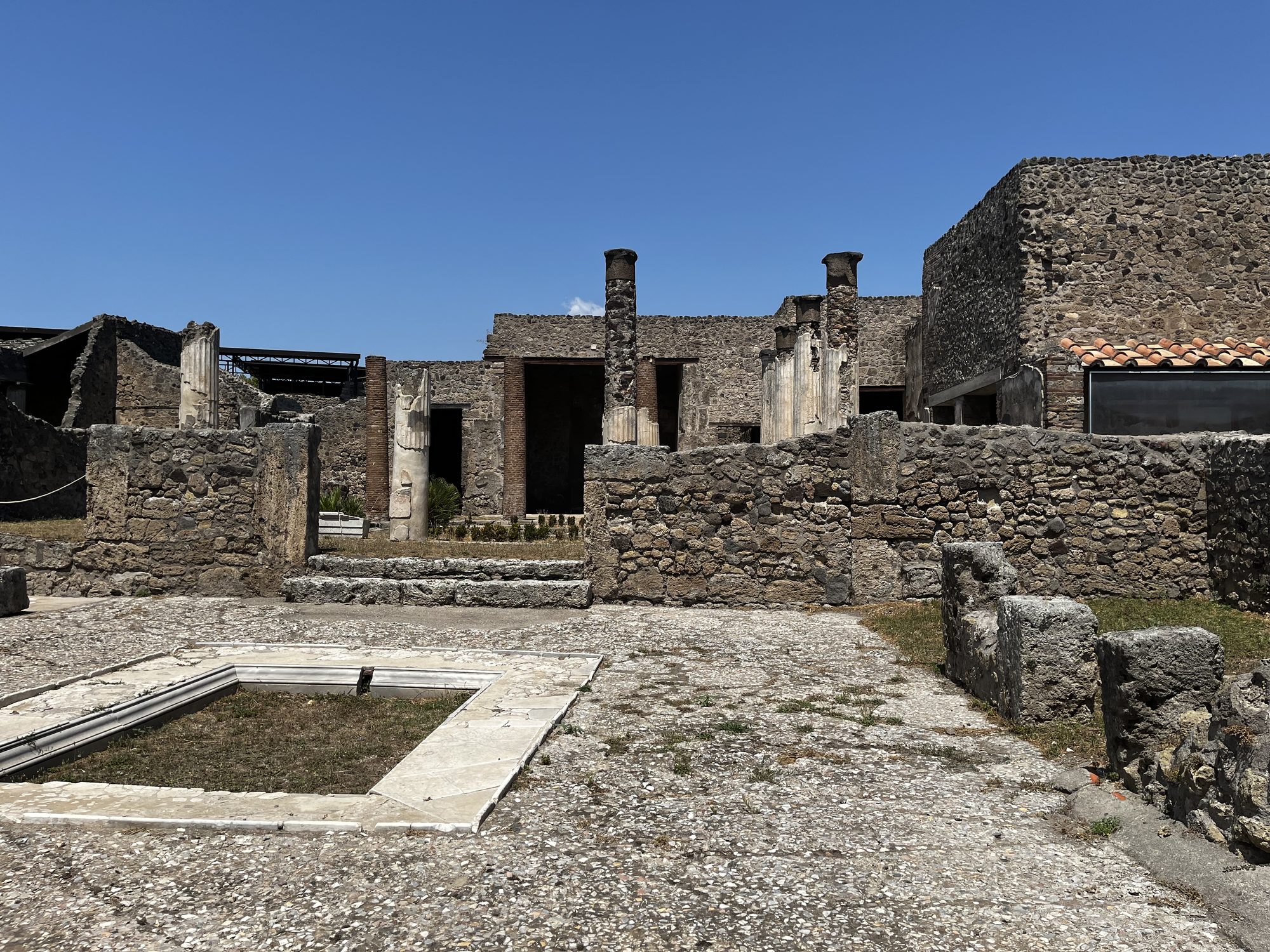
Now — What Really Matters
It's absolutely incredible.
There's a reason my cousin and I spent 6 hours of continuous walking through intense sun and heat — and that's because it's absolutely breathtaking to walk among that ancient city.
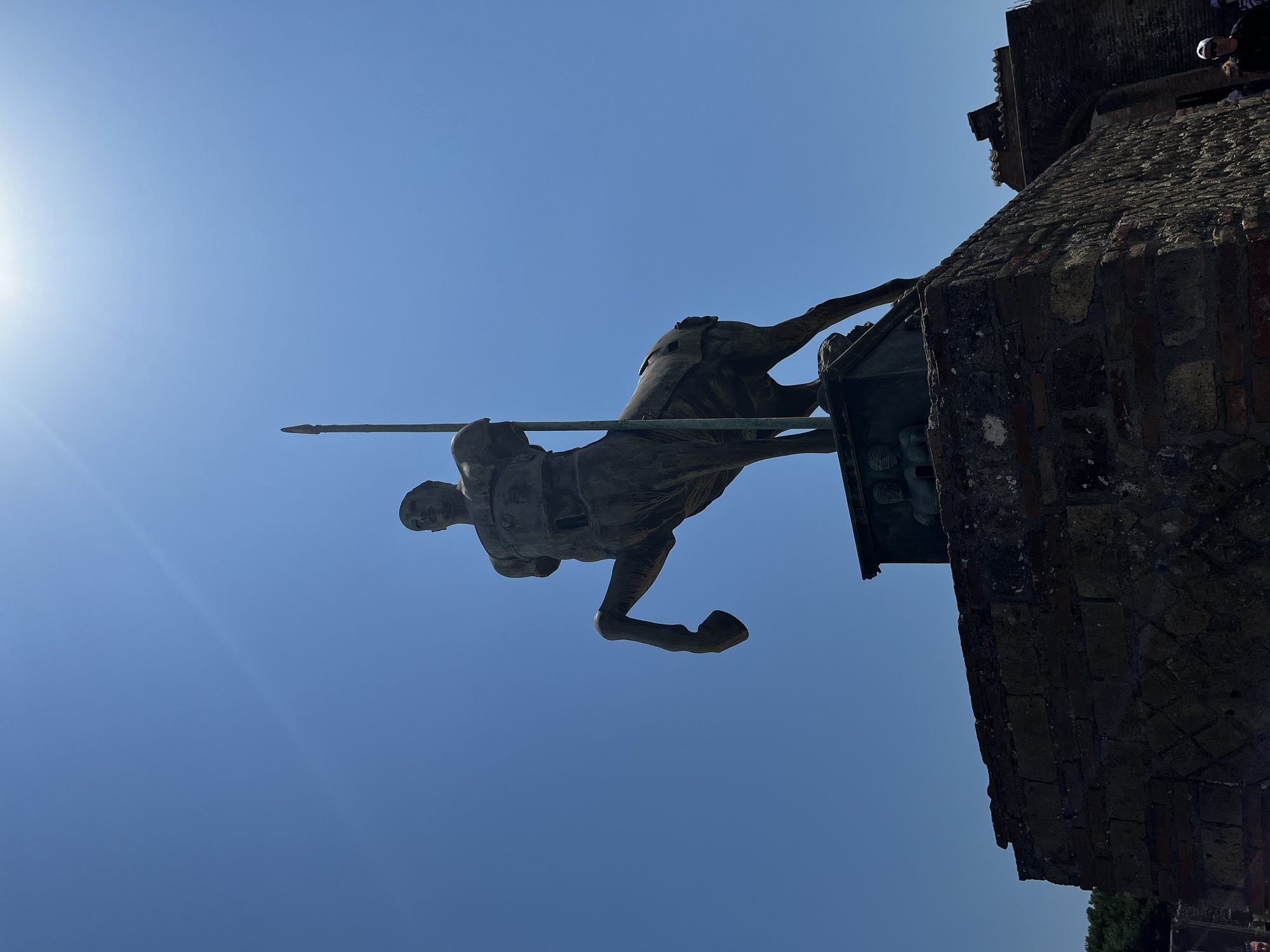
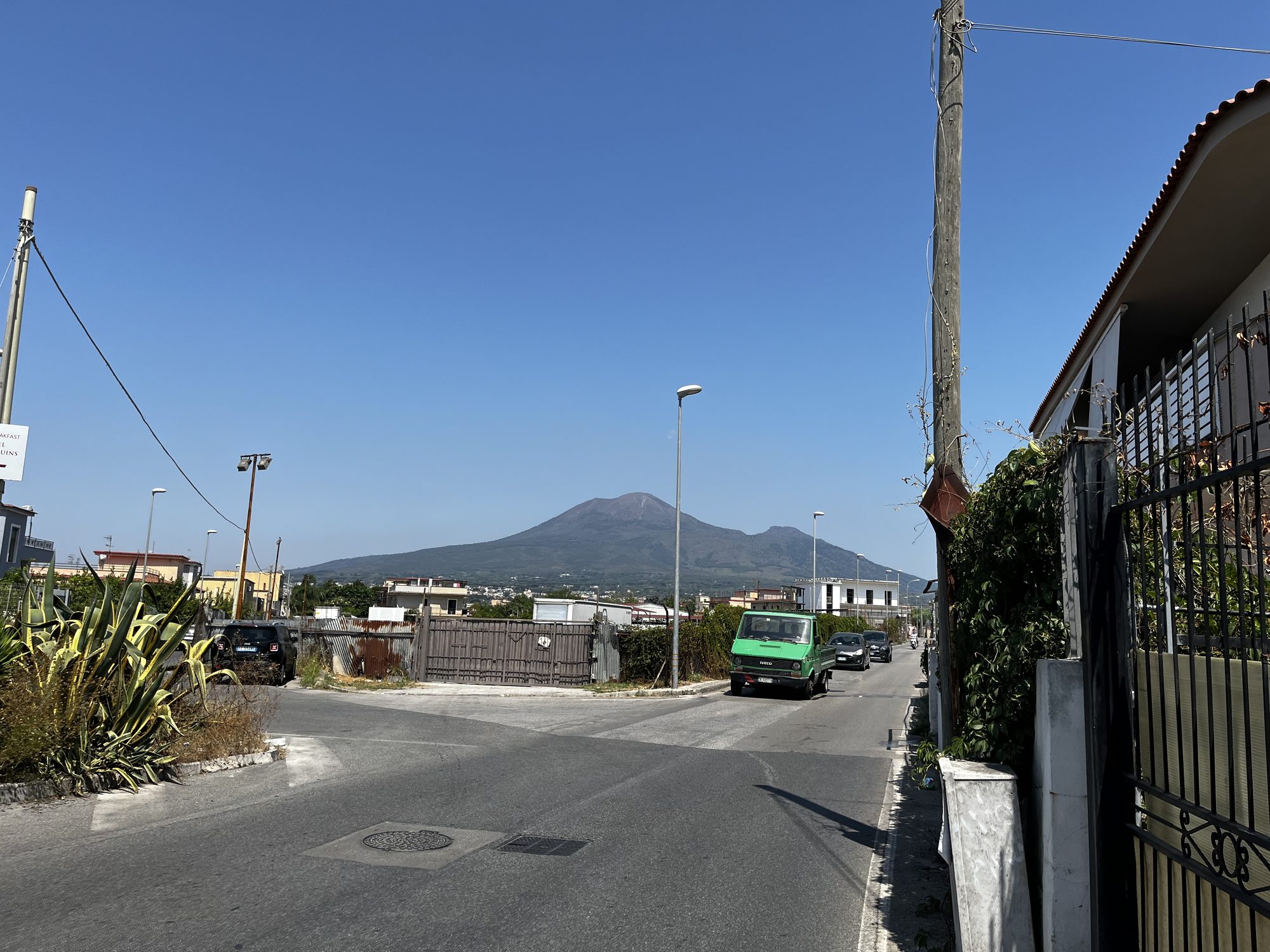
As you walk through its ruins, you see — at all times — the very same volcano, Mount Vesuvius, that caused the destruction almost 2,000 years ago. The volcano is still active, though very much monitored. You walk through those old roads and think to yourself how bustling life was here before it all went wrong. You look at Vesuvius, and you look all around you, and you think — where would I even go if it erupted right now? Where would I even run to?
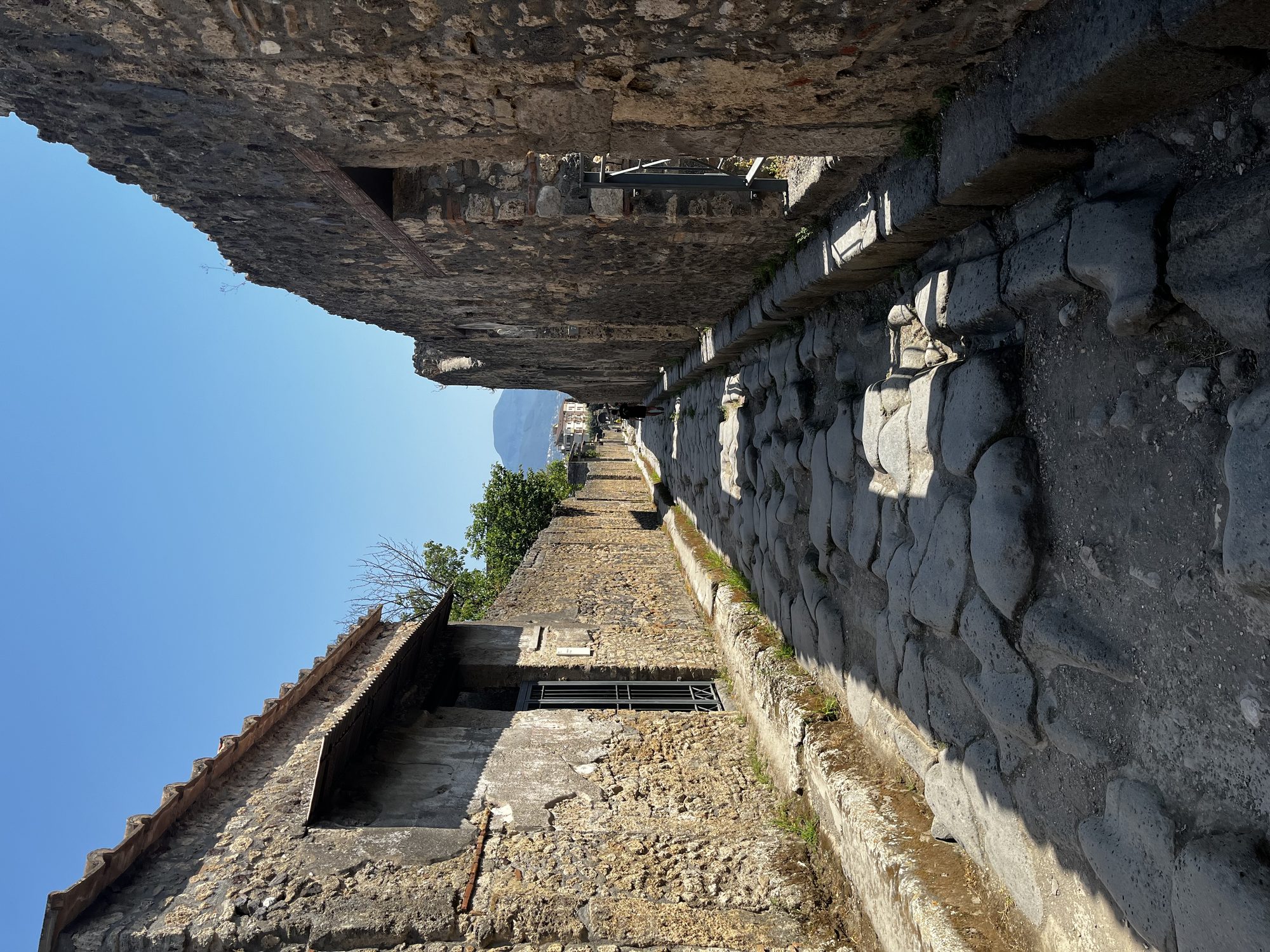
"You're not just an observer when you're there — you're in it. You are part of the history. You are walking through thousands of years."
It's one of those places where wherever you look, you are brought to absolute wonder. It's hard to stop taking pictures of Pompeii. Every corner we turned we stood there awestruck.
The closest thing to this feeling I have had since — that exact "I came for a beach and accidentally walked into 2,000 years of history" shape of surprise — was on a Greek island we showed up to for the coves and ended up reading plaques on for an entire morning. The full piece is here: Corfu — the Greek island that doesn't feel Greek. The fortress that defended Venice. The colonnade the French built. The statue most visitors walk past.
And for the same surprise, two hours from Montreal — the gold-altared basilica nobody warns you about, the cobblestone streets the French built four hundred years ago — read Quebec City — Europe without the flight. Different continent. Same "I had no idea that was in there" moment.
The Preserved Interiors — What Survived
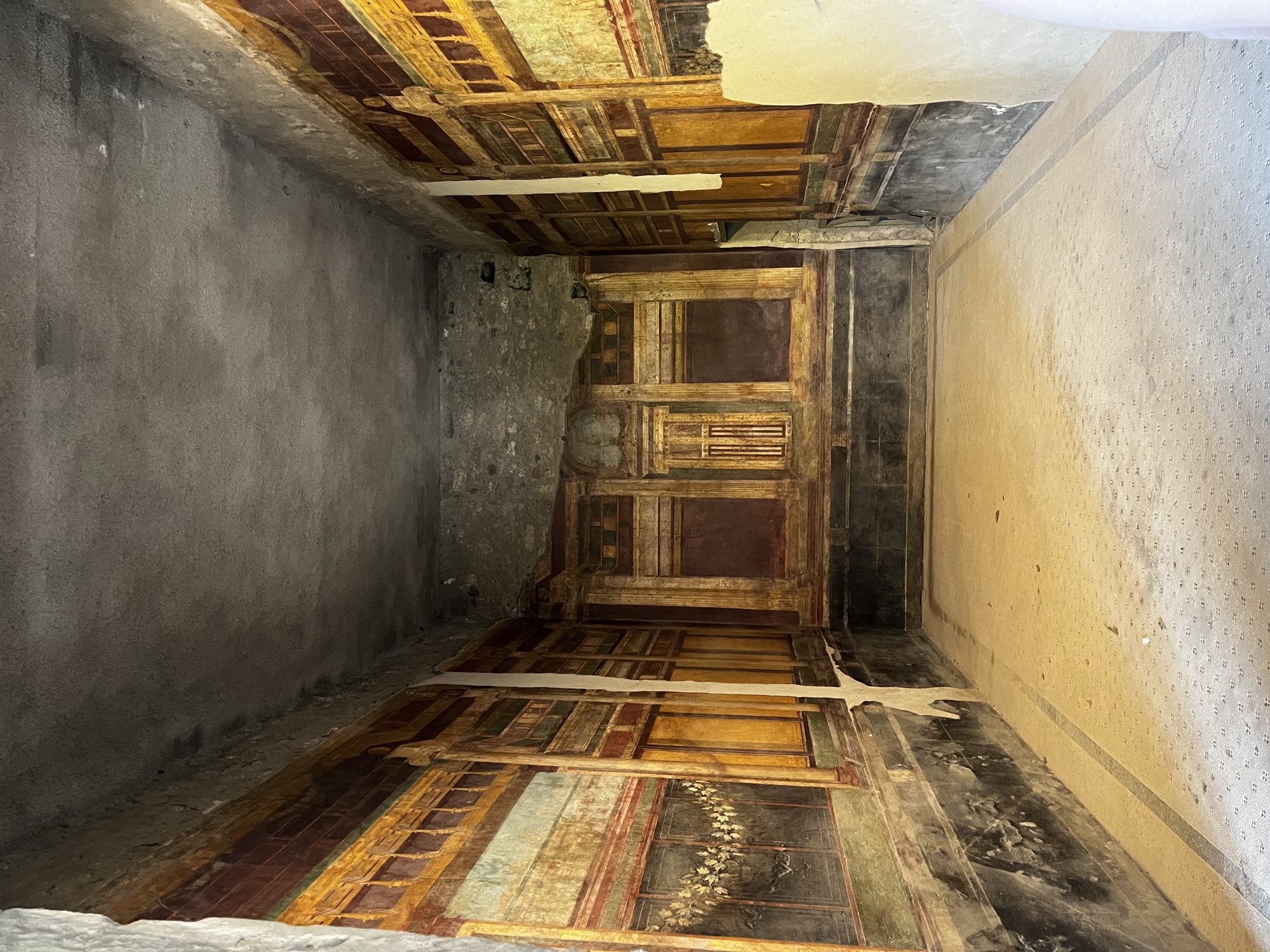
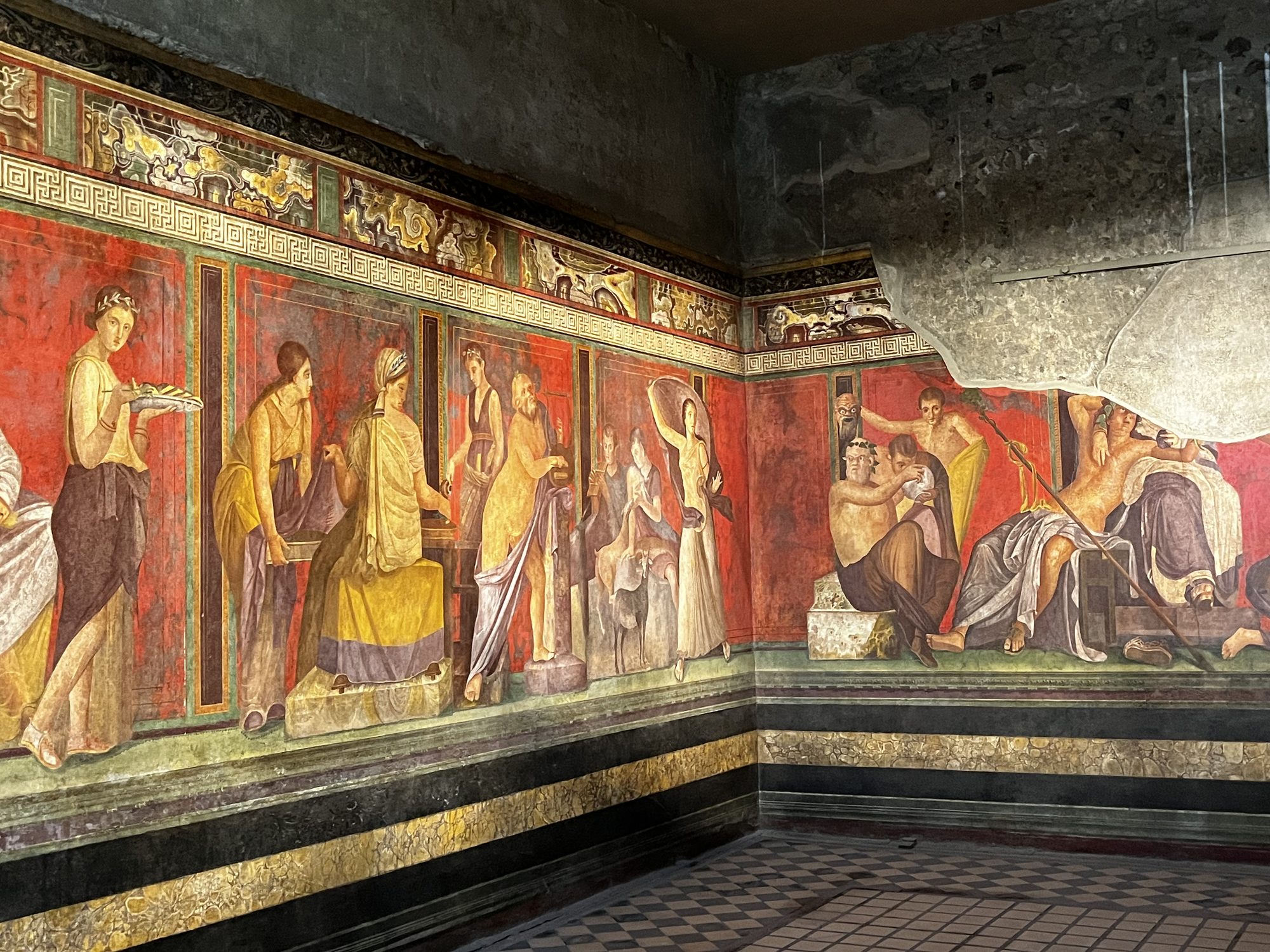
Parts of Pompeii are not ruins in the way you imagine. Some interiors survived the eruption with their original painted walls intact — the colours still vivid after two millennia under ash. Walking into one of these rooms is a genuinely disorienting experience. The city was buried so quickly that parts of it were sealed rather than destroyed.
The Museum — The Difficult Part
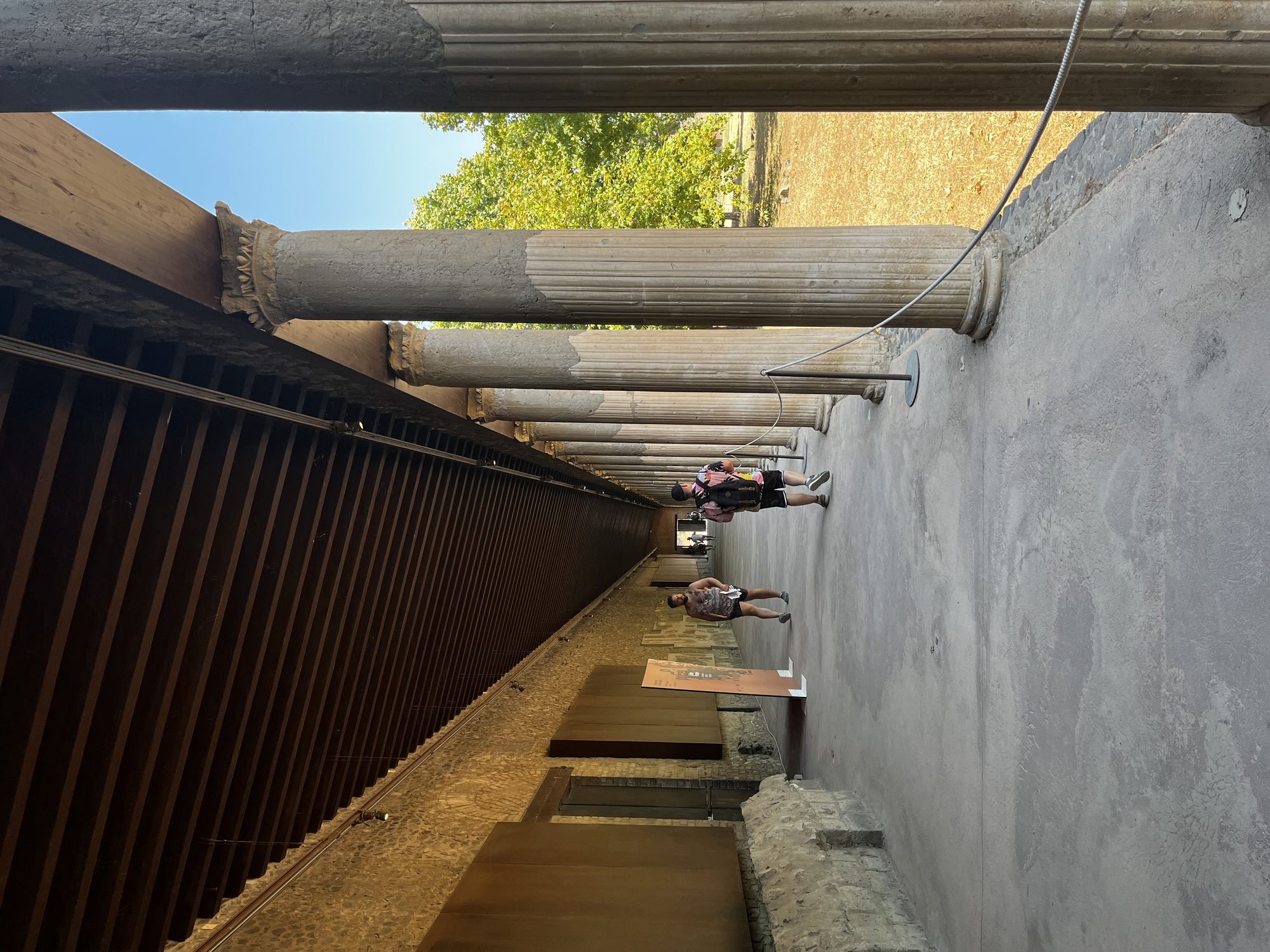
The city itself is a museum, but there are also indoor areas where certain things found during the excavations had to be moved in order to best preserve them and protect them from vandals. The recreated plaster casts of the ancient Pompeii citizens are such an example.
It's difficult to write about. It was heavy. It was sad. But it was also important to see. You've heard about Pompeii before — school, shows, movies, the internet. You know what happened there. But when you're standing there, walking those streets, seeing the volcano not far off, and then you see those plaster casts — it puts things into perspective. It places you in the moment. It makes you understand Pompeii in the way that shows, pictures, or anything on the internet could never — including this article.
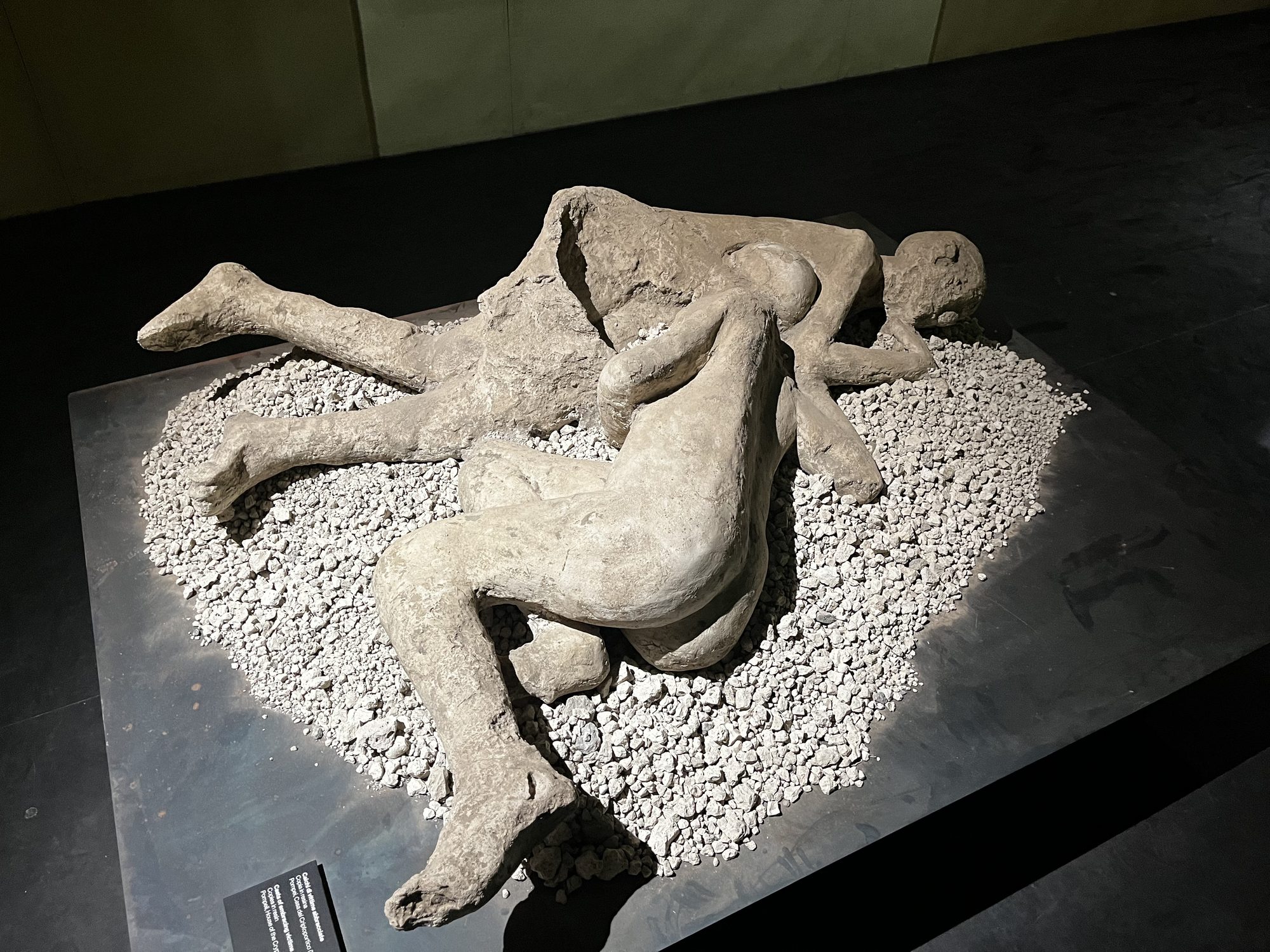
So yes — when you're in Pompeii, absolutely visit the indoor museum areas. They are part of the site, they are included in your entry, and they are the part of the visit that stays with you longest.
The Ideal Pompeii Visit — How to Actually Do It
Sunscreen: SPF 50 minimum. Apply before entering. Reapply at lunch. The ruins are enormous and completely exposed.
Water: At least 2 litres per person. There are drinking fountains inside the park but you do not want to depend on finding them.
Shoes: Comfortable, broken-in walking shoes. The basalt paving stones are uneven, rounded, and surprisingly hard on your feet over 6 hours. Do not wear sandals. Do not wear new trainers.
Hat: One that covers your face, not just your head. A cap is not enough in July.
Time: 4 hours minimum. 6 hours to do it properly. A full day if you want to read every information panel on the digital guide.
The Verdict — Go
Yes, go to Pompeii. Walk those streets. Stop and stare at every old ruined building. Read the history of the city. Take your pictures. Take your time there.
But please — try to avoid going on a cloudless, 38-degree day. If you do, dress appropriately. Bring lots of sunscreen. Bring lots of water. Pace yourself.
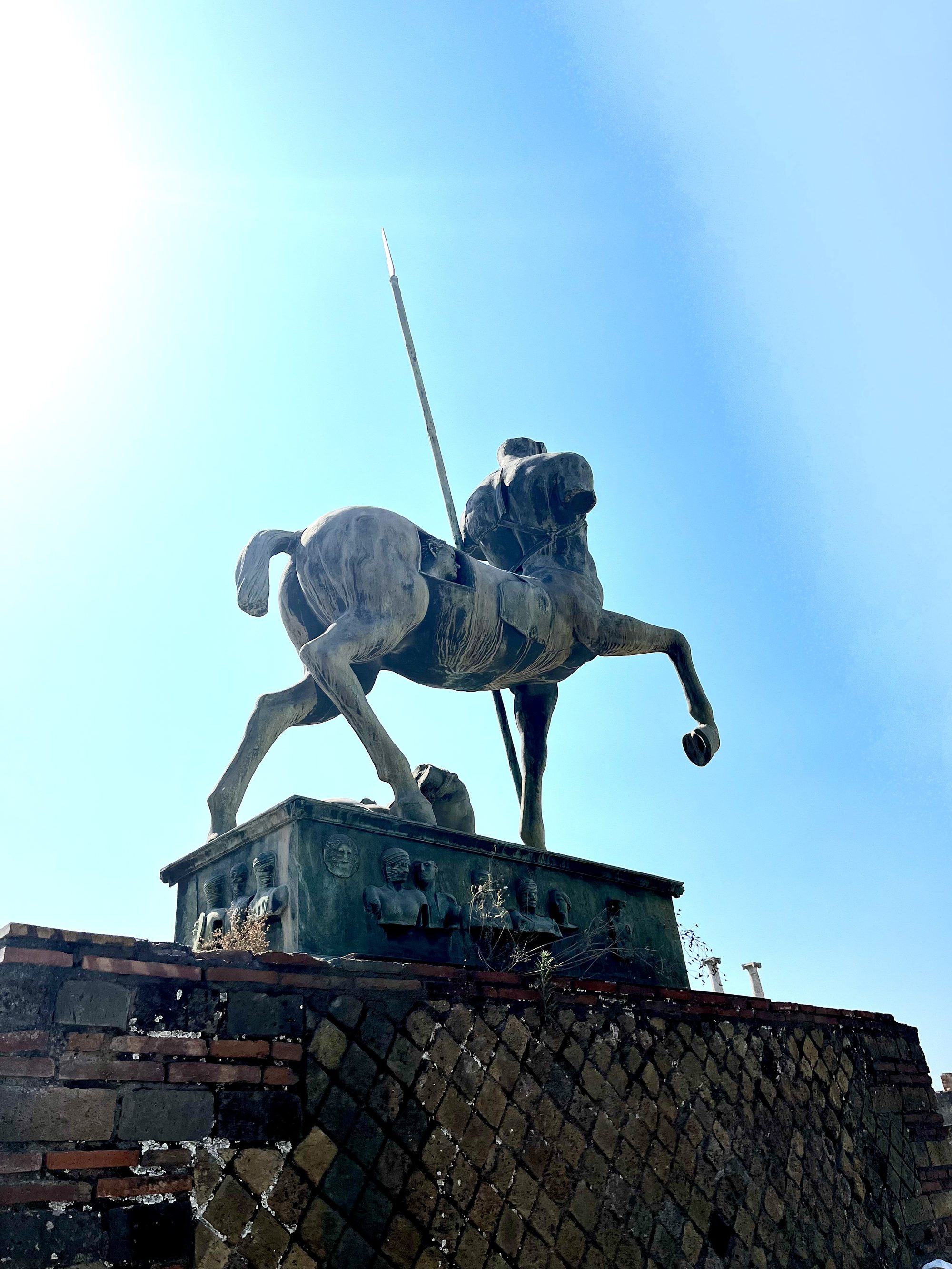
Six hours in brutal July heat, and my cousin and I would do it again immediately. There is nowhere else on earth quite like it. Walk those streets. Stand in front of Vesuvius. Visit the museum. Let it sit with you.
But most of all — enjoy it. Live it. Experience it.
Common questions — answered honestly
Is Pompeii worth visiting?
Yes — without question. Pompeii is a complete Roman city, buried whole by Vesuvius in 79 AD and dug out of the ash centuries later, and you walk it on the same stones its citizens walked. There is nothing else like it anywhere in the world. Plan 4–6 hours minimum and it still won't feel like enough.
How much time do you need at Pompeii?
Four to six hours minimum. It is a whole city, not a single ruin — my cousin and I walked it for six continuous hours and still didn't see all of it. If you are travelling with young children, treat it as a half-day.
When is the best time to visit Pompeii?
Early in the day, and ideally outside high summer. Pompeii is roofless — there is almost no shade — so July and August sun is punishing. Go at opening time, bring sunscreen, a hat, water and proper walking shoes, and you'll actually enjoy it instead of being defeated by the heat.
Where should you stay to visit Pompeii?
Naples or Sorrento both make an easy base. My cousin and I stayed just south of Naples in Torre Annunziata, a 15-minute walk from the archaeological park. Basing in Naples also puts Herculaneum and the wider Amalfi Coast within reach.
One practical aside. Whether you base in Naples or Sorrento for Pompeii, the price of that room is set less by the hotel than by the two companies that run the booking sites. Read who actually owns online travel — and why it costs you before you reserve.
If you read this all the way down, there's a fair chance you've been somewhere too — and you have your own version of what just happened in this piece. I want to read it. I read every story that comes in, and I write back. The pieces that earn it go live here with your name on them, your photographs, your verdict.
This is what PONTUS
is built for.
Waking up 15 minutes from Pompeii. Spending 6 hours walking through history. Coming back for pasta that costs €9. This is the kind of trip that should be normal — not a once-a-decade event you spend months recovering from financially. PONTUS exists to make this kind of travel a way of life.
Join the Community