Quebec City for one trip and the walled old town. Montreal for the food and a longer stay.
The full verdictHonest answer? Quebec City — for one trip, for the European-weekend feel, for the walled-old-town experience nothing else in North America offers. Montreal — for the longer relationship, for food, for the city that holds you for a week. If you can do both, do both. The right order is two nights in Montreal, then two in Quebec City. That is the trip.
I am, full transparency, from Montreal. I grew up an hour west of the city, took the bus in for high school, lived there in my twenties, drive in regularly. I love Montreal in a way that is not negotiable. I am also the kind of Montrealer who ignored Quebec City for years — most of us do — and discovered, when we finally drove east, that we had been making a mistake. The broader case for finally taking that drive is in my main Quebec City article; this piece is the comparison version, with full credit to Montreal before the verdict.
The two cities sit on the same river, 233 km and about three hours apart, and they serve genuinely different trips. Choosing one is a coin flip if you're not clear on what you came for. The lines above tell you which one is yours.
Every piece here ends with an honest call on where to actually go. New verdicts land in your inbox first. One email. No noise.
Montreal — The Case, Made by Someone Who Lives There
Let me give Montreal the full credit it deserves. I am biased toward this city in the way that anyone with thirty years inside its walls is biased, but the bias is earned. Montreal is the second-largest French-speaking city in the world (after Paris), the largest bilingual city in North America, the city of Leonard Cohen and the Cohen Brothers' best-loved bagel shops, the home of three of Canada's five Michelin-recommended restaurants in 2026, and — quietly and without fanfare — one of the great food cities on the continent.
Old Montreal — Vieux-Montréal — is the part of the city that gets compared to Quebec City. It is the seventeenth and eighteenth-century historic core, with cobblestone streets, stone churches, and the Basilique Notre-Dame, which is genuinely one of the most beautiful church interiors in North America. The Place Jacques-Cartier in summer with its outdoor cafés. The Old Port and the river. The Bonsecours Market. The walk from Place d'Armes to the river along Rue Saint-Paul is, in a good month, one of the genuinely European afternoons you can have in Canada.
The food argument. This is where Montreal genuinely wins against Quebec City, and against most of the continent. The bagels (Saint-Viateur and Fairmount, do not be drawn into the debate, both are correct). The smoked meat at Schwartz's. The Schwartz's experience is itself a piece of cultural property — a single deli on a single street that has been serving the same brisket the same way since 1928 — and you should do it, even though the line is long, because the bites in the third quarter of the sandwich are the reason you came. The poutine at Chez Claudette or La Banquise at 1am. The Portuguese chicken at Romados in the Plateau. The countless Lebanese places along Saint-Laurent. The Sunday morning ritual of bagels and the New York Times on a porch in Mile End.
And the bigger thing the food argument represents: Montreal is a city to live in. Quebec City is a city to visit. Montreal has the neighbourhoods to absorb a week — the Plateau, Mile End, Outremont, Saint-Henri, Little Italy, Old Montreal — each its own small country. Quebec City has Vieux-Québec and an outer city that mostly does not interest the visitor. If your trip is a week and you want a city that opens up over time, Montreal is the right answer.
The festivals. Jazz Fest in June, the Festival Juste Pour Rire / Just For Laughs in July, Osheaga in August, Montreal en Lumière in February. The summer in Montreal is genuinely one of the great urban summers in the world — outdoor, all evening, music everywhere, terraces open until 11pm. Quebec City has the Carnival in February (which is itself extraordinary in a way no other Canadian city matches) and Festival d'Été in July. But the festival density in Montreal is on a different scale.
The honest Montreal downsides
It is not, by Canadian standards, a beautiful first sight. The drive in from the airport is a tangle of expressways and aging infrastructure. The downtown core, outside Old Montreal, is functional and unromantic — towers, intersections, the kind of mid-twentieth-century urban renewal that looked the future in the eye and made it work for the cars. You have to give Montreal a day to find its rhythm. Quebec City offers its best face the moment you arrive.
The language thing, for some travellers. Montreal is genuinely bilingual — most service workers speak both — but the city's identity is firmly French, and visitors who arrive expecting an English-default experience can feel that they are missing context. This is, by the way, a feature not a bug. But it is worth naming.
The winter. Montreal winter is real. November through March is genuinely cold, often punishing. The metro is good, the city is built for winter, but if you are visiting in February with a romantic-snowy-streetscape vision, plan around the dates of Igloofest, the Plateau winter walks, or a deliberate stay-indoors trip. The slush from January to early March is the part nobody photographs.
Quebec City — The Walled City North of Mexico
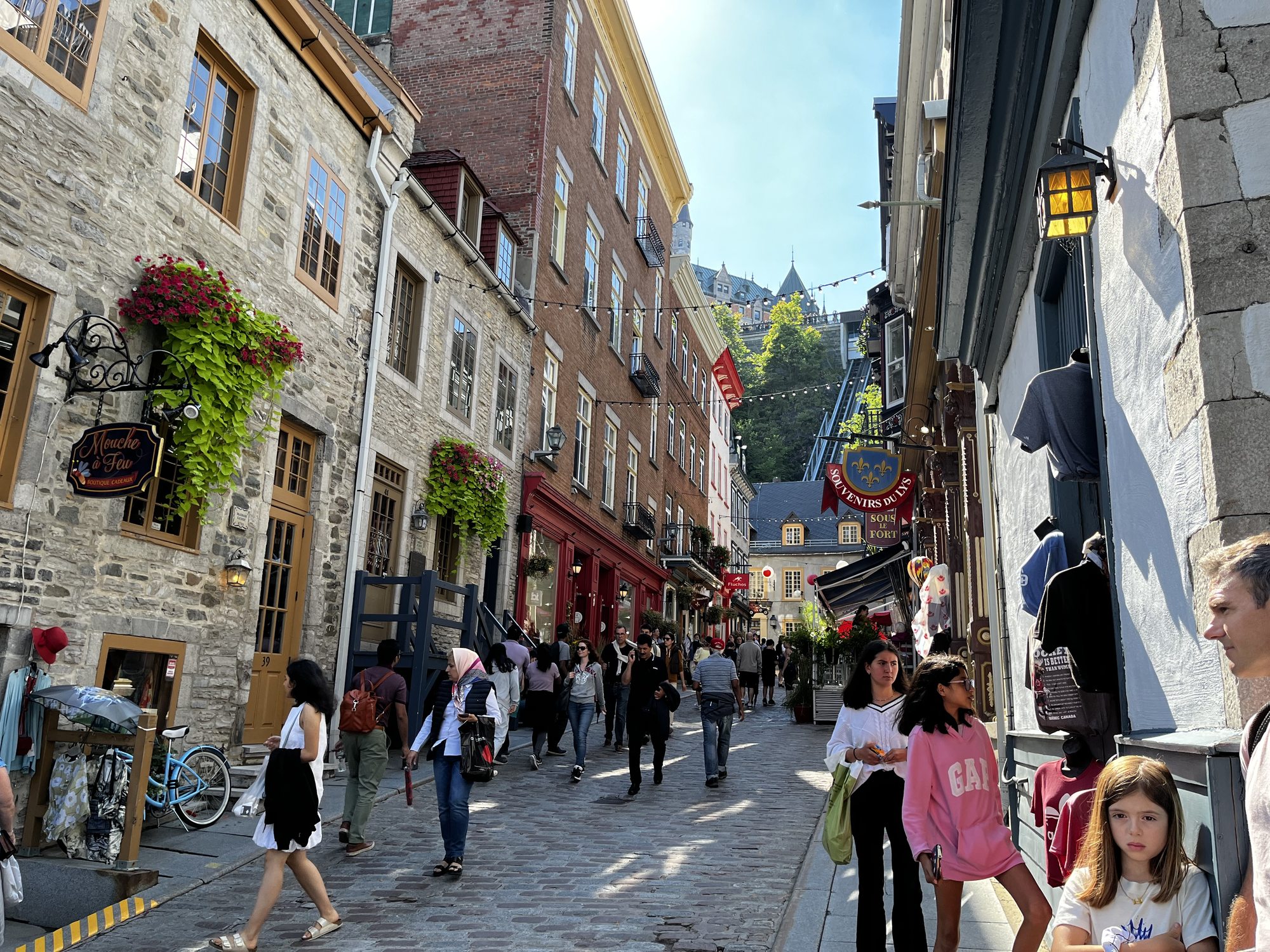
Here is the argument that nothing in the Montreal case can answer: Quebec City is the only walled city north of Mexico, and the only meaningfully French-speaking old town in continental North America. The texture is genuinely European. Old Montreal is European-influenced. Vieux-Québec is a four-hundred-year-old French and British city, intact, with the original fortifications standing, the cobblestones still in place, the language of the streets unmistakably and entirely French. There is, in pure walled-old-town terms, no comparison.
This is the case I made in my main Quebec City piece: if you live in North America and have been telling yourself for years that you'll save up for a European weekend, you can stop. It is here. The walled streets, the stone churches, the French language as ambient texture, the cafés where the next table is speaking Quebecois to each other without performance — this is what most North American travellers fly across the Atlantic to find, and it sits two hours from Montreal on a river the French have lived on since 1608.
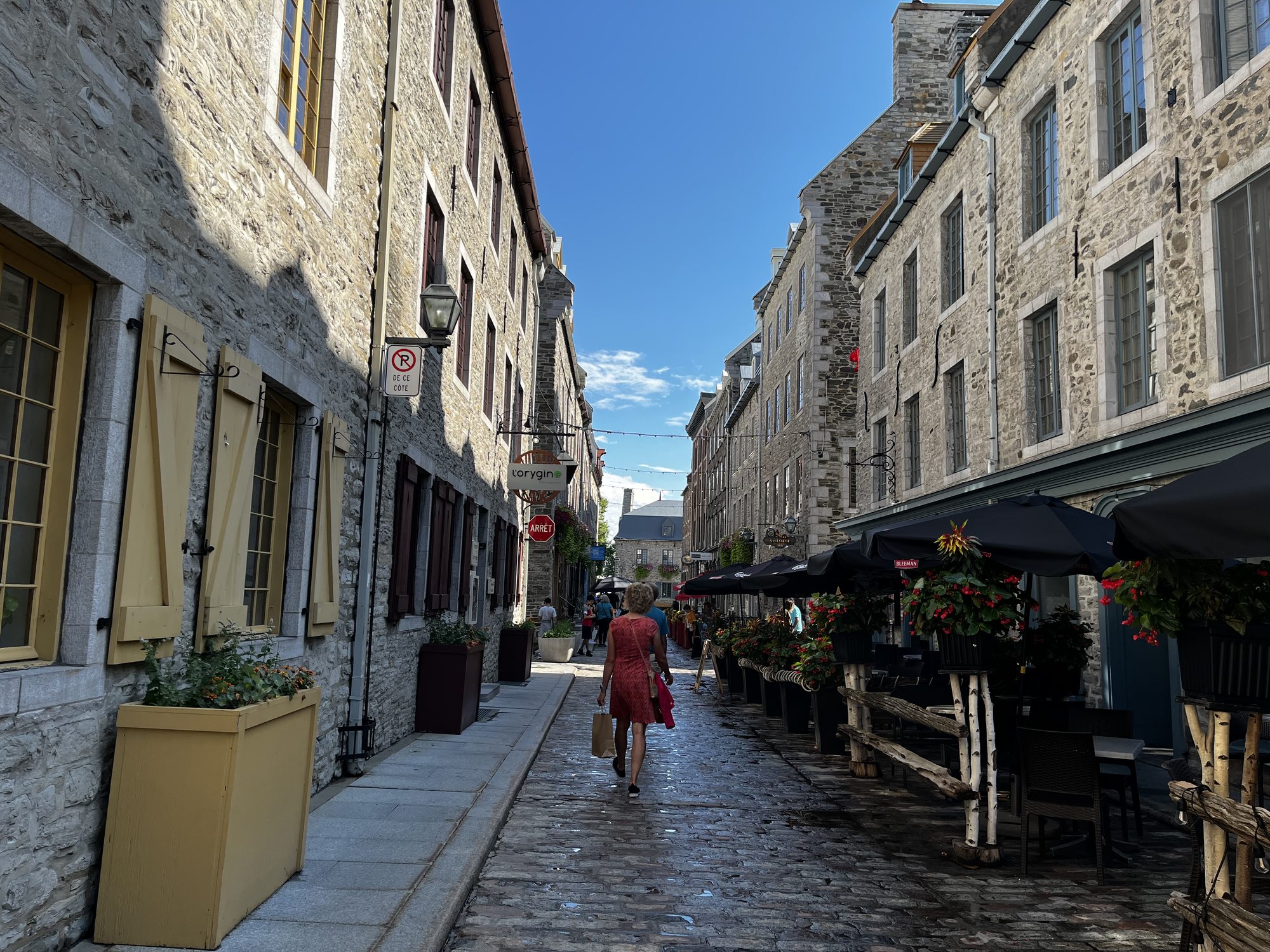
For a weekend specifically, Quebec City is the right city. My 48-hour Quebec City itinerary works as a self-contained trip — the old city on day one, Chutes Montmorency and slow afternoons on day two, a vaulted-tavern dinner each night. Quebec City fits a long weekend almost perfectly. Montreal does not — you can spend a weekend in Montreal and feel like you have only seen one neighbourhood.
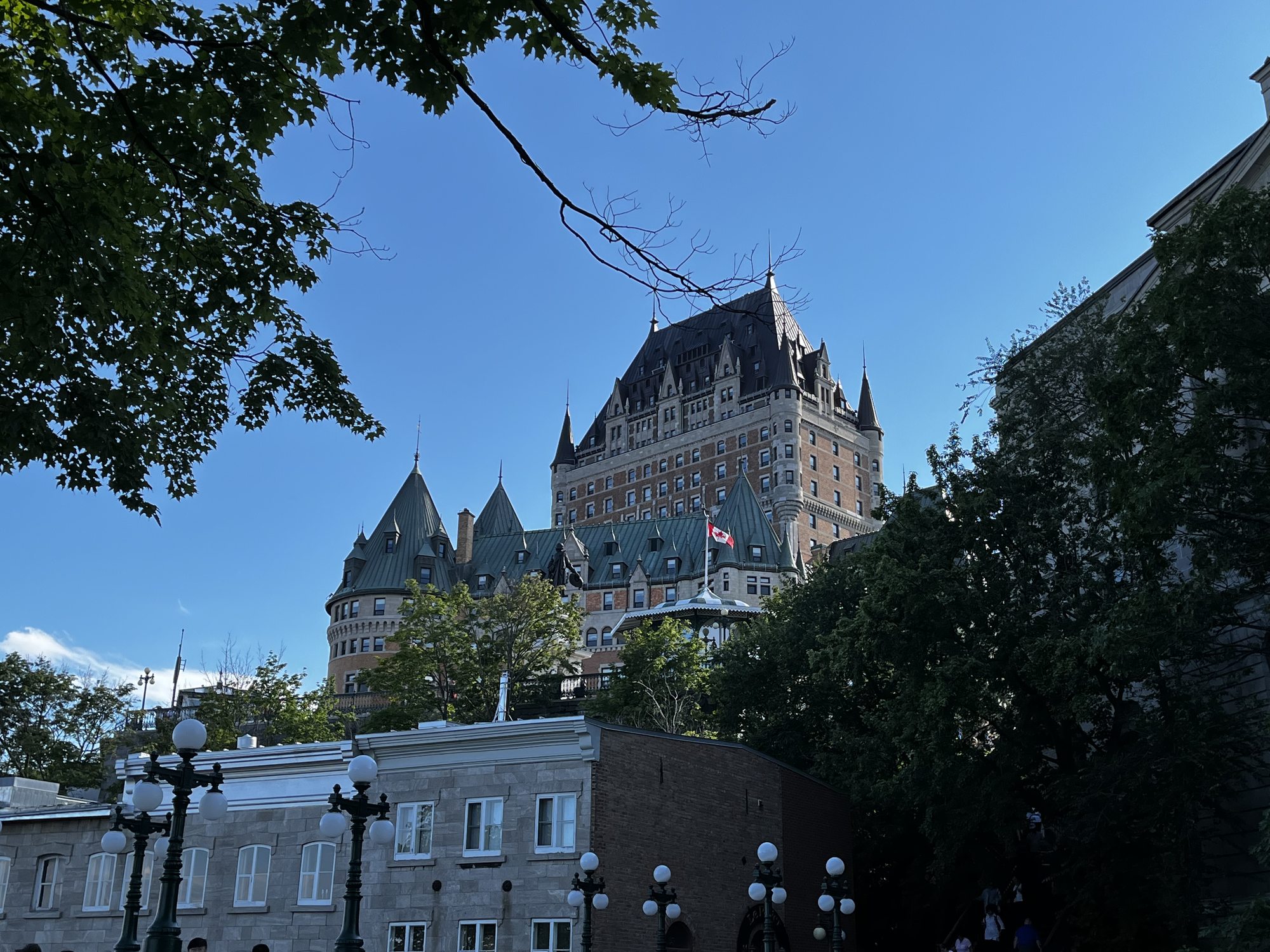
The European-feel argument is also a logistical argument. The walking distance from the funicular at Dufferin Terrace to the front of Notre-Dame is about four minutes. Petit Champlain to the Chateau is six. The Plains of Abraham to Rue Saint-Jean is fifteen. Quebec City you can do entirely on foot. Montreal you need the metro, an Uber, or thirty minutes of walking per major neighbourhood transition.
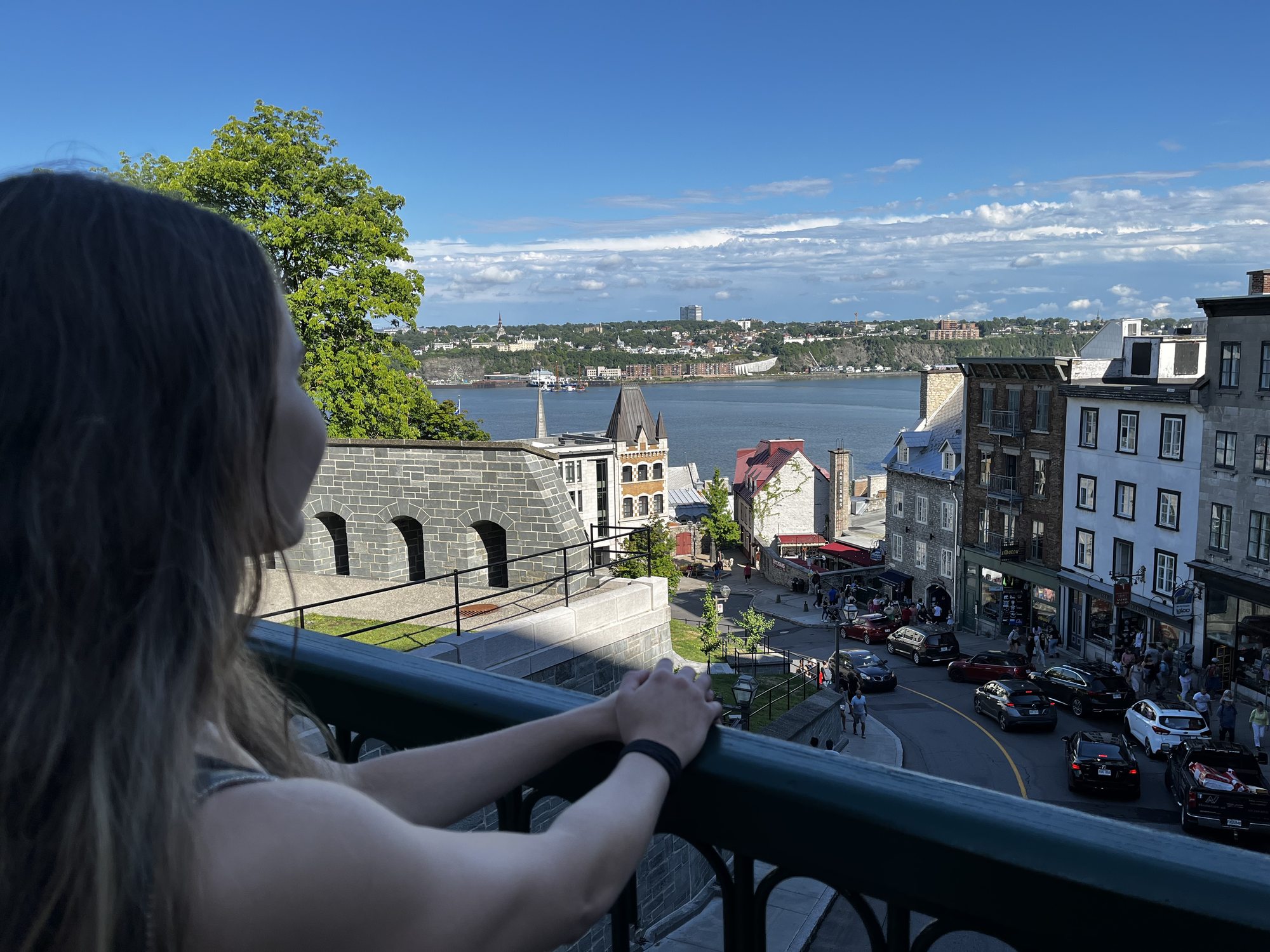
How is Quebec City different from Old Montreal?
Old Montreal is European-influenced. Quebec City is a complete European-style walled city, end to end. Old Montreal is one neighbourhood within a much larger non-European city. Quebec City is, effectively, an entire small European city. Old Montreal is most-photographed at the river. Quebec City is most-photographed in dozens of different positions because the entire city has the photograph. Old Montreal does not have a Petit Champlain. It does not have a Plains of Abraham. It does not have the Citadel. It does not have the funicular up the cliff. It does not have walls. It has a beautiful neighbourhood. Quebec City has a city.
I am going to make this point only once, but it matters: many Montrealers — including, until recently, me — have a habit of dismissing Quebec City as "a kind of bigger Old Montreal." It is not. The two are different products. Old Montreal is what you go to for a Saturday afternoon out of the city. Quebec City is what you fly to Italy for — and most of us in North America did not know we had it.
The honest Quebec City downsides
It is smaller. After three or four days, you have walked it. The restaurants you keep returning to are excellent but limited in number. The international tourist economy has concentrated heavily inside the walls, which means the souvenir-shop density in Petit Champlain in July is real. The Sainte-Foy ring outside the walls is functional and uninteresting. The Plains of Abraham at the far western edge are extraordinary in spring and fall, less so in midwinter slush.
It is also, frankly, less culturally varied than Montreal. The Quebec City restaurant scene runs heavily on Quebec traditional cuisine and a tight band of French-influenced bistros. Montreal has Lebanese, Vietnamese, Portuguese, Italian, Korean, Ethiopian, Caribbean, all of it serious. Quebec City has, mostly, very good Quebec food and a few Italian places. If culinary breadth is the trip, Montreal wins. If depth in one tradition is enough, Quebec City does not embarrass itself.
The Real Comparison — Five Categories
How to do both in one trip — the move you should make
If you have a four-night trip and you live within driving or short-flight distance of either city, the right shape is: two nights in Montreal, two nights in Quebec City. Fly into Montréal-Trudeau (the international airport), spend the first half of the trip in Montreal's neighbourhoods, then drive (or take the train) to Quebec City for the second half. Fly home from either Quebec City Jean Lesage (smaller airport, fewer connections) or back via Montreal.
The order matters. Montreal first, Quebec City second. Two reasons. First, Quebec City is the part most travellers will remember more vividly — putting the more memorable city at the end of the trip gives you the better goodbye. Second, Montreal is the easier flight access for most international visitors, so the trip naturally starts there. Three, the rhythm shift is in the right direction — bigger city first, slower walled town second.
The drive between them: Autoroute 20 on the south side of the Saint Lawrence is faster; Autoroute 40 on the north side is prettier in autumn colour. Roughly 250 kilometres, 2.5 to 3 hours depending on traffic. If you're not driving: VIA Rail from Montreal Gare Centrale to Quebec City Gare du Palais takes 3 to 3.5 hours and is the best option if you want to drink wine at lunch. The train deposits you in Lower Town in Quebec City; walk straight up to Upper Town from there.
If you live in Montreal already and the question is just whether to drive east for the weekend: yes. Do it. I waited far too long, and I am the founder of a travel publication. Most North American travellers can fly to Italy more easily than they can drive two hours to Quebec City. Stop telling yourself you'll save up for the European weekend one day — the European weekend is two hours east on the 20.
"Montreal is the city you live in. Quebec City is the city you fly to Europe for and did not realise you already had."
How to actually book the trip
For a one-city trip: Quebec City for a weekend (the 48-hour itinerary is the route), Montreal for a longer week (four to six nights, base in the Plateau or Mile End, eat your way through the neighbourhoods).
For a both-cities trip: 2+2 nights as above, in that order. Montreal first, Quebec City last. Drive or VIA Rail between them.
Timing: late September through mid-October for both — autumn colours are extraordinary along the Saint Lawrence, the weather is honest crisp-not-cold, hotels are not yet at winter prices, and the patios stay open until early October. December for the Christmas market feel in Quebec City (worth the cold, worth the prices). February only for Carnival (one weekend in early February — book a year ahead). Avoid March through April, mud season for both cities.
The same structural logic — bigger or more practical city first, more memorable or contained city second — applies to a 7-day Greek trip, to a Lyon and Paris combined visit, to Naples and the Amalfi Coast. The pattern repeats because the pattern works.
Quebec City or Montreal — the right trip
If you only have one weekend: Quebec City. Fits the time. Full 48-hour route here.
If you have four nights or more: Both. Two nights Montreal, two nights Quebec City, in that order. Drive or VIA Rail between them.
Montreal base: The Plateau, Mile End, or Old Montreal. Avoid downtown chain hotels — they're functional but they waste the trip.
Quebec City base: Inside the walls, Upper Town. Walking distance to everything. The full case here.
When to go: Late September to mid-October for autumn. December for Christmas. February only for Carnival. Avoid March-April mud season.
Getting between them: Drive Autoroute 20 (south side, faster) or 40 (north side, prettier in fall) in 2.5-3 hours. VIA Rail runs it in about 3.5 hours (Escape fares from roughly CAD $43). The cheapest is the Orléans Express bus — around 17 a day, often about $25, and a touch faster than the train. Take the train or bus if you want to drink at lunch.
The food rule: Bagels (Saint-Viateur or Fairmount) and Schwartz's smoked meat in Montreal; one real vaulted-tavern dinner in Quebec City. Skip the rest of the "must-eat" lists; they are mostly tourist concentrations.
For travellers who want European-feeling weekends to be a normal part of life rather than a once-a-year flight across the Atlantic, the PONTUS community runs a private travel membership built around the idea. Read about the community side →
Both cities’ hotels sit on the same booking sites. Worth knowing who actually owns online travel — and why it costs you before you choose.
The Verdict — And Why It Matters
Quebec City or Montreal is one of the few comparisons where my honest answer depends almost entirely on the length of the trip. For a weekend — Quebec City, almost every time. For a week — Montreal, with a side trip if you can manage it. For four nights — both, in that order.
But here is the bigger thing, the part that almost no other travel article will say plainly: most North Americans who have never been to either of these cities are also the people who have been telling themselves for years that they will save up for a European weekend one day. They have not booked it. They have not done it. They have, instead, made plans and then put them off and gone to Cancun or Vegas or somewhere else. And the closest thing North America has to that European weekend, the part of the continent that genuinely delivers it, is sitting on a river two hours east of Montreal, walled, four hundred years old, French-speaking, with the same kind of dinner you would have had in Lyon or Florence at a fraction of the cost and without the Atlantic crossing.
Go. Drive in. Stay inside the walls. Eat one real meal in a vaulted tavern. Walk Petit Champlain at 9am before the buses. Watch the Saint Lawrence from Dufferin Terrace at sunset. And if you can stretch the trip — start in Montreal, do the bagels, do the smoked meat, then drive east on the 20 and let the second half of your trip be the one you remember more vividly. The European weekend you keep saying you'll save up for one day is here. The trip is built into the drive.
"Montreal is the city you live in. Quebec City is the city you fly to Europe for. Drive east on the 20 instead. The trip is built into the drive."
Common questions — answered honestly
Is Quebec City or Montreal better to visit?
Quebec City for a first visit, for a European-weekend feel, and for the walled-old-town experience nothing else in North America offers. Montreal for food, nightlife, neighbourhood texture, and a bigger-city rhythm that holds you for a week rather than a weekend.
Should you visit Quebec City or Montreal first?
Quebec City if you have one trip. Montreal if you live within driving distance and can plan a return. Most travellers doing one trip choose Montreal — bigger airport, more famous — and most of them regret not getting to Quebec City.
How far is Quebec City from Montreal?
Roughly 250 km along the Saint Lawrence. By car, 2.5 to 3 hours on Autoroute 20 or 40. By VIA Rail, about 3.5 hours. The drive is the practical answer; the train is the right answer if you want to drink wine at lunch.
How do you get from Montreal to Quebec City?
Three ways. Driving is the practical one — 2.5 to 3 hours on Autoroute 20 or 40. VIA Rail runs Gare Centrale to Quebec City in about 3.5 hours, with Escape fares from roughly CAD $43. The cheapest is the Orléans Express bus — around 17 departures a day, often about $25, and a touch faster than the train. Drive for freedom; take the train or bus if you want to drink at lunch.
Can you visit both Quebec City and Montreal in one trip?
Yes — easily. The right structure is two nights in Montreal, then two nights in Quebec City, then a return drive. Four nights total. Most travellers default to Montreal-only because of flight logistics, and most of them wish they had built the second half in.
If you read this all the way down, there's a fair chance you've been somewhere too — and you have your own version of what just happened in this piece. I want to read it. I read every story that comes in, and I write back. The pieces that earn it go live here with your name on them, your photographs, your verdict.
This is what PONTUS
is built for.
48 hours in Quebec City this October. Three days in Lyon next May. A long weekend in Paris the following spring. A week in Greece after that. This is the rhythm a travel-shaped life looks like — and PONTUS exists to make that life normal, not exceptional.
- For those who want to be part of a community of like-minded people
- For those who don't want to break the bank just because they want to see the world
- For those who are ready to put the effort in and build their own income from the travel industry
Whatever you want, whatever you choose — PONTUS is here.
Join the Community