Honest answer? For most travellers, on most trips — Sorrento. For the kind of traveller who came for Italy itself rather than for the Instagram of the coast — Naples.
This is the question almost nobody asks honestly. Most Amalfi Coast guides tell you to base in Sorrento, and Sorrento is the default for good reason. It is the easier answer. It is also, for some trips and some travellers, the wrong one. What follows is the case for both — and the verdict.
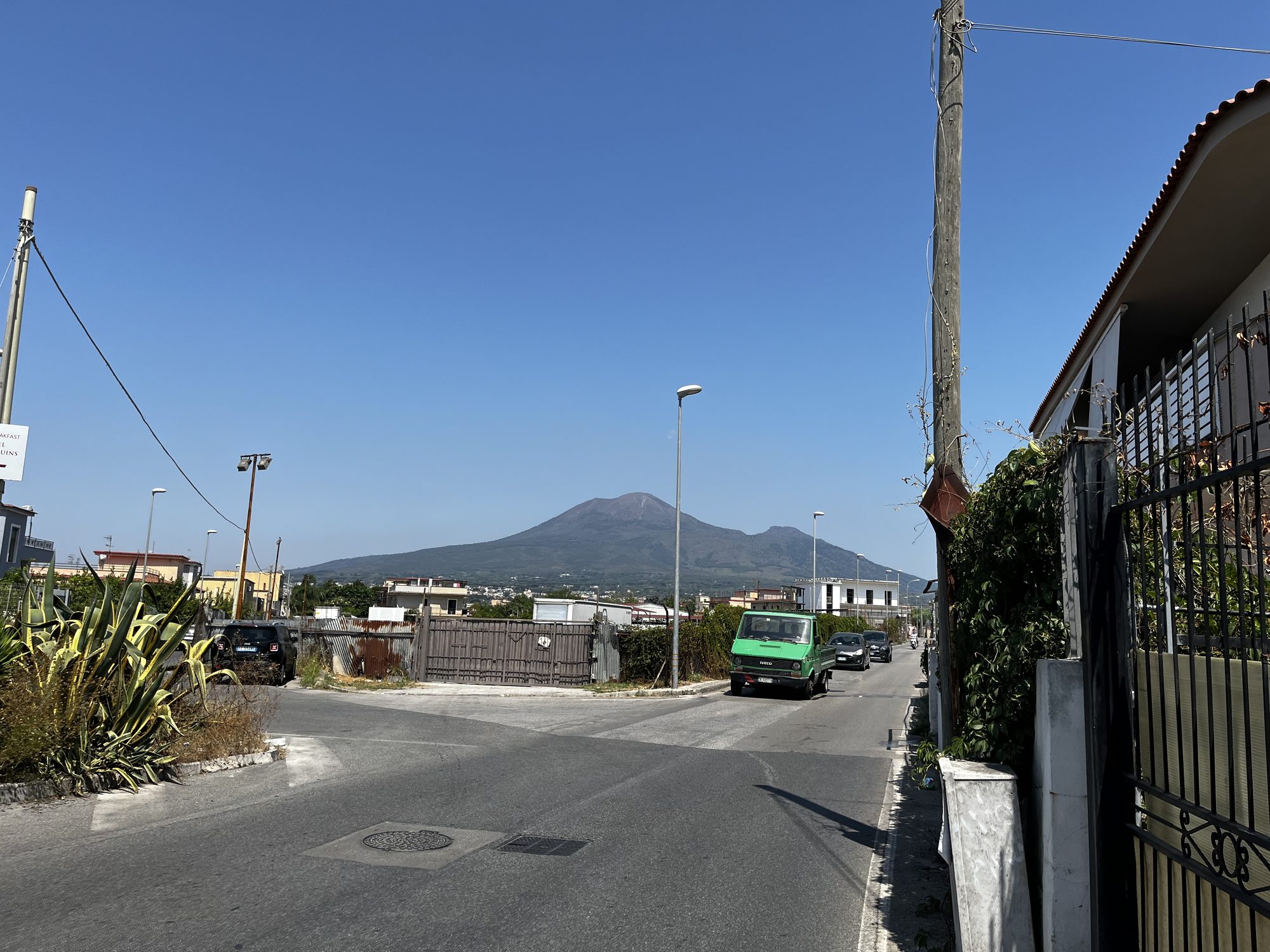
My cousin and I did the south of Italy in late July. We stayed near Pompeii to the south of Naples, day-tripped Naples, did Sorrento and Positano, walked Pompeii in brutal heat, and ate pizza in the centre of Naples on a Friday night while motorbikes blew past at speed. I have a clear opinion on what the right base is and for whom. Here it is, with the full credit to the other side first. If you are choosing between the two Vesuvius cities themselves, the Pompeii or Herculaneum verdict is the more specific piece; the broader case for Naples as a city in its own right lives in Naples vs Rome.
About 70 minutes on the Circumvesuviana line separates them. Naples and Sorrento are the two ends of the same trip. They are not interchangeable bases. Choosing wrong is how people come home wishing they had done it differently. The lines above tell you which one is for you.
Every piece here ends with an honest call on where to actually go. New verdicts land in your inbox first. One email. No noise.
Sorrento — The Default, and Why It's Earned
Let me give Sorrento its full credit. It is the default base for a reason, and the reasons are real.
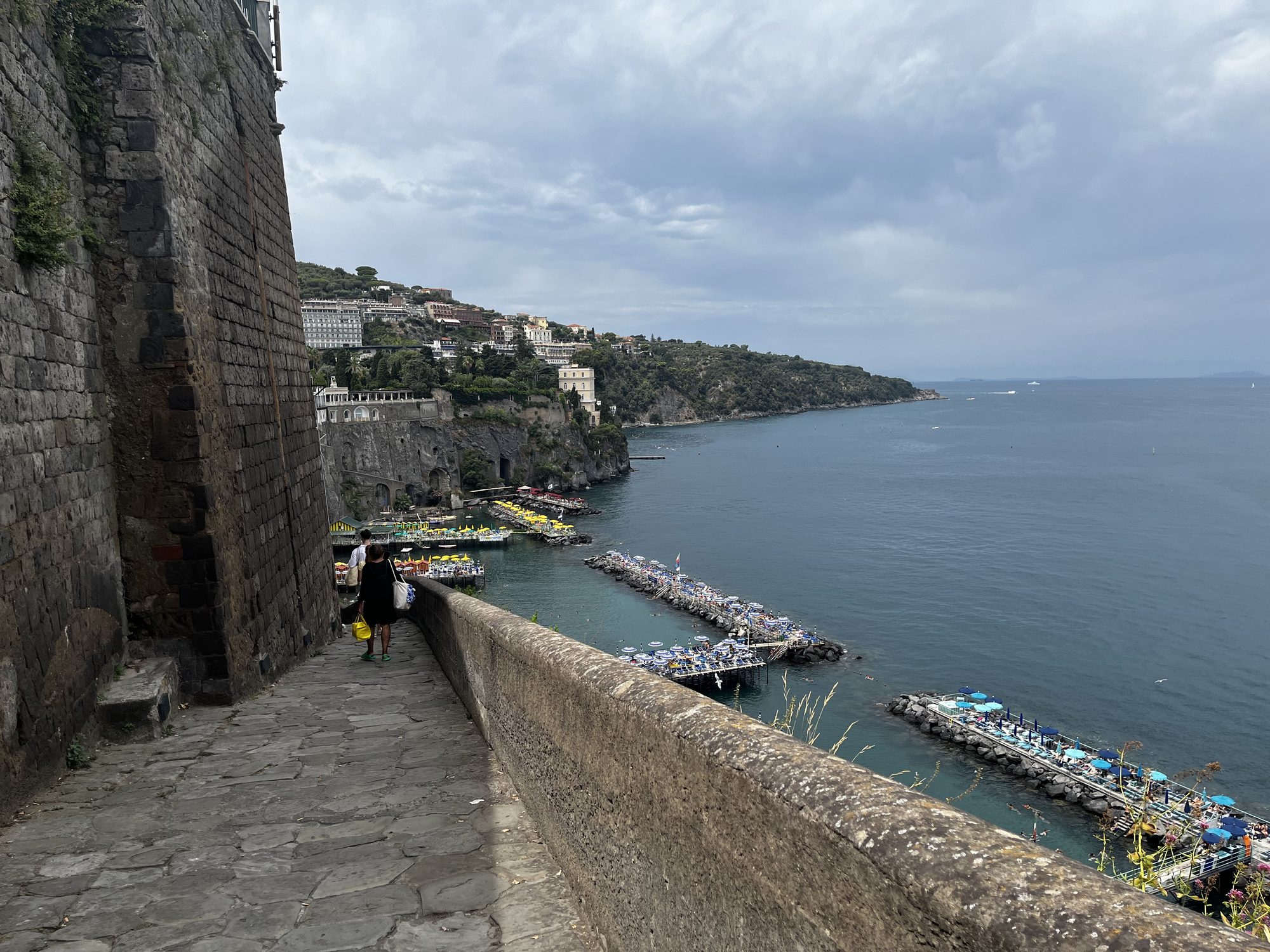
Sorrento sits at the end of the Circumvesuviana train line from Naples. This makes it the most practically connected town on the entire Amalfi Coast — Pompeii in 35 minutes, Naples in 65, Capri 25 by ferry, the SITA bus along the coast to Positano, Amalfi and Ravello. You can do everything from Sorrento. And you can do most of it without ever needing to think about logistics, because Sorrento is small enough to walk in twenty minutes and generous enough to spend a week in.
It is also calmer than Naples. Significantly calmer. This is not a small thing for some travellers. Naples is loud. Naples is fast. Naples is the kind of city that requires you to conform to it, rather than the other way around. After a long day at Pompeii or on the coast, the difference between coming home to Sorrento's quiet piazzas and coming home to Naples's centro storico is the difference between a holiday and a workout.
The food in Sorrento is also a serious argument. Locals eat there. Restaurants cook for them. The prices reflect a town that earns its money year-round, not a town that spikes its prices in summer. I have written about this in detail — but the short version is that Sorrento is a quietly underrated food town, and you will eat better here, for less, than anywhere else on the coast.
If your trip is centred on the Amalfi Coast — Positano, Amalfi, Ravello, the boat day, the lemon groves, the slow walk along the cliff — Sorrento is the right base. Do not let me talk you out of it. It is the default for honest reasons.
The honest Sorrento downsides
Sorrento is small. After three or four nights, you have walked it. The restaurants you keep coming back to are excellent but limited in number. The town itself does not have much to surprise you with once you know it. This is not a flaw exactly — it is the price of how calm and walkable it is. Naples, for all its chaos, will keep showing you new things for a week.
Sorrento is also, increasingly, a destination rather than a town. The international tourist economy has shifted the centre. Some streets are now entirely souvenir shops. The Italian-ness of Sorrento is real but compressed; it lives in the side streets and on the Circumvesuviana platform at 6am when the workers commute in. The Italian-ness of Naples is everywhere, all the time, whether you wanted it or not.
Naples — The Base for the Trip Most People Don't Take
Naples is the south of Italy at full strength. It is the city that makes Rome feel suddenly legible — because Rome, by comparison, has been smoothed for international consumption in a way Naples has not. Naples resists being smoothed. It is too layered, too loud, too itself. This is its greatest weakness and its most underrated quality, depending entirely on why you travel.
The arrival is the first thing. You step off the train at Napoli Centrale and Naples hits you all at once. The noise of the streets. The smell of something delicious somewhere in the not-too-far distance. The motorbikes that do not stop for traffic lights. It is an electrifying feeling. No matter how tired you are from the journey there, the arrival wakes you up like a strong cup of coffee.
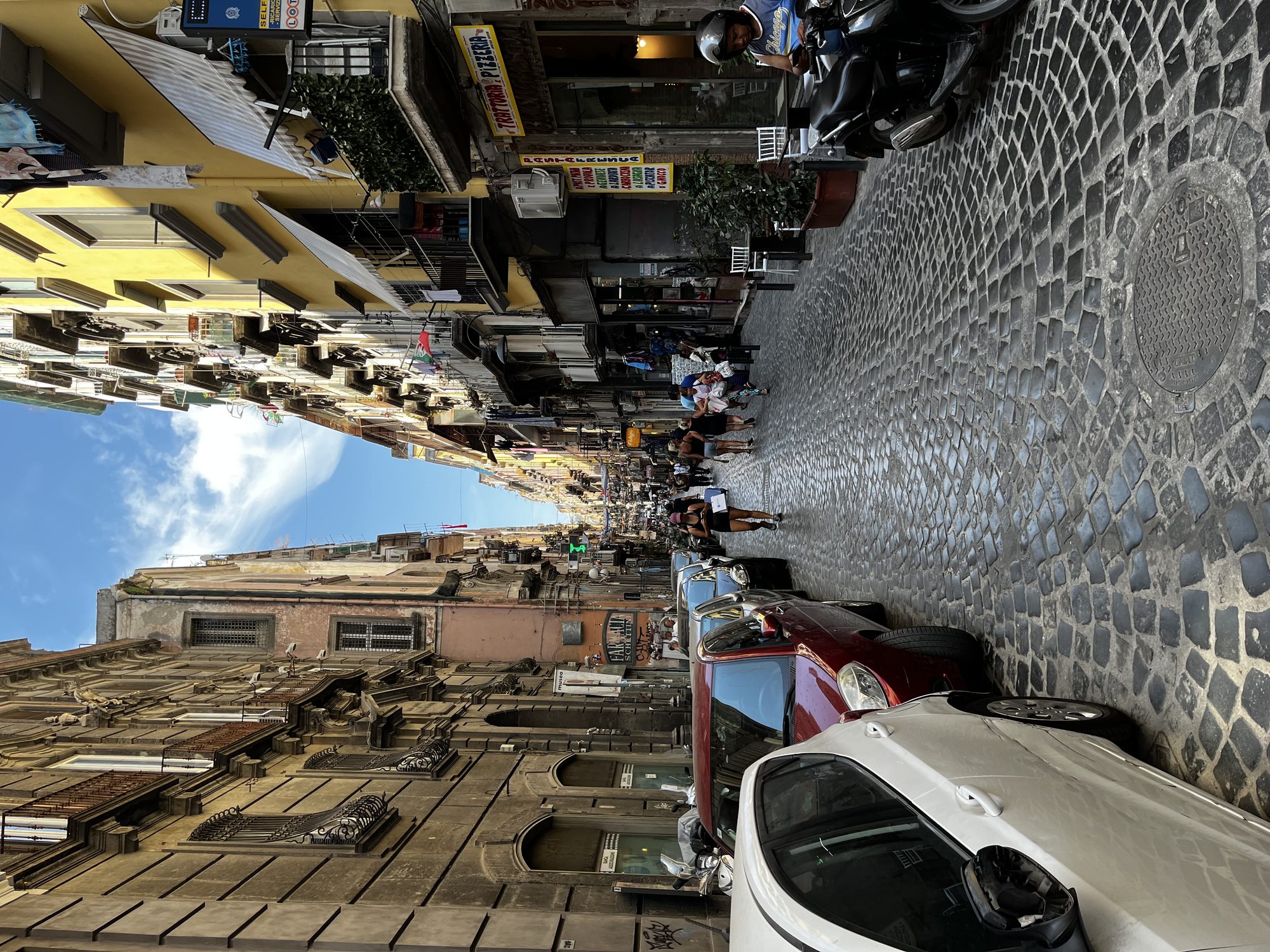
Here is the argument that Sorrento simply cannot answer: Naples is itself a destination, and Sorrento is not. If you base in Sorrento, the Amalfi Coast is the trip, with day trips to Pompeii and Naples bolted on. If you base in Naples, you get the Amalfi Coast and Pompeii as day trips, and you also get Naples as the heart of the experience — three thousand years of continuous occupation by Greeks, Romans, Byzantines, Normans, Aragonese and Spanish, all stacked on top of each other and still visible if you walk slowly. The Naples Underground. The National Archaeological Museum. The original pizza, made by people whose great-grandparents made it. Two evenings of just walking the centro storico in the warm summer air with no plan.
For the right traveller, this is not a small difference. It is the difference between a coast trip and an Italy trip.
Is Naples safe as a base for tourists?
Yes. With common sense. The historic centre, the Lungomare, the Vomero, and the route to Pompeii and Sorrento are fine. The Quartieri Spagnoli at midday is genuinely lively, not dangerous. The Circumvesuviana train carries the pickpocket reputation, so keep your bag in front of you and your phone out of your back pocket. Avoid the outskirts of Scampia and Secondigliano at night — these are residential areas where you have no reason to be anyway. Solo female travellers base in Naples every day without incident. The reputation outpaces the reality by a wide margin, and the safety question is the single biggest reason travellers wrongly default to Sorrento.

How do you actually get from Naples to the Amalfi Coast?
Circumvesuviana train from Napoli Centrale to Sorrento — 65 minutes, under €5. From Sorrento, two options: the SITA bus along the coastal road (45 minutes to Positano, 90 to Amalfi), or the ferry from Sorrento port (25 minutes to Positano, 50 to Amalfi). The ferry is dramatically better — slower in clock terms, faster in experience, and the arrival from the water is the moment the trip is selling you. Take the ferry both ways if you can. Total time from your hotel in central Naples to a beach in Positano: about two hours. This is not the obstacle most people imagine.
Pompeii from Naples is even easier — 35 minutes on the same Circumvesuviana line. Capri is 80 minutes on the hydrofoil ferry from the Beverello port. Rome is 70 minutes on the Frecciarossa high-speed train. Naples is, geographically, the hub of southern Italy in a way Sorrento simply is not.

The Ideal Itinerary — Do Both, in This Order
Here is the move almost nobody recommends and almost everyone should make: split the trip. Three nights in Naples first, then four nights in Sorrento. Seven total. Both bases get their proper weight, and you arrive on the coast having already done the dense work — Pompeii, the museum, the underground, the pizza — so the Amalfi days become what they should be: slow, beach-oriented, restaurant-led.
The order matters. Naples first, Sorrento second. The other way around is exhausting — you spend three calm days getting acclimated to slow-Sorrento, then walk into Naples for three days and the contrast is too violent. Going Naples → Sorrento means you arrive on the coast tired in the good way, ready to slow down, with the loud parts of the trip already behind you.
Most travellers will resist this. The default itinerary says base in Sorrento and day-trip Naples. I am telling you the default itinerary is wrong for travellers who want to actually understand the south of Italy. Three nights in Naples is not a stretch. It is the trip earning its weight.
"Sorrento is the holiday. Naples is the trip. Most travellers want one of them. The lucky ones want both."
How to actually book this trip
Timing first. May, June, September, or early October. Skip July and August — Pompeii in July nearly killed my cousin and me (I am writing the article on that elsewhere — see Is Pompeii worth visiting?). The coast is markedly more pleasant in the shoulder seasons, and the day-trip ferries run at full schedule from late April through October. Prices in Sorrento drop 20 to 30 percent versus August.
On where to stay in Naples: aim for the centro storico (the historic centre), the Chiaia neighbourhood, or the Vomero hill. Avoid the area immediately around the Centrale station at night — not unsafe so much as ugly and tired. The centro storico is the right call for first-timers: walkable to everything, full of the Naples you came for, easy access to the metro and Circumvesuviana. In Sorrento, stay inside the old centre on the cliff side of Corso Italia — walking distance to the station and the harbour, away from the resort hotel strip on the main road.
Book three to six months ahead in peak. The best places fill first and the rest double their prices to fill the gaps. If you want one indulgence, put it in Sorrento with a sea-view balcony for the last two nights. The Naples three nights work as a regular hotel — the city is the experience, not the room.
Naples + Sorrento in seven nights — the route I'd take again
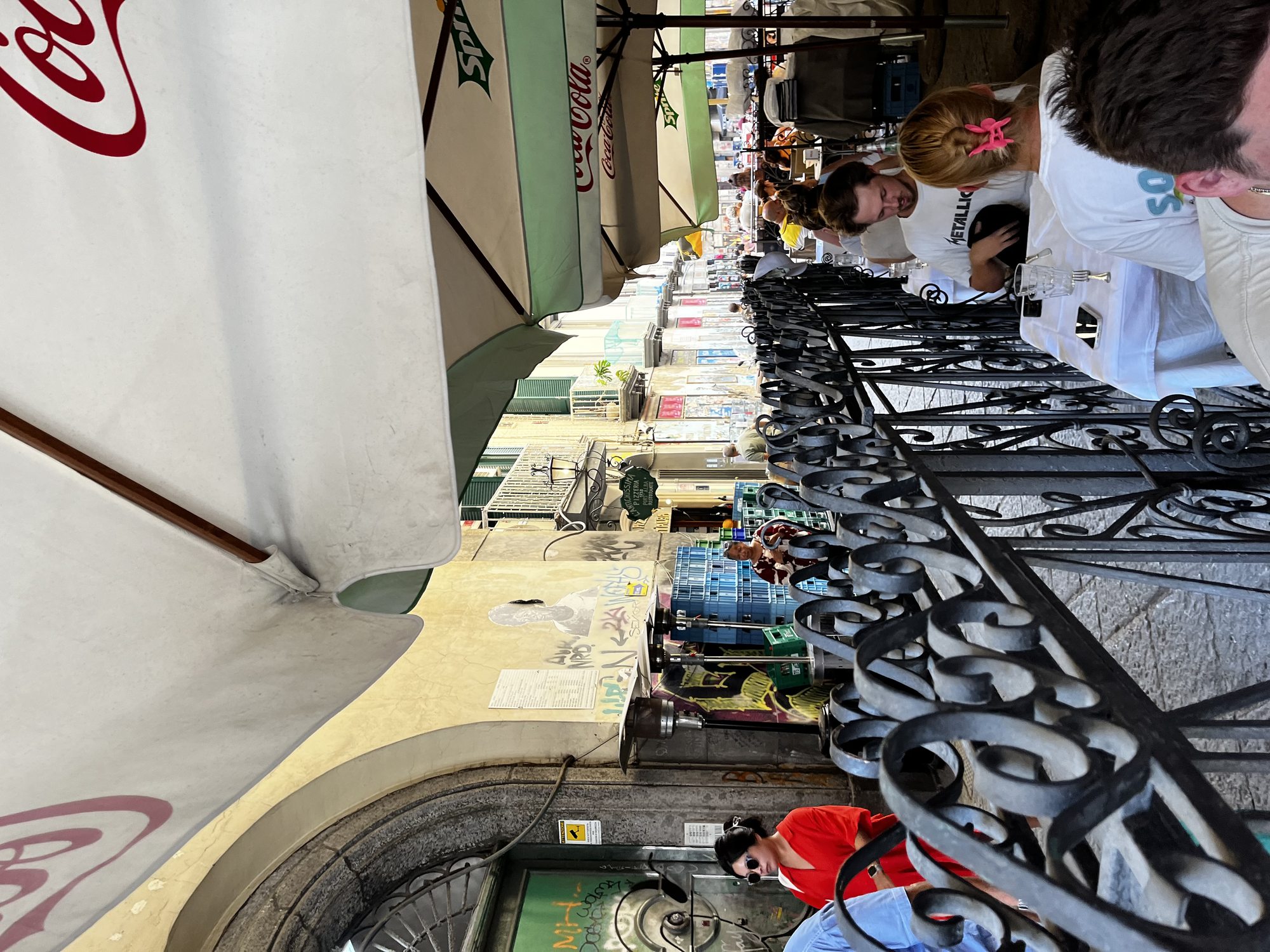
Night 1 (Naples): Arrive, drop bags in the centro storico, walk to Antica Pizzeria Port'Alba for margherita and a Peroni. Slow walk back along the Spaccanapoli — the straight street that cuts the old city in half.
Day 2 (Naples): Napoli Sotterranea underground tour in the morning. National Archaeological Museum in the afternoon — Pompeii and Herculaneum's best frescoes and mosaics live here, not at the sites themselves. Dinner wherever your nose leads you in Quartieri Spagnoli.
Day 3 (Naples → Pompeii): Circumvesuviana to Pompeii in the morning. Four to six hours on site. Train back to Naples or onward to Sorrento. If you go onward, your bags follow you on the train. Easy. If you have appetite for both Vesuvius cities in a single day, hit Herculaneum at 8:30am opening, then Pompeii from 1pm — the Pompeii or Herculaneum piece walks through how to do both without breaking yourself.
Days 4–5 (Sorrento): Day on the Amalfi Coast. Ferry to Positano in the morning, lunch on the cliff, ferry to Amalfi in the afternoon, last ferry back to Sorrento by sunset. The next day: rest, the cliff walk below the old town, dinner at Spizzichiamo two minutes from the station (trust me, get the sausage sandwich).
Day 6 (Sorrento → Capri): Hydrofoil to Capri at 9am. Spend the day. Chair lift to Anacapri, lunch at a non-touristy restaurant, the Blue Grotto if the sea is calm, last ferry back to Sorrento.
Day 7 (Sorrento): Slow morning. Lemons from the market. The cliff walk again, this time without an agenda. Limoncello at the bar where the owner makes his own. Last dinner. Sleep early — early flight.
For travellers who want this rhythm to be normal — not a once-in-a-decade event — the PONTUS community runs a private travel membership built around it. Read about the community side →
Amalfi hotels carry a heavy booking-site markup. It pays to know who actually owns online travel — and why it costs you before you reserve a coast room.
The Verdict — And Why It Matters
Sorrento as your Amalfi Coast base is the safe default and a real answer. Most travellers will be happiest with it. If you are doing your first trip to southern Italy and the coast is the centre of the trip, do not let the contrarian voice in this article talk you out of Sorrento. It earns being the default.
But if you are the kind of traveller who came for Italy itself — who wants the food, the chaos, the museums, the layered three-thousand-year city as much as you want the photo of Positano — then base in Naples for three nights first, then move to Sorrento for four. This is the move almost nobody recommends and almost everyone who tries it regrets not doing the first time. The south of Italy works as a single trip, not as a coast plus a day-trip. Naples is the hinge it pivots on.
Do this in May or September. Take the ferry, not the bus. Do not skip the Underground. Get the margherita at Port'Alba. Eat the sandwich at Spizzichiamo. Do the cliff walk twice. Walk Pompeii early in the morning. You will leave with a different idea of what Italy actually is — and a real reason to come back.
"The south of Italy is one trip, not two. Sorrento is where you sleep. Naples is where the trip earns its weight."
If you read this all the way down, there's a fair chance you've been somewhere too — and you have your own version of what just happened in this piece. I want to read it. I read every story that comes in, and I write back. The pieces that earn it go live here with your name on them, your photographs, your verdict.
This is what PONTUS
is built for.
One week in southern Italy. Pizza in Naples on the first evening. Pompeii on day three. Positano by ferry on day five. Lemons from the Sorrento market on day seven. A parallel week in Greece next spring. 48 hours in Quebec City next October. Three days in Lyon the spring after that. This is the kind of trip that should be normal — not a once-in-a-decade event you spend months recovering from financially. PONTUS exists to make this kind of travel a way of life.
- For those who want to be part of a community of like-minded people
- For those who don't want to break the bank just because they want to see the world
- For those who are ready to put the effort in and build their own income from the travel industry
Whatever you want, whatever you choose — PONTUS is here.
Join the Community