Honest answer? Pompeii — if you only have time for one. Herculaneum — if you have a half-day and want preservation over scale. Both, in a single day — if you have the legs, the logistics, and the appetite for the version of this argument that actually rewards you.
Full transparency before we start: I have walked Pompeii. I have written about it at length, in two registers — the practical Is Pompeii Worth Visiting guide, and the broader argument for Naples as the underrated centre of southern Italy. I have not yet walked Herculaneum personally. What follows is the honest case for both, grounded in my own Pompeii visit and serious reading on Herculaneum — written so that whichever way you choose, you'll get the version of the day you came for. I'll come back and rewrite the Herculaneum half from first-person ground the next time I'm down there.
The two sites are 10 kilometres apart and on the same train line. Doing both in a day is the move almost no one mentions, and the one that gives the trip its real depth. The lines above tell you which version is yours.
Every piece here ends with an honest call on where to actually go. New verdicts land in your inbox first. One email. No noise.
The Same Volcano — Two Completely Different Burials
The starting fact most travellers miss is the difference in how Vesuvius killed each city. On the morning of 24 October 79 AD — the modern dating has shifted from the long-held August — Vesuvius erupted in two distinct phases. Pompeii, downwind of the prevailing breeze, was buried under approximately four to six metres of falling pumice and ash over the course of about 18 hours. Most of its population had time to flee. Those who stayed died in the second phase, when the pyroclastic surges finally reached the city the next morning. The roofs collapsed under the weight of accumulated debris. What you walk through today is mostly a city without its top storey.
Herculaneum, much closer to the volcano on the seaward side, was hit differently. A series of pyroclastic surges — superheated avalanches of ash, gas and rock moving at hundreds of kilometres per hour — buried the town under twenty metres of material in a matter of hours. The temperature in those surges has been estimated at 400 to 500 degrees Celsius. Wood did not burn. It carbonised. Food on tables, papyrus scrolls in libraries, wooden beams and roof joists and even the contents of a market stall were preserved in place by a heat that turned them all to carbon almost instantly. That is the underrated difference between the two cities. Pompeii gives you a city. Herculaneum gives you an afternoon.
Pompeii — The Scale, the Story, the Photograph You Came For
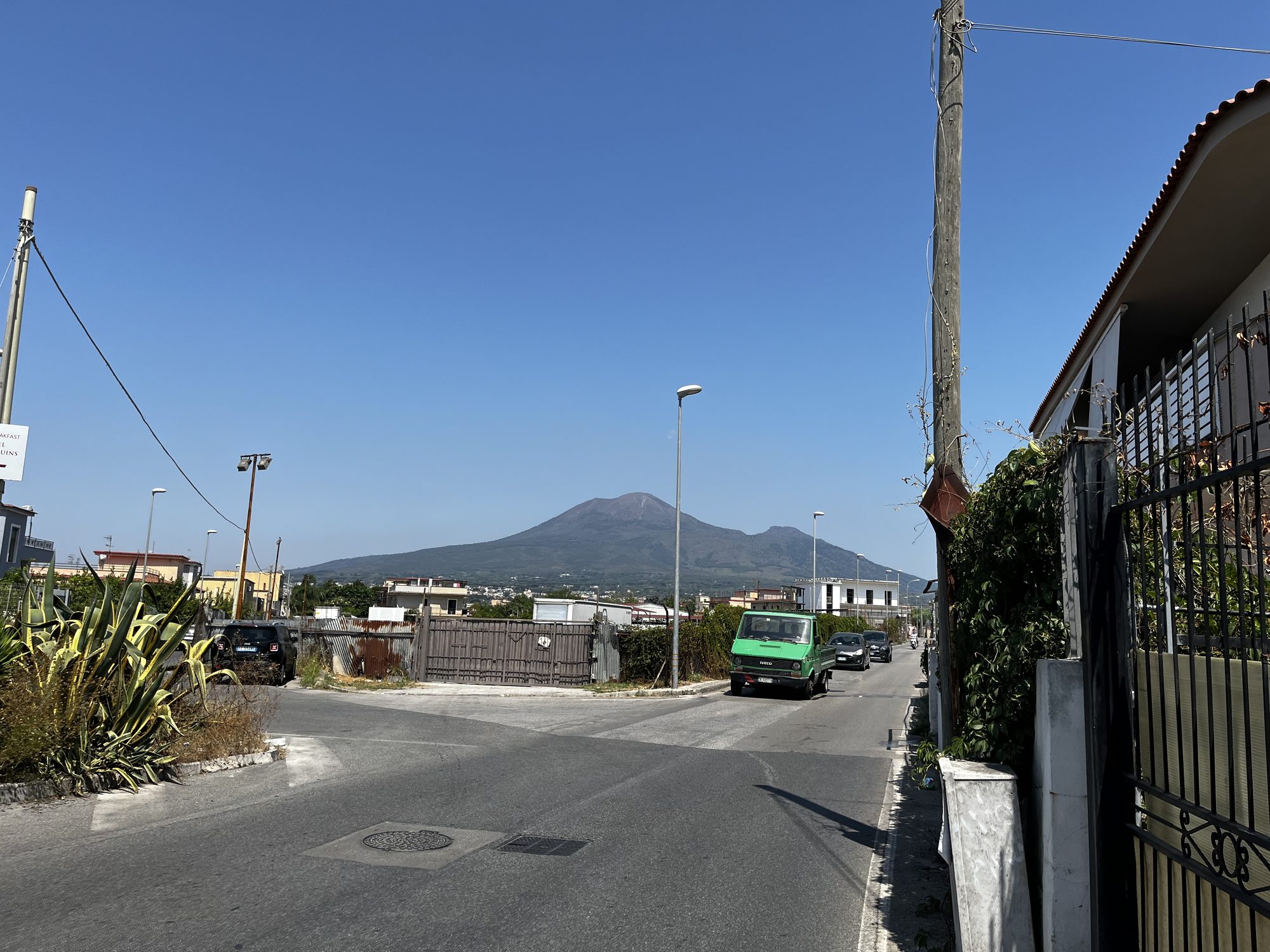
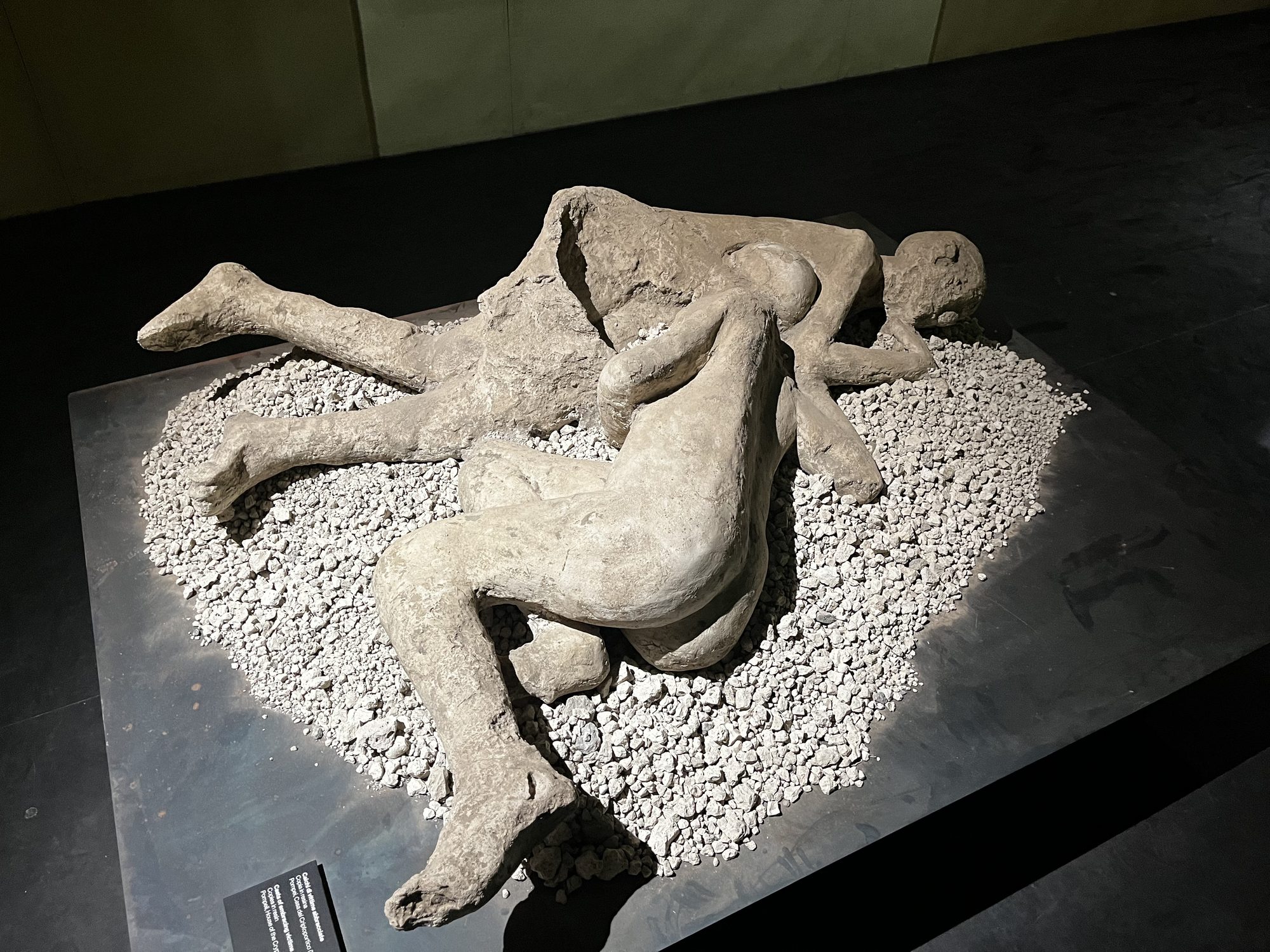
Pompeii is the city. Roughly four times the size of Herculaneum. Roughly six times the number of visitors. The one with the photographs, the famous victim casts, the Forum framed by Vesuvius in the distance.
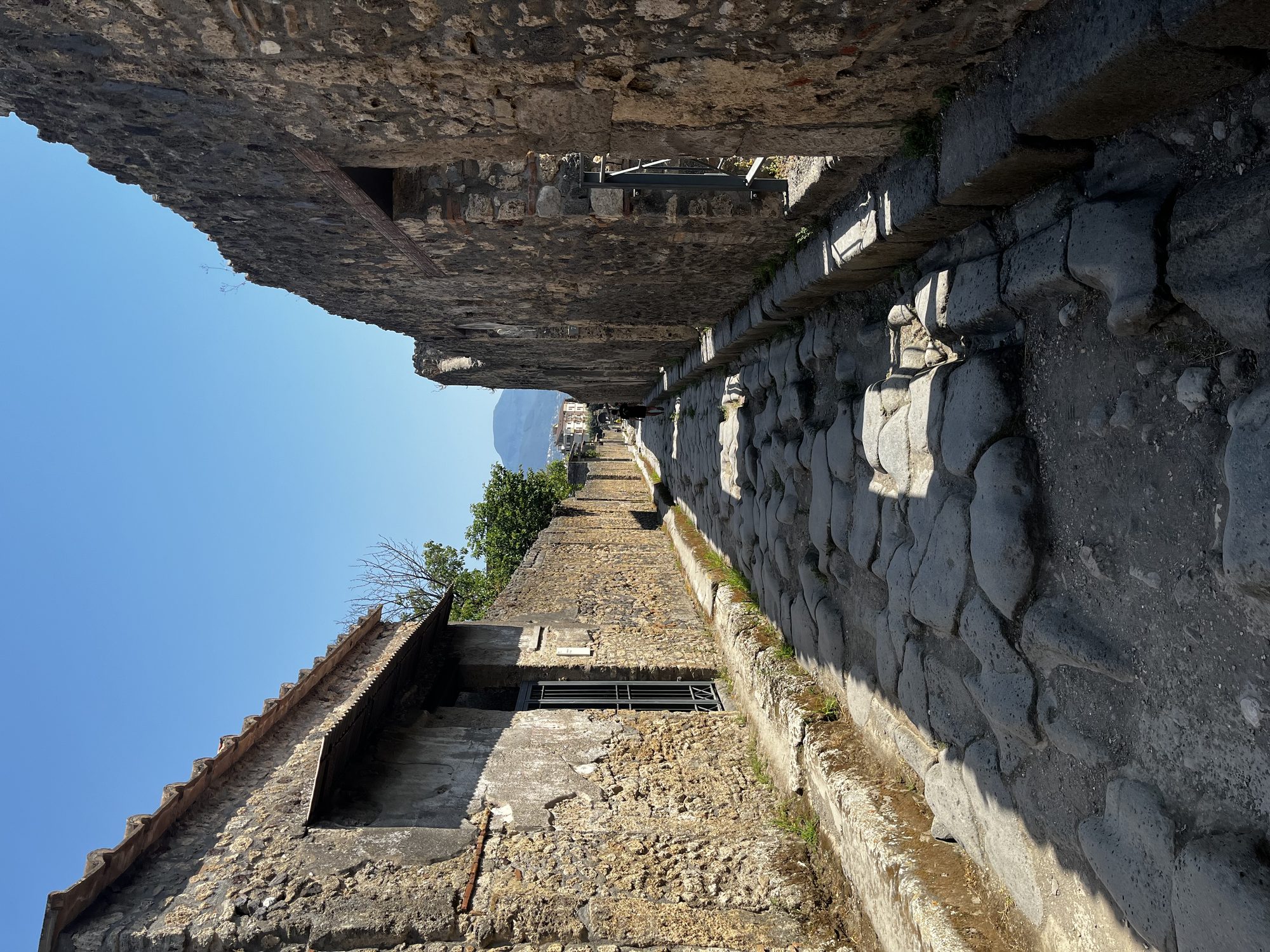
What Pompeii gives you that nothing else does is the scale of an entire Roman provincial city, intact and walkable. The Forum. The basilicas. The brothel with the menu painted on the wall. The Stabian Baths. The amphitheatre — the oldest surviving stone amphitheatre in the Roman world, two and a half centuries older than the Colosseum. The Villa of the Mysteries, with its continuous Dionysian fresco running across an entire room, extraordinarily preserved and one of the genuinely great works of Roman painting. You can walk for six hours and still feel like you have only seen pieces of it.
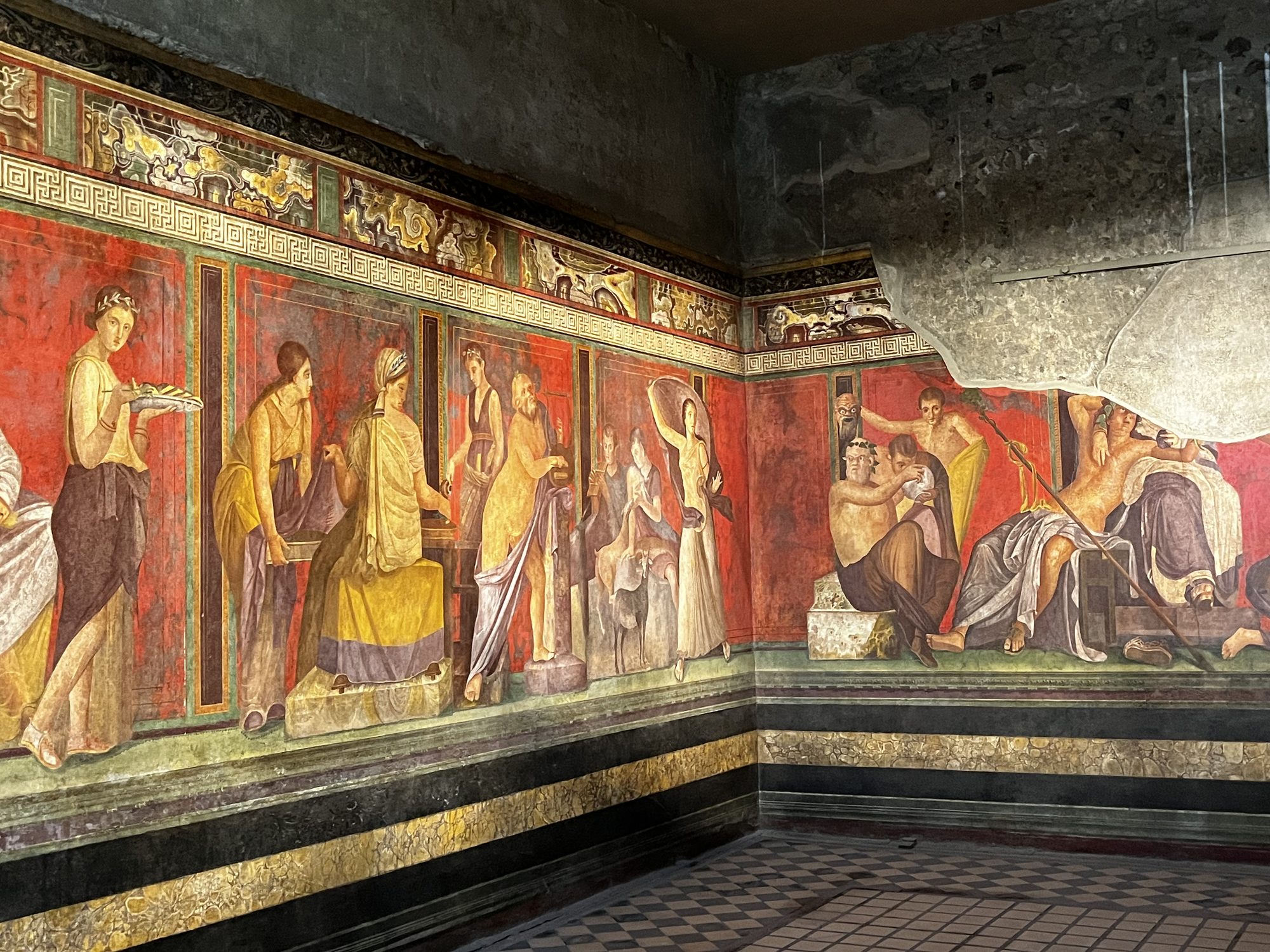
The scale is also Pompeii's weakness. Most travellers arrive without a plan, walk for two hours, see the Forum and the brothel and the famous body casts, and leave thinking they did Pompeii. They did not. The full case for doing Pompeii properly — the four to six hours, the early start, the route, the mistakes I made — is in my Is Pompeii Worth Visiting piece, and I will not repeat all of it here. The short version: if you are giving Pompeii a half-day, give it a real half-day. Walk five districts, not two.
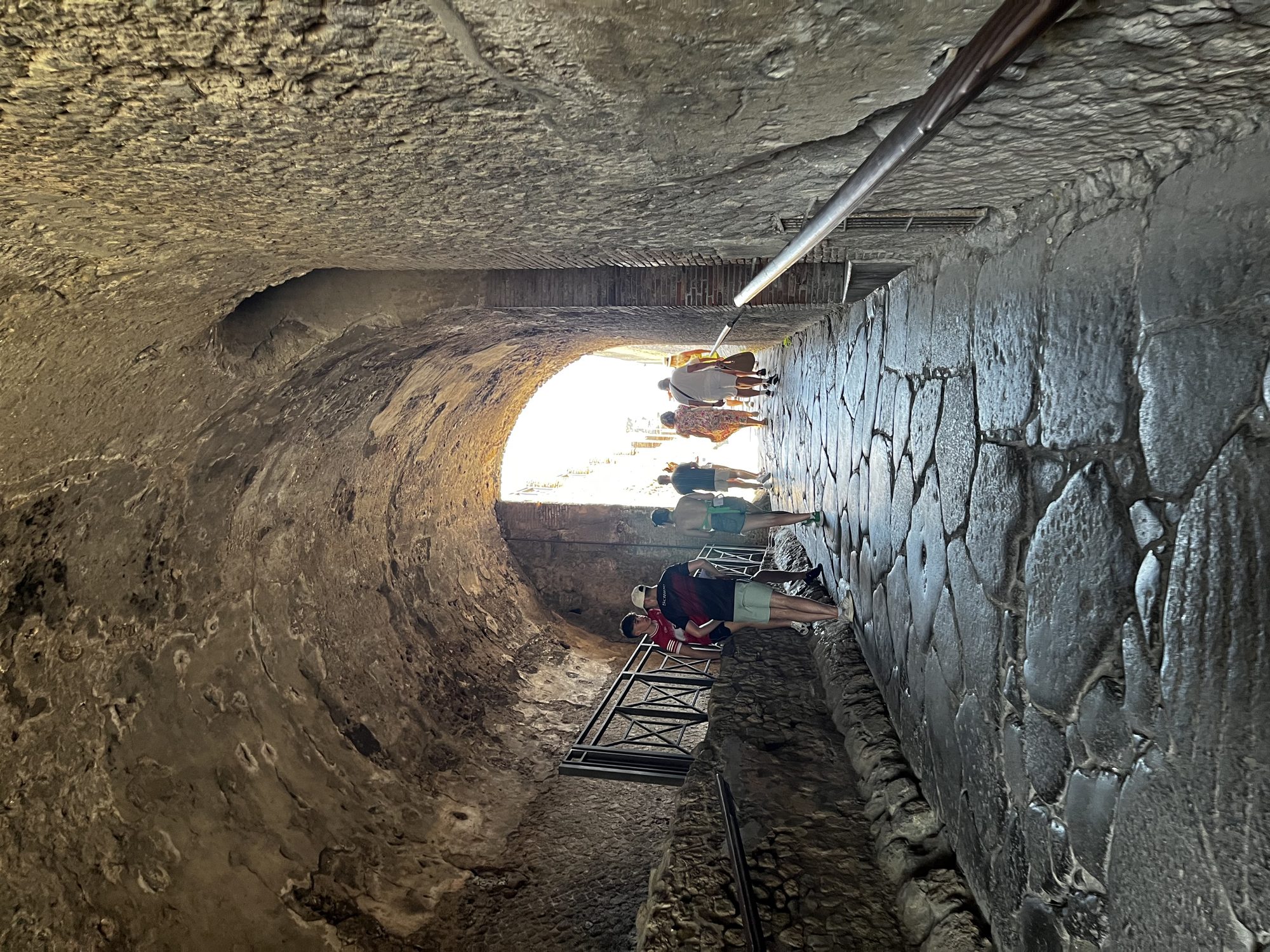
The honest Pompeii downsides
The heat, in summer. The lack of shade. The crowds at the famous sites (the Forum at midday in August is a queue). The roofless nature of the ruins — most of the surviving walls are head-height, the second storeys gone, the interior rooms exposed. The scale that makes the visit extraordinary is also the thing that exhausts you. My own July visit nearly broke my cousin and me. Go in May, September or October. Bring a hat the brim of which would embarrass you at home. Drink twice as much water as you think you need.
Herculaneum — The Preservation, the Quiet, the Underrated Answer
Herculaneum gives you the detail Pompeii does not. The second storeys are largely intact. The wooden screens and partitions in the houses are still there — carbonised, blackened, but in their original positions. The mosaics are extraordinarily well preserved. The frescoes are denser per square metre than anywhere in Pompeii. The Villa of the Papyri held an entire library of carbonised scrolls — fifteen hundred so far recovered, the only intact library to survive from the ancient world.
The other thing Herculaneum gives you that Pompeii cannot: the boathouses on the ancient shoreline. When the pyroclastic surge hit, roughly three hundred residents had gathered in the vaulted boat sheds at the edge of the sea, hoping the Roman navy would evacuate them. The navy did not arrive in time. The skeletons of those three hundred — including women, children, a soldier in full armour with his weapons, a man whose mother had brought him a sack of coins and jewellery to take with him — were discovered in those boathouses in the 1980s. They are still in place. You can walk along the front and see them. There is nothing like it in Pompeii. There is, frankly, nothing quite like it anywhere.
Herculaneum is also significantly smaller — roughly twenty hectares to Pompeii's sixty-six, of which only a third has been excavated. You can do it properly in two to three hours rather than the four to six Pompeii demands. The crowds are a fraction of Pompeii's. The shade is better, because the second storeys are intact. In July heat, Herculaneum is not a worse choice — it might be a better one.
The honest Herculaneum downsides
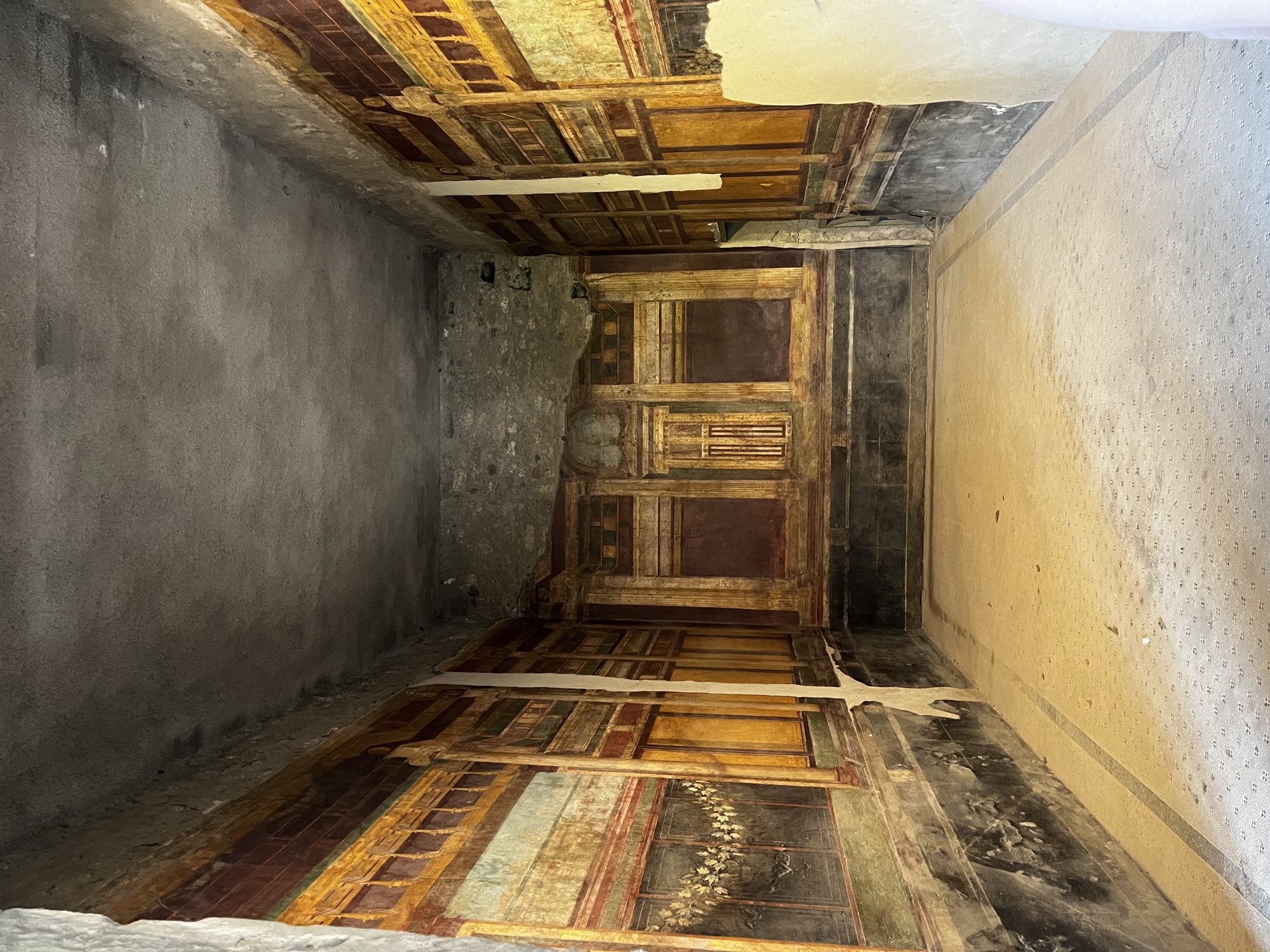
It is, by comparison, small. There is no famous photograph of Herculaneum — no instantly recognisable image like Pompeii's Forum-and-Vesuvius. The site is also physically below the modern town of Ercolano, dug into a deep rectangular pit, which means the approach lacks Pompeii's drama. You walk down a ramp into a recessed grid of streets rather than entering through an ancient gate. For travellers who want the cinematic version of "ancient city under a volcano," Pompeii still has the visual edge — it is the city you came to see, in the form you came to see it. Herculaneum is the museum. Pompeii is the postcard.
The Real Comparison — Five Categories
How to do both in a single day — the move nobody recommends
If you are giving the Vesuvius-buried cities a full day from a Naples or Sorrento base, doing both is not just possible — it is the right call. The logistics are simpler than they sound. Both sites are on the Circumvesuviana railway. Herculaneum first thing in the morning, Pompeii in the afternoon. Lunch between them.
The day: Catch the 8am Circumvesuviana from Naples Centrale (or 8:30 from Sorrento). Off at Ercolano Scavi at roughly 8:30 from Naples, 9:30 from Sorrento. Walk down the hill to Herculaneum (signposted, about 10 minutes). Site opens 8:30. You'll have it nearly to yourself for the first hour. Two and a half to three hours is enough — do the House of the Wooden Partition, the House of the Mosaic Atrium, the boathouses, the Villa of the Papyri perimeter, and the central street to the bath complex.
Lunch in the town of Ercolano if you want fast-and-cheap, or back on the train one stop to Pompei Scavi village for a slower meal at a non-touristy restaurant near the modern town. Pompeii itself reopens after the lunch lull at around 1pm — go in then. Three to four hours of focused walking. Pick five districts: the Forum, the Villa of the Mysteries, the amphitheatre, the Stabian Baths, the Villa of the Faun. Skip the rest. Return train to Naples or Sorrento by 6pm. Dinner that night will feel earned.
"Pompeii gives you a city. Herculaneum gives you an afternoon — the carbonised, preserved, frozen-in-motion afternoon when Vesuvius came down the mountain. Do not pick. Do both."
How much time do you actually need at each site?
Herculaneum: two to three hours. Less than two and you are skimming. More than three and you start re-walking streets you have already seen. The site is genuinely small enough to do thoroughly in a single morning.
Pompeii: four hours absolute minimum. Six hours to do it properly. The whole day to do it slowly, district by district. Pompeii is genuinely too large for a single visit — most visitors end up rushing the second half, and the second half is where most of the great frescoes live. If you only have a half-day for Pompeii (because you are doing Herculaneum the same day), pick five districts in advance and walk them slowly rather than trying to sample the whole site.
How to actually book the day
Base in Naples for the easiest run at both sites — Ercolano is 20 minutes by train, Pompeii is 35 minutes, and the Circumvesuviana ticket is under €5 for the whole day. The Naples-base argument exists partly because of how cheaply and quickly the Vesuvius sites and the Amalfi Coast open up from Napoli Centrale. Sorrento works too — the same train line, slightly longer journey, and you can pair the Vesuvius day with a coastal day either side.
Buy tickets online for both sites — the Pompeii queue at the gate in summer can take an hour, and the Herculaneum office is sometimes closed during lunch. The official site for Pompeii is pompeiisites.org; Herculaneum tickets sell through the same portal. Skip the unofficial "skip-the-line" resellers that pop up first in Google — they charge a markup for a service you can do yourself in five minutes.
Timing: May, June, September, or early October. Skip July and August unless your dates are absolutely fixed. The Naples-region summer is genuinely punishing on these sites — you walk for hours in direct sun on stone roads, with limited shade and even more limited drinking-water access. I made the mistake on my own trip; my cousin and I were absolutely destroyed by hour four. The honest version of that mistake is the longer piece I wrote afterwards.
Doing the Vesuvius cities — the right day
Base: Naples (Circumvesuviana from Napoli Centrale, easier and faster) or Sorrento (same line, slightly longer). The Naples-as-Amalfi-base argument applies in full here — both sites are day trips you barely notice doing.
When: May, June, September, or early October. The summer heat on roofless ruins is real. Skip July and August unless fixed.
Order on a one-day trip: Herculaneum first (smaller, opens 8:30, do it before 11), lunch in Ercolano or Pompei, Pompeii from 1pm to 6pm.
Pompeii route on a half-day: Forum, Villa of the Mysteries, Stabian Baths, amphitheatre, House of the Faun. Skip the rest unless you have the full day.
Tickets: Buy on pompeiisites.org. Skip the unofficial resellers in search ads. Combo tickets exist for both sites.
The Circumvesuviana pickpocket rule: Bag in front of you, phone out of your back pocket. That is the entire defence. Most reports of pickpocketing are on this single line — the rest of the Naples public transport network is fine.
Hat, water, sun cream. The mistake my cousin and I made was none of the three. Do not be us.
For travellers who want to make a week in southern Italy normal rather than a once-in-a-decade event, the PONTUS community runs a private travel membership. Read about the community side →
Before you book a Naples or Sorrento base: most hotel prices are set by two companies. We explain who actually owns online travel — and why it costs you.
The Verdict — And Why It Matters
Pompeii or Herculaneum is the wrong way to phrase the question. The right way is: do you have a half-day, a full day, or a full week in this corner of Italy? Half-day, Pompeii. Full day, both. Full week with the Amalfi Coast and Naples already on the list, both, plus the Naples Archaeological Museum where most of the best frescoes from both sites actually live now — which is the move almost no travel guide mentions and which doubles the value of either site visit.
The volcano is still active. It is monitored, but it is active. Both cities are still being excavated — Herculaneum has only about a third of its area uncovered, and the Villa of the Papyri may yet yield further scrolls that haven't been read since 79 AD. You are not just visiting an ancient site. You are visiting an ongoing archaeological project that one day will look very different from the version you see now. That, on its own, is enough reason to go. Go to both if you can. Pick Pompeii if you can't. And if you find yourself with two days rather than one — give the second to the Naples Archaeological Museum, which is the third leg of this Vesuvius-region tripod that almost nobody completes.
The bigger picture: this is one of the great archaeological regions on earth, and almost every traveller to southern Italy gives it half a day and a single site. Most of them are wrong. The south of Italy works as one continuous trip, not a series of bolted-on day excursions — and the Vesuvius cities are its emotional centre.
"Pompeii or Herculaneum is the wrong question. The right one is: how much time will you give the volcano that ate them both?"
If you read this all the way down, there's a fair chance you've been somewhere too — and you have your own version of what just happened in this piece. I want to read it. I read every story that comes in, and I write back. The pieces that earn it go live here with your name on them, your photographs, your verdict.
This is what PONTUS
is built for.
Seven days in Greece in May. A week in southern Italy in June, with both Vesuvius cities and the Amalfi Coast. A long weekend in Quebec City in October. Three days in Lyon next spring. This is the rhythm a travel-shaped life looks like — and PONTUS exists to make that life normal, not exceptional.
- For those who want to be part of a community of like-minded people
- For those who don't want to break the bank just because they want to see the world
- For those who are ready to put the effort in and build their own income from the travel industry
Whatever you want, whatever you choose — PONTUS is here.
Join the Community