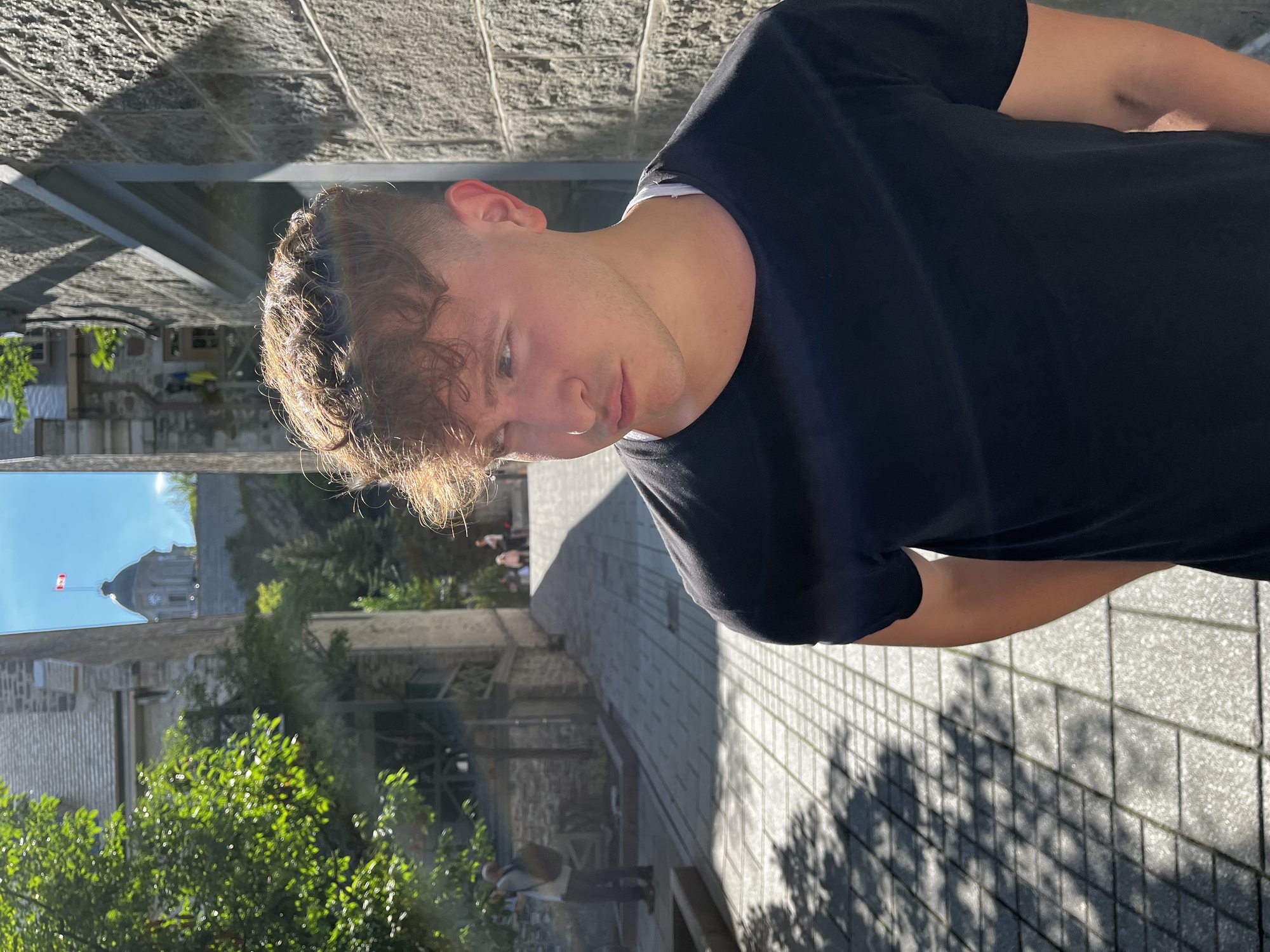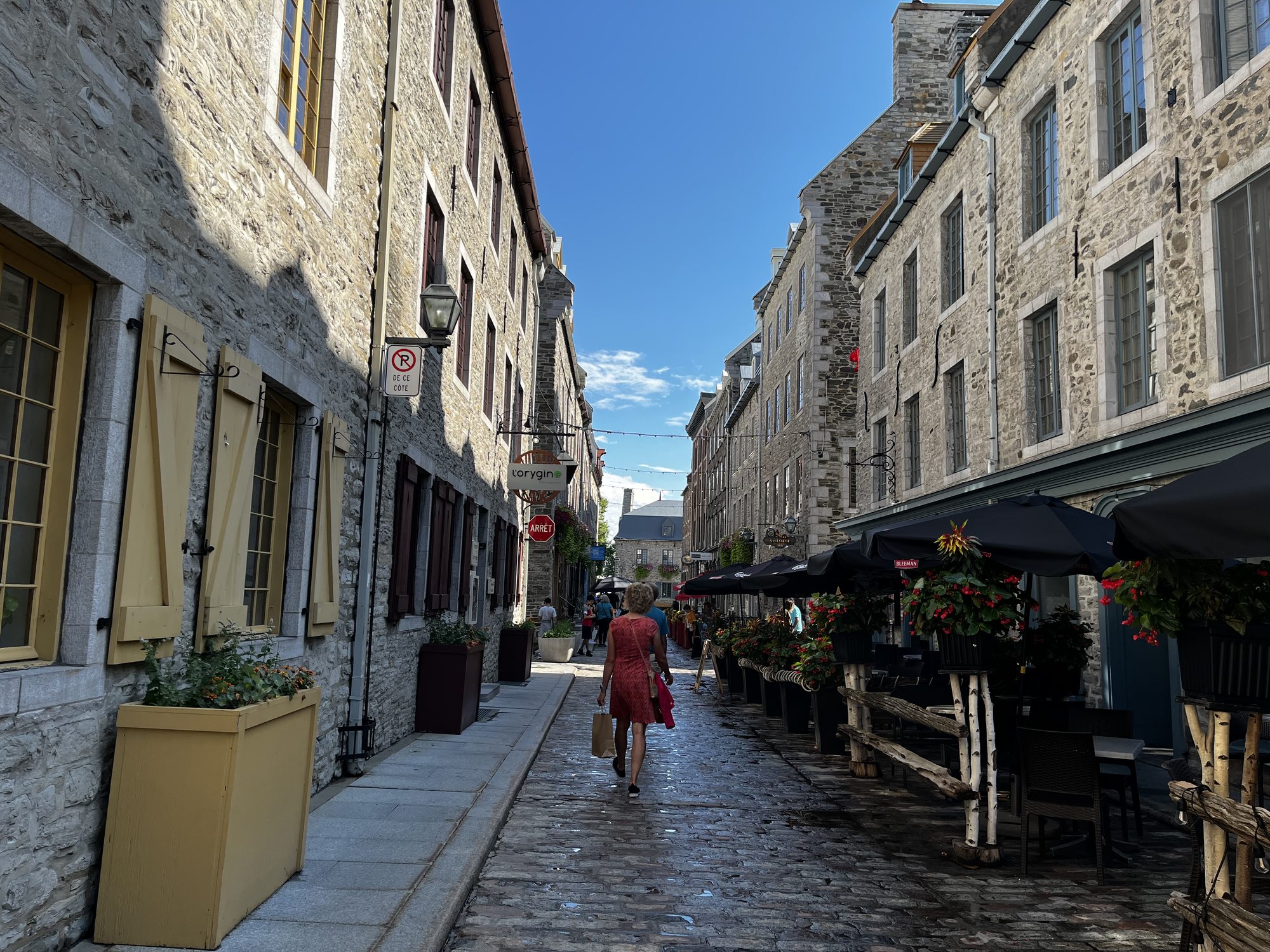
Forty-eight hours is exactly the right length for a first weekend in Quebec City. Long enough to walk the old city properly, eat one real meal in a vaulted tavern, and get yourself out to Chutes Montmorency for a morning. Short enough that you'll leave with a reason to come back — for the Spa Nordique you didn't have time for, for the Île d'Orléans cider run, for a winter Carnival weekend, for Christmas. Two days is not a stretch on this city. It is the right length.
I have already made the broader case for Quebec City in my full Quebec City article — the argument that if you live in North America and have been telling yourself for years that you'll save up for a European weekend, you can stop, because it is here, on a river two hours from Montreal, and most of us ignored it for years because we didn't believe it. If you are still weighing the city against its bigger neighbour, the head-to-head verdict is in Quebec City or Montreal. This piece is the operational version of the case I have already made: what to do when you have two days and want all of it.
Two days inside the walls. One morning out at the falls. One real meal in a vaulted tavern, one slow walk at dusk through Petit Champlain. That is the trip. The lines above are the route. The detail below is how to make each hour pull its weight.
Every piece here ends with an honest call on where to actually go. New verdicts land in your inbox first. One email. No noise.
Day 1 — Inside the Walls, on Foot, All Day
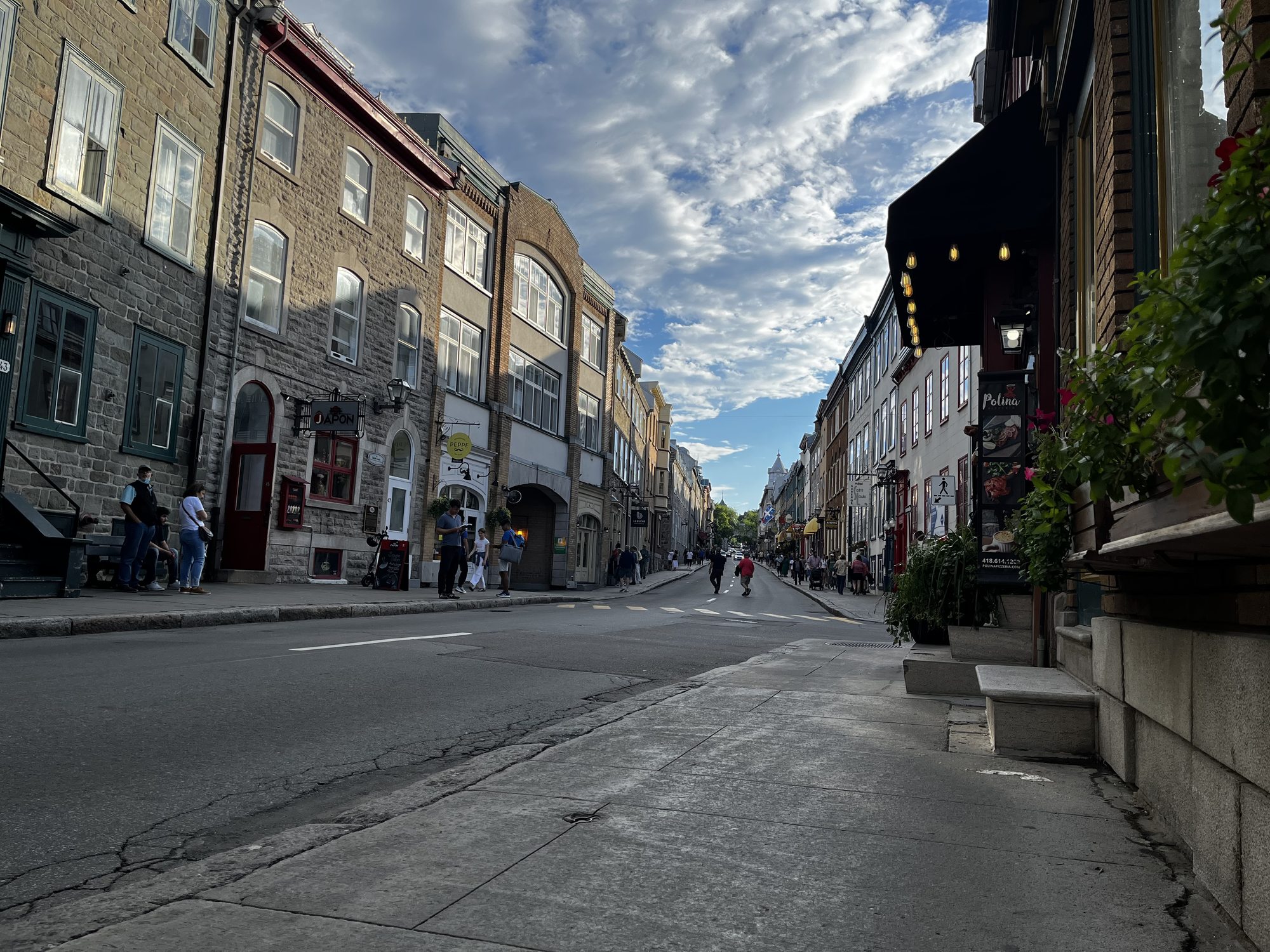
Park outside the walls or arrive by train and walk in. The historic core of Quebec City — Vieux-Québec — is the only walled city north of Mexico and the entire reason you came. Trying to drive inside the walls is a logistical mistake at best and a fender-bender at worst. The streets are narrow. The cobblestones are uneven. The European logic applies: park, then walk for two days.
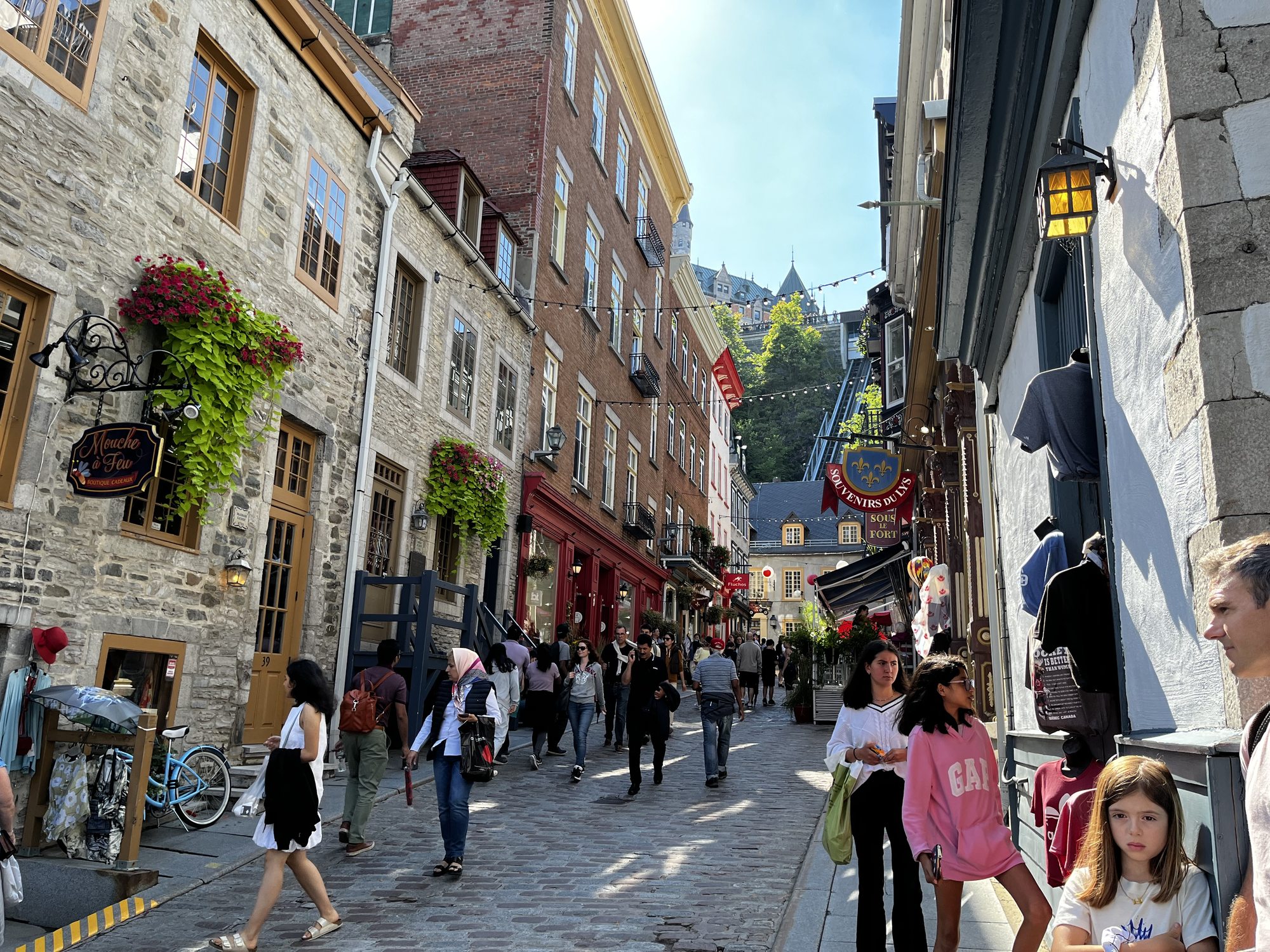
Morning — Petit Champlain at opening hour. Take the funicular down from Dufferin Terrace to Quartier Petit Champlain — the small, dense, ridiculously photogenic lower-town district at the foot of the cliff. Get there by 9am, before the day-tour buses arrive. The street is quiet. The shops are half-open. The famous photograph — the row of stone houses, the cliff at the end, the funicular sliding up the rock face — is yours alone for about forty-five minutes. After that the crowds arrive and the moment is gone for the day. This is the photograph for which most people come. Get up early. Earn it.
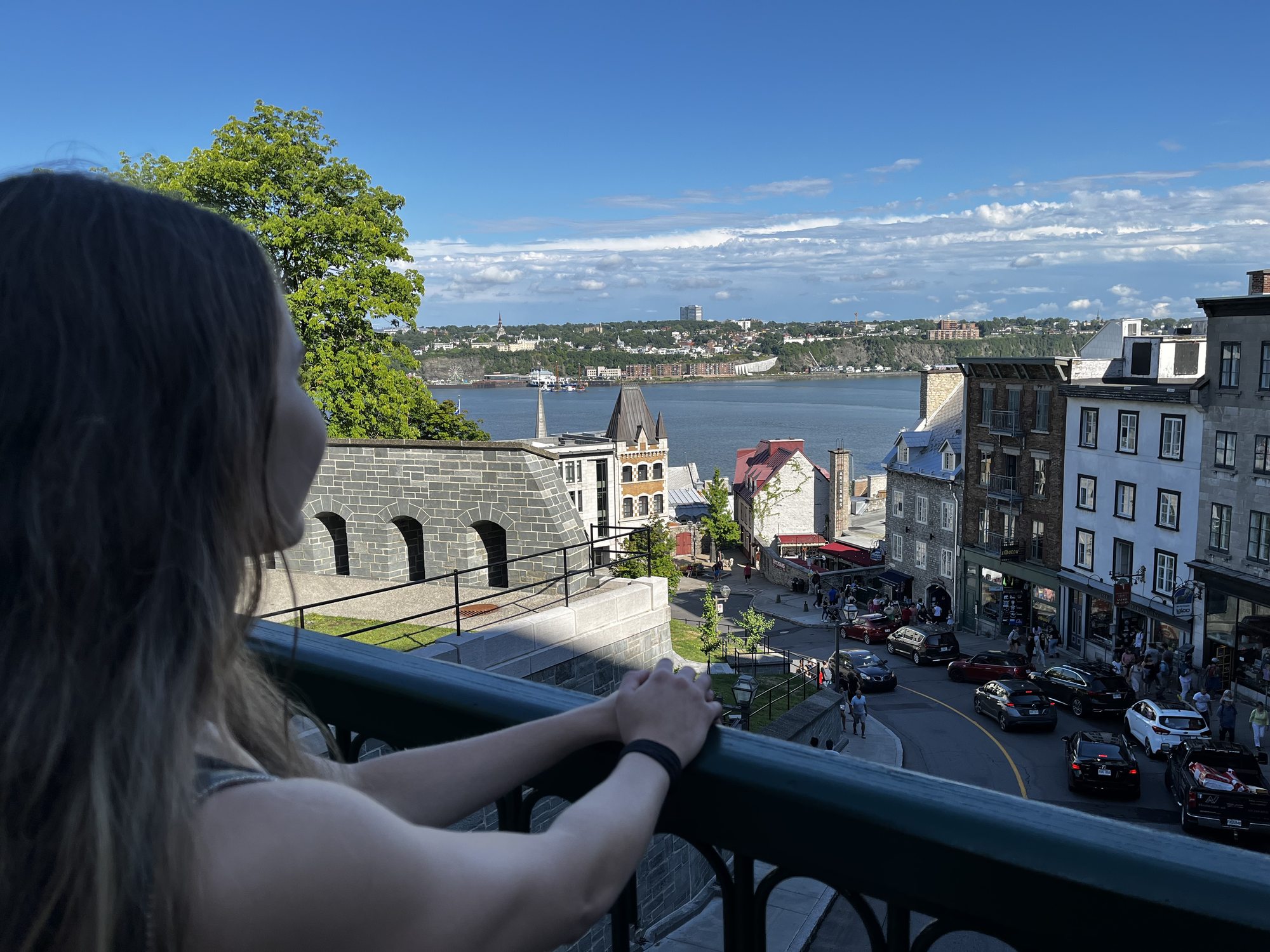
Late morning — the cliff back up, slowly. Walk up the Côte de la Montagne or take the funicular back up to Dufferin Terrace. The Terrace itself — the long wooden promenade beneath the Chateau Frontenac, suspended above the Saint Lawrence — is the move most visitors rush. Don't. Sit. Watch the river. The cannons along the edge are real cannons that the British army left when they handed the city over in 1867. The view across to the Île d'Orléans and the Saint Lawrence widening toward the Atlantic is the geography that explains why Quebec was where the French first dug in.
Lunch — somewhere unmarked. The restaurants on the cathedral square and along Rue Saint-Louis are tourist-priced and tourist-quality. Walk two blocks. Anywhere off the main promenade. The neighbourhood around Rue Saint-Jean (outside the gates of the old city, technically) has real Quebec restaurants for a fraction of the cost, and you'll be the only English-speaker at the next table.
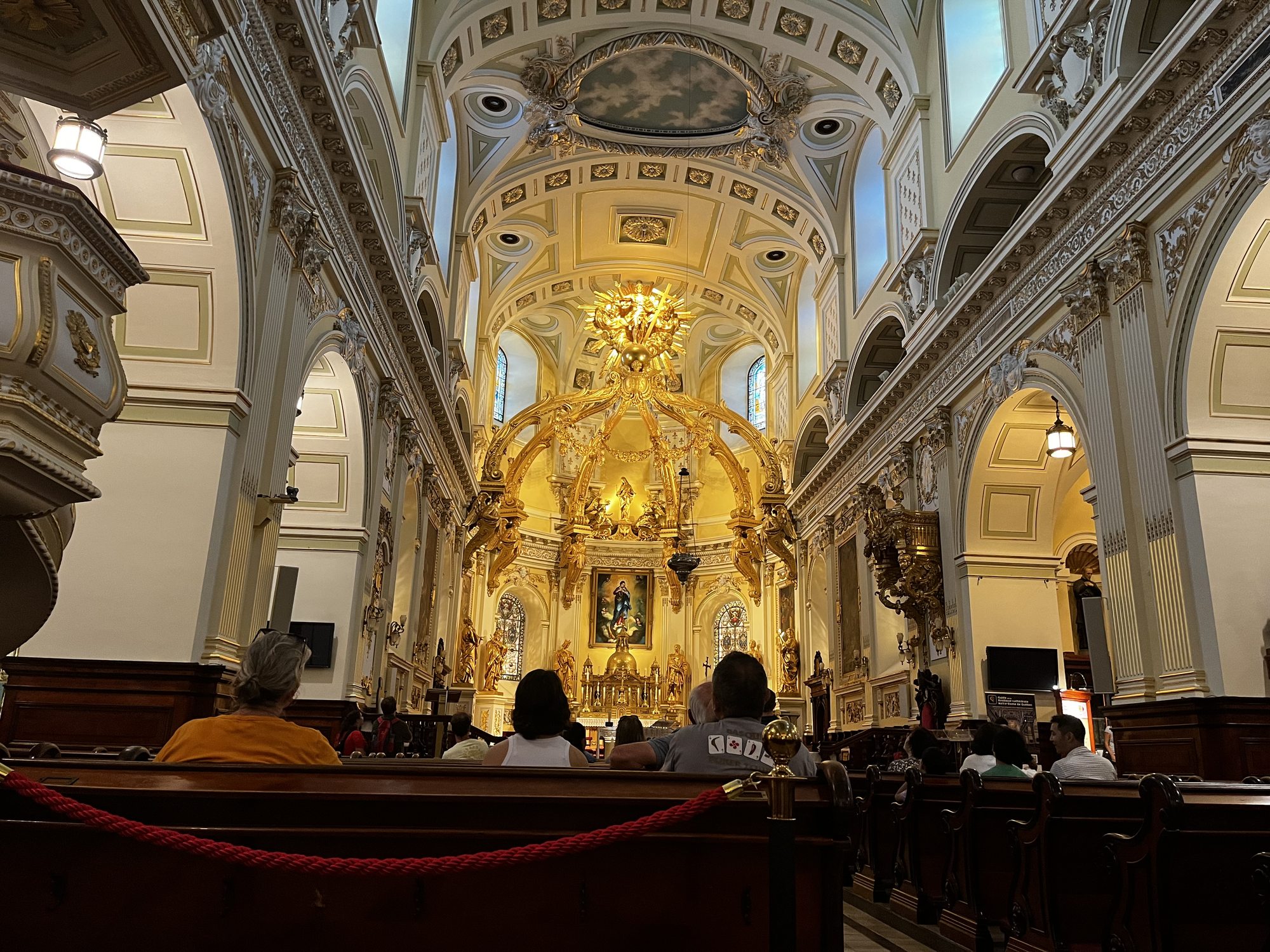
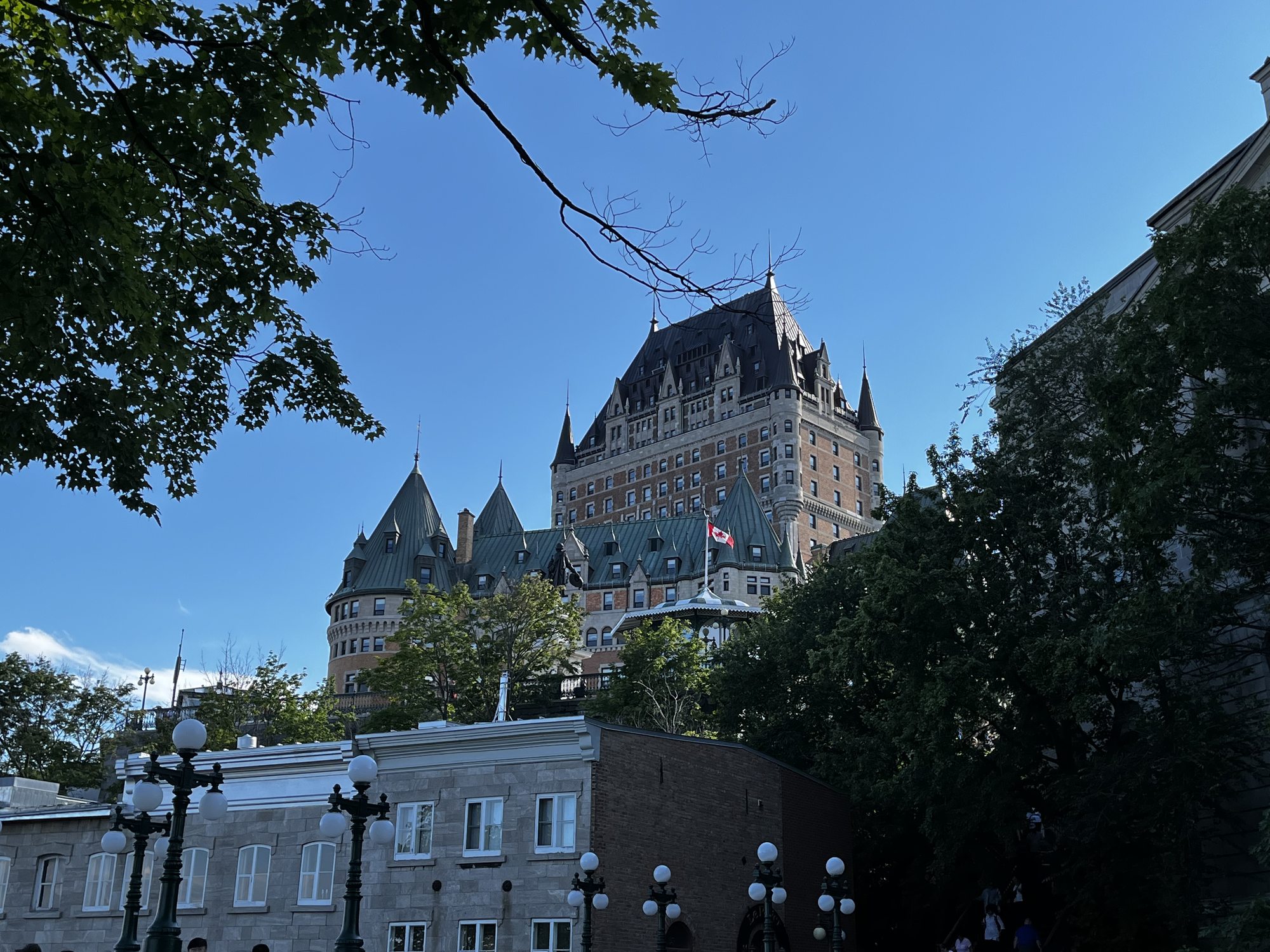
Afternoon — Notre-Dame Basilica and the Chateau. Notre-Dame de Québec is the cathedral most visitors walk past and shouldn't. The current building is the fourth on the site — the first three burned. The interior is genuinely extraordinary: a gilded baroque main altar that looks more Spanish-colonial than French, painted vaulted ceiling, soft light through the side windows. Free entry. Twenty minutes. Then the Chateau Frontenac itself. Walk through the public lobby and the bar — both are open to non-guests, and the Chateau is the most photographed hotel in the world (genuinely, by total photo count). The Bar 1608 inside is worth a single drink at sunset for the view alone.
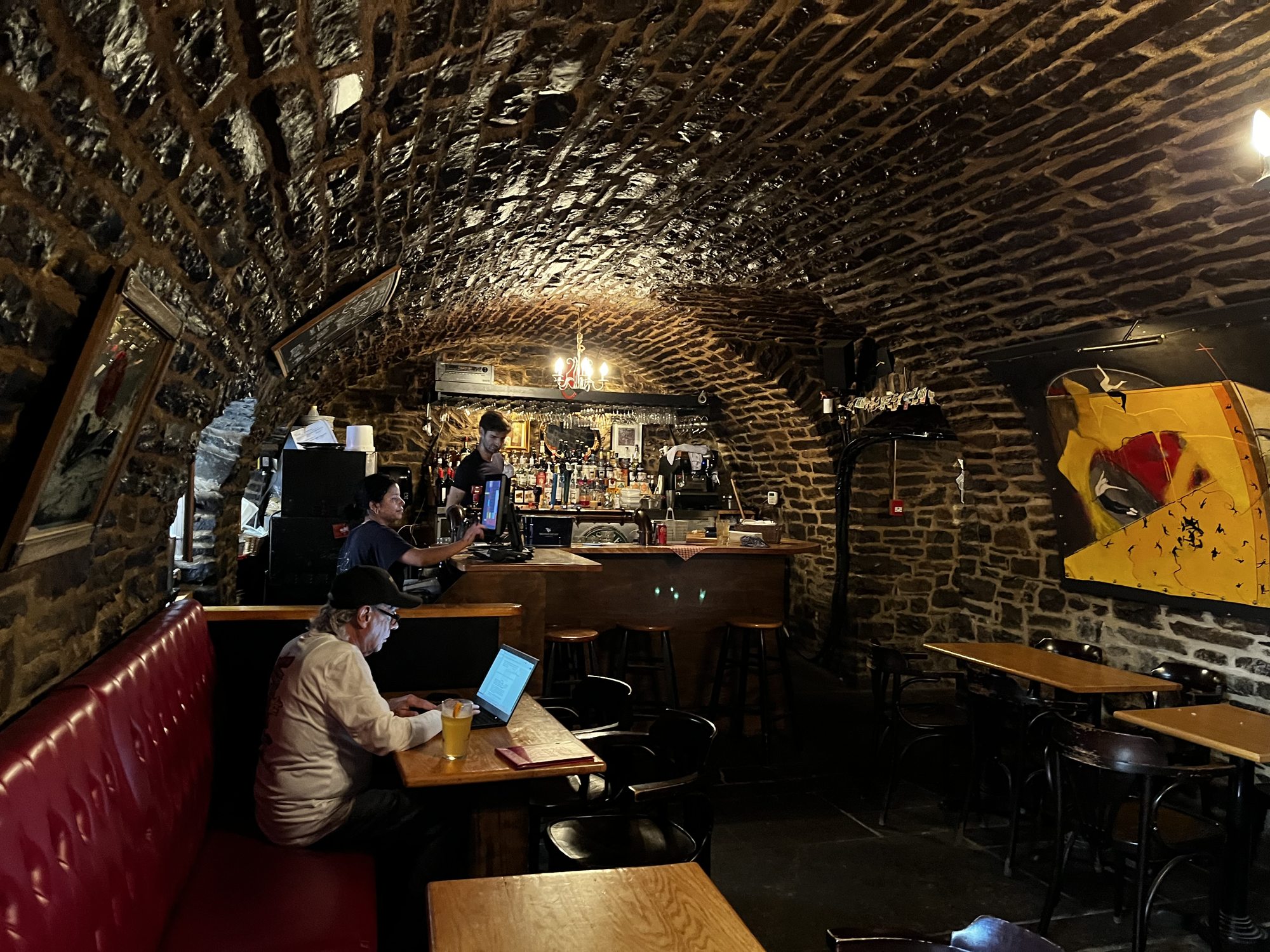
Evening — a tavern dinner that earns the trip. The vaulted-cellar tavern restaurants in the old city are the move. Aux Anciens Canadiens is the famous one (touristy, but the menu is genuine Quebec cuisine — pea soup, tourtière, sugar pie). Le Saint-Amour is the higher-end version. For the cheaper, livelier version: the Pub Saint-Alexandre or Les Frères de la Côte for moules-frites and a Quebec craft beer. Whatever you pick — let it be a long meal. The European weekend you are here for happens at the dinner table.
Late evening — walk Upper Town when it empties out. The streets after 10pm are nearly silent. The lamplight on stone. The few open bars on Rue Saint-Jean. The view from the Plains of Abraham at night, looking back toward the Chateau lit up. This is the version of Quebec City that almost nobody gives the time to. Stay out for it.
Day 2 — Out of the Walls, Then Back In Slowly
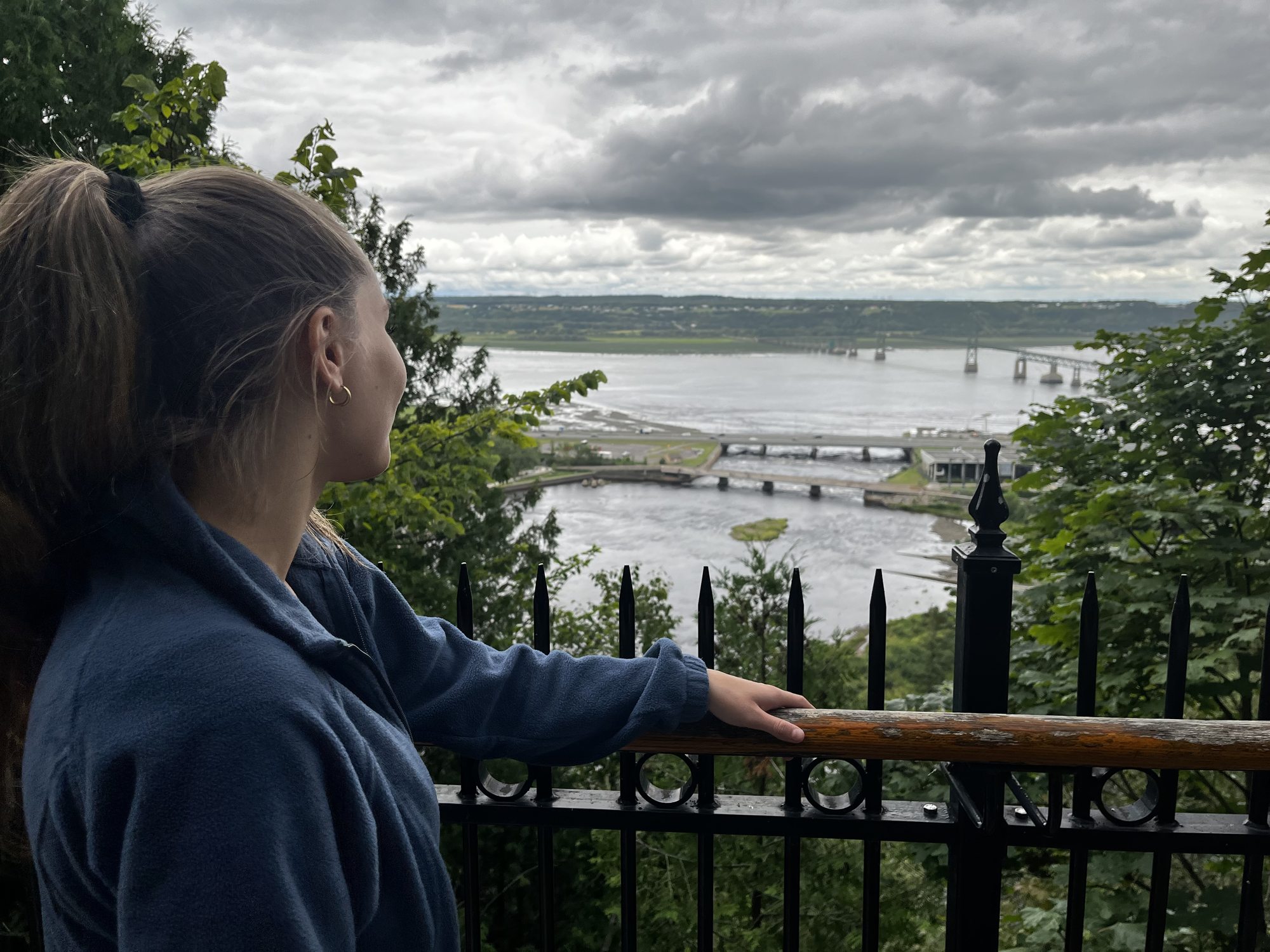
Morning — Chutes Montmorency. Fifteen-minute drive (or city bus) from the old city. The falls are higher than Niagara — 83 metres versus Niagara's 51 — and considerably less crowded. You can take the cable car up, walk the suspension footbridge across the top, hike down the staircase on the cliff face if you have the legs. The view back across to the Île d'Orléans and the Saint Lawrence is the geography of New France. Two hours including transit. The right way to start day two.
While you are out at Montmorency, the Île d'Orléans is just across the bridge — it is the agricultural island where Quebec City's farms have produced for four hundred years. Cider houses, sugar shacks, strawberry farms, the cheese-making monastery. If you have a half-day to give it (and the car), the loop drive is worth it. If not, save it for the next trip — there will be one.
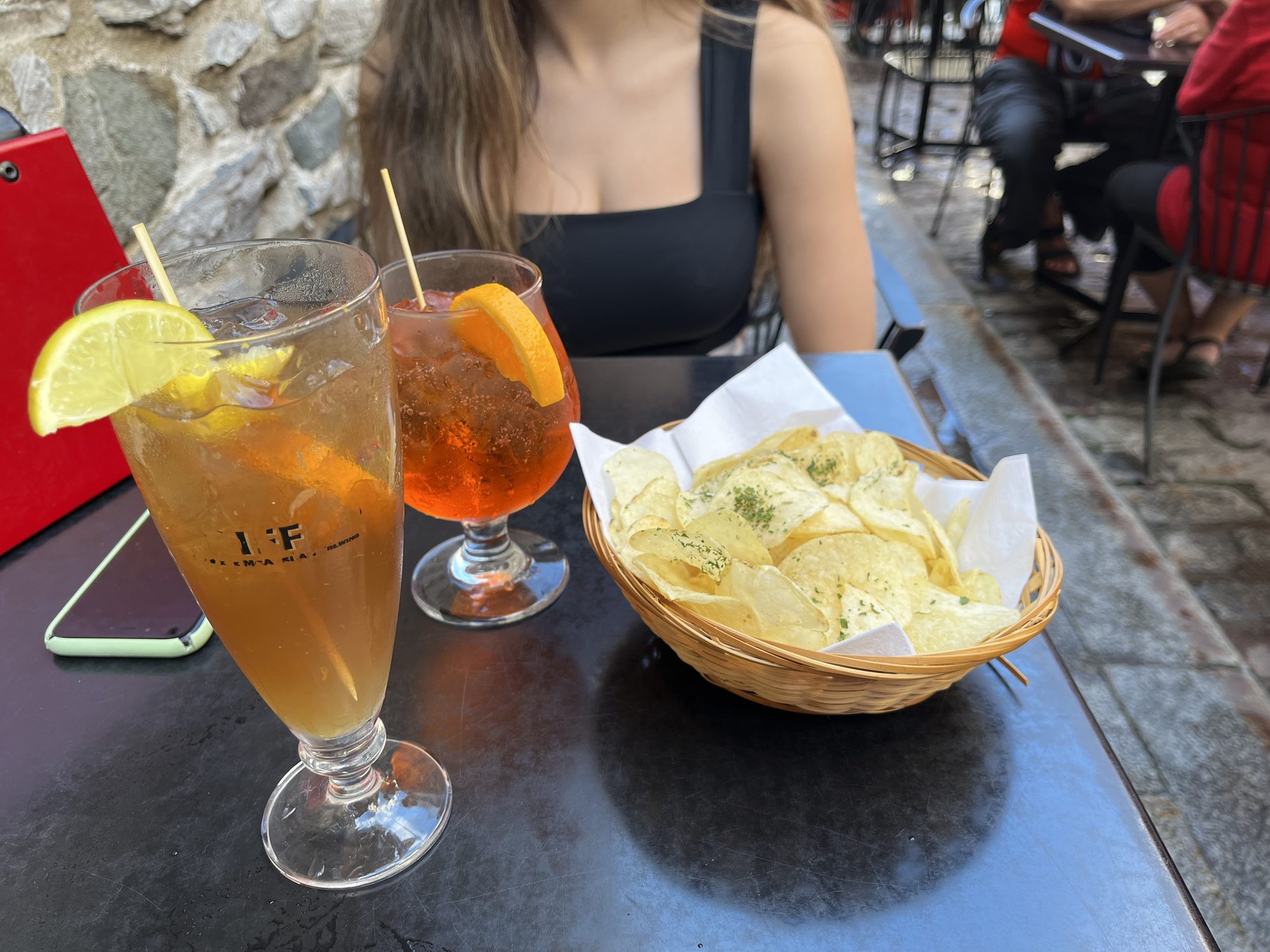
Lunch — back in the old city, slowly. Drive or bus back into Quebec City. Lunch on a terrace if the weather allows. The alley restaurants tucked behind Rue du Petit-Champlain are the move — small, slow, almost all of them serve excellent food at honest prices. The Saint-Amour terrace for the splurge. Aux Anciens Canadiens still works for the traditionalists. The new wave of bistros along Rue Saint-Jean for the more contemporary version of Quebec food.
Afternoon — the neighbourhoods you missed. Use the second half of day two for the parts of the old city you skipped on day one. The Plains of Abraham (one of the most consequential battlegrounds in the entire history of North America, now a public park). The Musée du Fort if you want the military-history short version. The Musée des Beaux-Arts du Québec on the Plains for the longer, slower museum afternoon. Or — and this is the move I'd make — the slow second walk through Petit Champlain when the morning rush is over and the streets quiet down again.
Evening — second dinner, somewhere different. Use the second night to eat in a register the first night didn't cover. If night one was traditional Quebec, night two is the modern bistro version — try a place along the lower edge of Rue Saint-Paul or in the resurgent Saint-Roch district just outside the walls. If night one was vaulted tavern, night two is the lighter terrace version. Order a different kind of wine. Walk a different way back to the hotel.
"Forty-eight hours in Quebec is not a short trip. It is the right trip — long enough to walk into the city, short enough to leave with a reason to come back."
How to actually book the 48-hour trip
Coming from Montreal: drive on Autoroute 20 (south of the river) or 40 (north). The 20 is faster on a Friday afternoon; the 40 is prettier in autumn colour. 2.5 to 3 hours depending on traffic. Park outside the walls — Hôtel-de-Ville lot or the Bassin Louise on the lower-town side. Walk in from there.
If you don't want to drive: VIA Rail Montreal to Quebec City, 3 to 3.5 hours, the late-morning Friday train arrives in time for a long lunch and afternoon. The train station in Quebec — Gare du Palais — is itself architecturally extraordinary (it is a smaller version of the Chateau Frontenac, built by the same architect). Walk straight from the station into Lower Town.
Coming from the US: fly into Quebec City Jean Lesage airport (small, friendly, 20 minutes to the old city by taxi). Or fly into Montreal and drive — adds 3 hours each way but opens up Montreal as a half-trip on either side.
Where to stay: inside the walls, in Upper Town. The Chateau Frontenac if you can swing it (the experience is what you'd think, the price too). Au Manoir Sainte-Geneviève or Hôtel Clarendon for the mid-range stone-and-old-fashioned charm. Anywhere on Rue Saint-Louis, Rue Sainte-Anne, or the small streets behind the cathedral. Avoid the outer Sainte-Foy hotels — they are cheaper but you'll spend half your day commuting.
If 48 hours becomes 72, the third day is the Spa Nordique at Stoneham, twenty minutes north — an outdoor Nordic-bath spa, hot pools, cold plunges, sauna huts in the snow, the kind of place that takes a tired urban weekend and turns it into a recovery. Worth the day. Save it for the second visit if 48 hours is your budget this time.
Quebec City in 48 hours — booking essentials
When to go: Late September to mid-October (autumn colours, light still warm), or December (genuine Christmas market feel). August is humid and busy. Skip April-May (mud season) and the deep winter unless Carnival is the reason.
Where to stay: Inside the walls. Upper Town. Walking distance to everything in this itinerary. Sainte-Foy hotels are cheaper but waste your day.
How to arrive: Drive from Montreal (Autoroute 20 fastest, 40 prettier in autumn) or VIA Rail (3.5 hours, Gare du Palais drops you into Lower Town).
Park outside the walls: Bassin Louise or Hôtel-de-Ville lot. Driving inside the walls is the move tourists make once and never again.
Petit Champlain timing rule: Be there before 9am for the photograph. After that, the day-tour buses arrive and the moment is gone until late evening.
Notre-Dame Basilica: Free entry, 20 minutes, the underrated stop on the route. Most visitors walk past.
One dinner inside a vaulted tavern: Aux Anciens Canadiens (traditional), Le Saint-Amour (high-end), or Pub Saint-Alexandre (cheaper, lively). The European weekend you came for happens here.
The Chateau bar: Bar 1608. Open to non-guests. One sunset drink. Worth it.
For travellers who want to make European weekends like this a normal part of life rather than a once-in-a-decade event — even if some of them are technically inside North America — the PONTUS community runs a private travel membership built around the idea. Read about the community side →
Old Québec’s hotels fill and climb in summer. Most of that price is set by two companies — see who actually owns online travel before you book.
The Verdict — And Why It Matters
Forty-eight hours is the right length for a first weekend in Quebec City. It does what the trip needs to do: it gets you inside the walls, walking the only walled city north of Mexico, eating in a vaulted tavern that has fed people on the same stones for three centuries, watching the Saint Lawrence from Dufferin Terrace at the hour the sun begins to fall behind the cliff. It also leaves you wanting more — the Spa Nordique you didn't do, the Île d'Orléans cider houses, the Carnival in February, the autumn drive along the river up toward Tadoussac for the whales. That is the right shape of a weekend trip. You leave with a memory and a reason to come back.
And here is the harder truth: most North Americans live within a day's drive or a short flight of this city. Most of us never go. We tell ourselves we'll save up for a real European weekend one day — for Paris, for Lyon, for the kind of trip that requires an Atlantic crossing and a thousand dollars in flights and a week off work. And then we don't go. We don't go to Lyon, we don't go to Naples, we don't go anywhere. The Quebec City weekend is the version of that trip you can do in the time you actually have. A Friday afternoon to a Sunday evening. Two nights in a stone hotel. One real dinner. Two long walks. The whole point of PONTUS is that travel should be a way of life, not a saved-for-event — and the closest example of that argument in North America is sitting in Quebec, two and a half hours from Montreal.
Do it in late September or October. Drive in on the 40, park outside the walls, stay in Upper Town. The trip rewards the depth of attention you give it.
"The European weekend you keep saying you'll save up for one day is sitting in Quebec, two hours from Montreal. Forty-eight hours. The closest your continent will give you. Go."
If you read this all the way down, there's a fair chance you've been somewhere too — and you have your own version of what just happened in this piece. I want to read it. I read every story that comes in, and I write back. The pieces that earn it go live here with your name on them, your photographs, your verdict.
This is what PONTUS
is built for.
Forty-eight hours in Quebec City this October. Three days in Lyon next May. A week in Greece the following spring. A week in southern Italy after that. This is the rhythm a travel-shaped life looks like — and PONTUS exists to make that life normal, not exceptional.
- For those who want to be part of a community of like-minded people
- For those who don't want to break the bank just because they want to see the world
- For those who are ready to put the effort in and build their own income from the travel industry
Whatever you want, whatever you choose — PONTUS is here.
Join the Community