Three days. That is the answer. Two and a half leaves you rushing the parts that earn the trip. Four lets you slow into it. Three is the sweet spot, and this article is the route I would walk again tomorrow.
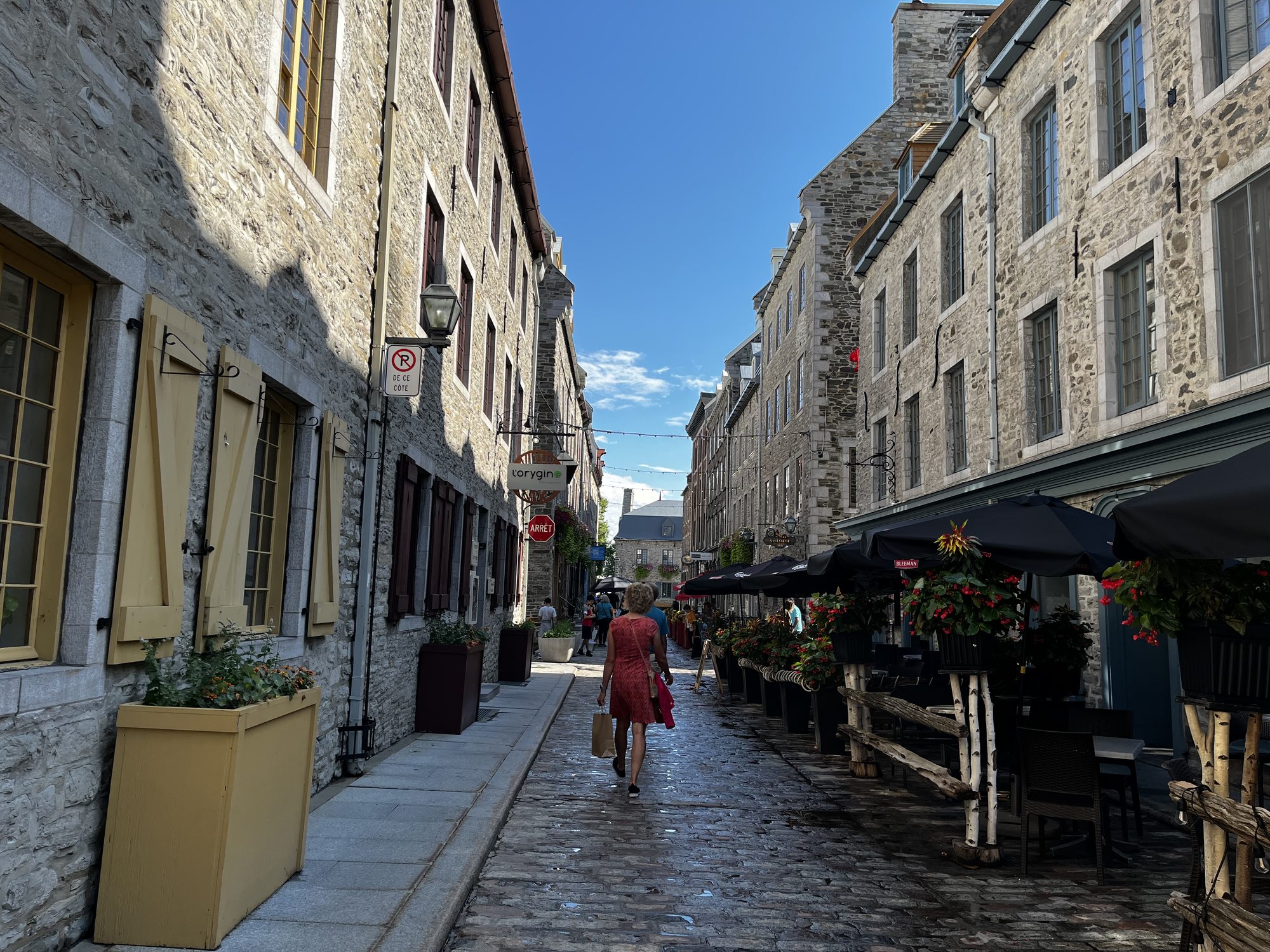
I have already made the broader case for Lyon over a return visit to Paris in my main Lyon piece, and the direct head-to-head on which one wins for a long weekend in my Lyon vs Paris verdict. This is the operational version of that argument: where to walk, when to walk, where to eat, what to skip, and how to assemble it into three days that work in real life. No padding. No filler. Just the route. If three days in Lyon is itself part of a wider European-weekend rhythm, the closest North-American twin — same stone streets, same European feel — is 48 hours in Quebec City (or, for the bigger comparison, Quebec City vs Montreal); the Mediterranean counterpart is 7 days across Athens, Santorini and Mykonos.
Lyon rewards a slow walker more than a checklist tourist. Three days is enough if you walk it right. The lines above are the route, distilled. The detail below is how to actually do it.
Every piece here ends with an honest call on where to actually go. New verdicts land in your inbox first. One email. No noise.
Day 1 — Vieux-Lyon, Saint-Jean, and the climb to Fourvière
Start in Vieux-Lyon. The old city, on the right bank of the Saône, is a tight grid of Renaissance and medieval streets — cobbled, ochre-faced, tall narrow buildings stitched together by the traboules, the covered passageways that thread between them. Lyon has roughly 230 traboules. Most are in Vieux-Lyon. They are quiet. They are largely free. They are the most underrated piece of urban architecture in France. Walk them slowly. Push on a wooden door that looks like an entrance, follow the passageway through, come out on the next street, push on the next door. The traboules were built so silk merchants could move bolts of cloth between workshops without going outside in the rain. You are walking through five hundred years of practical infrastructure.
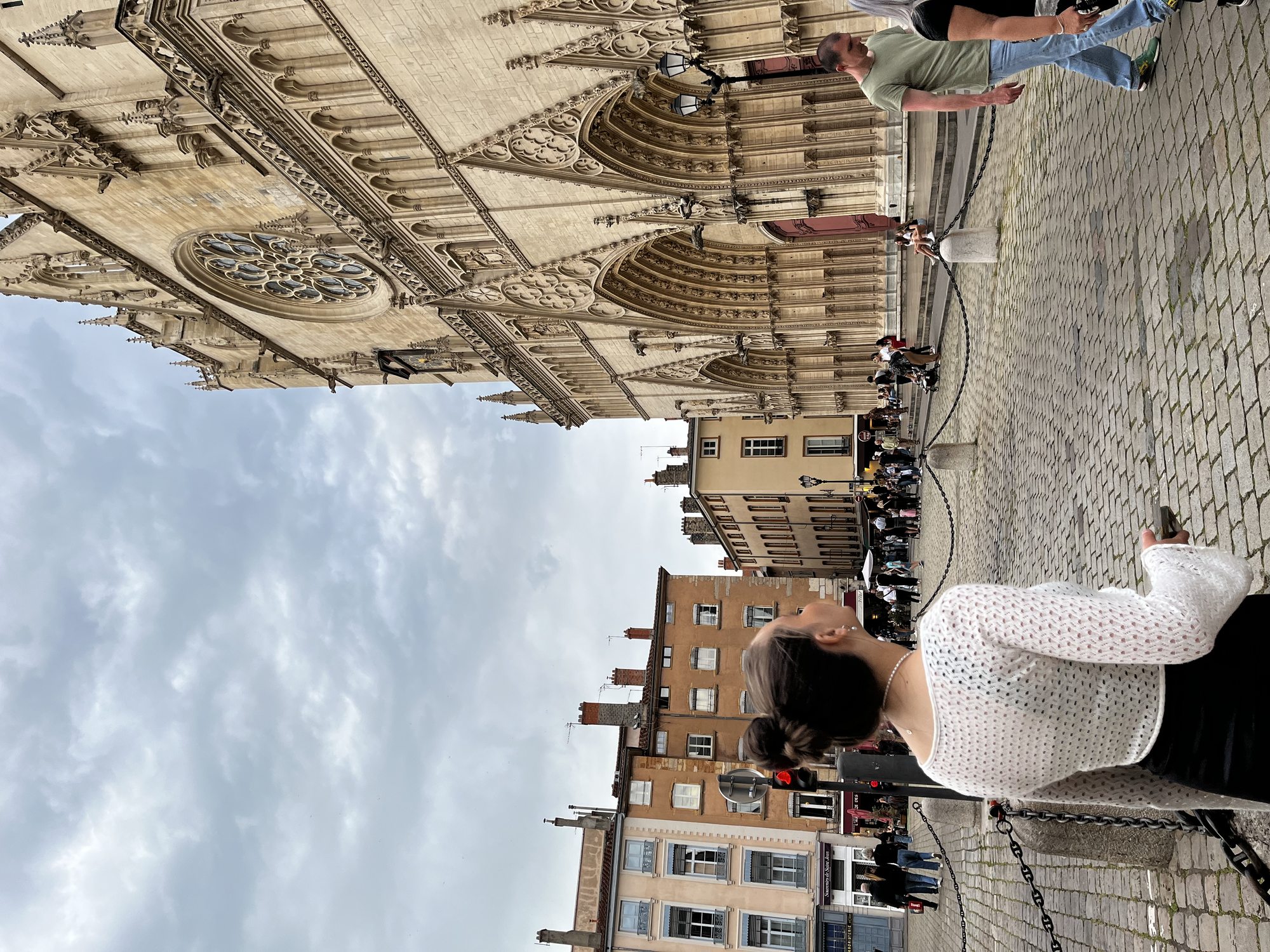
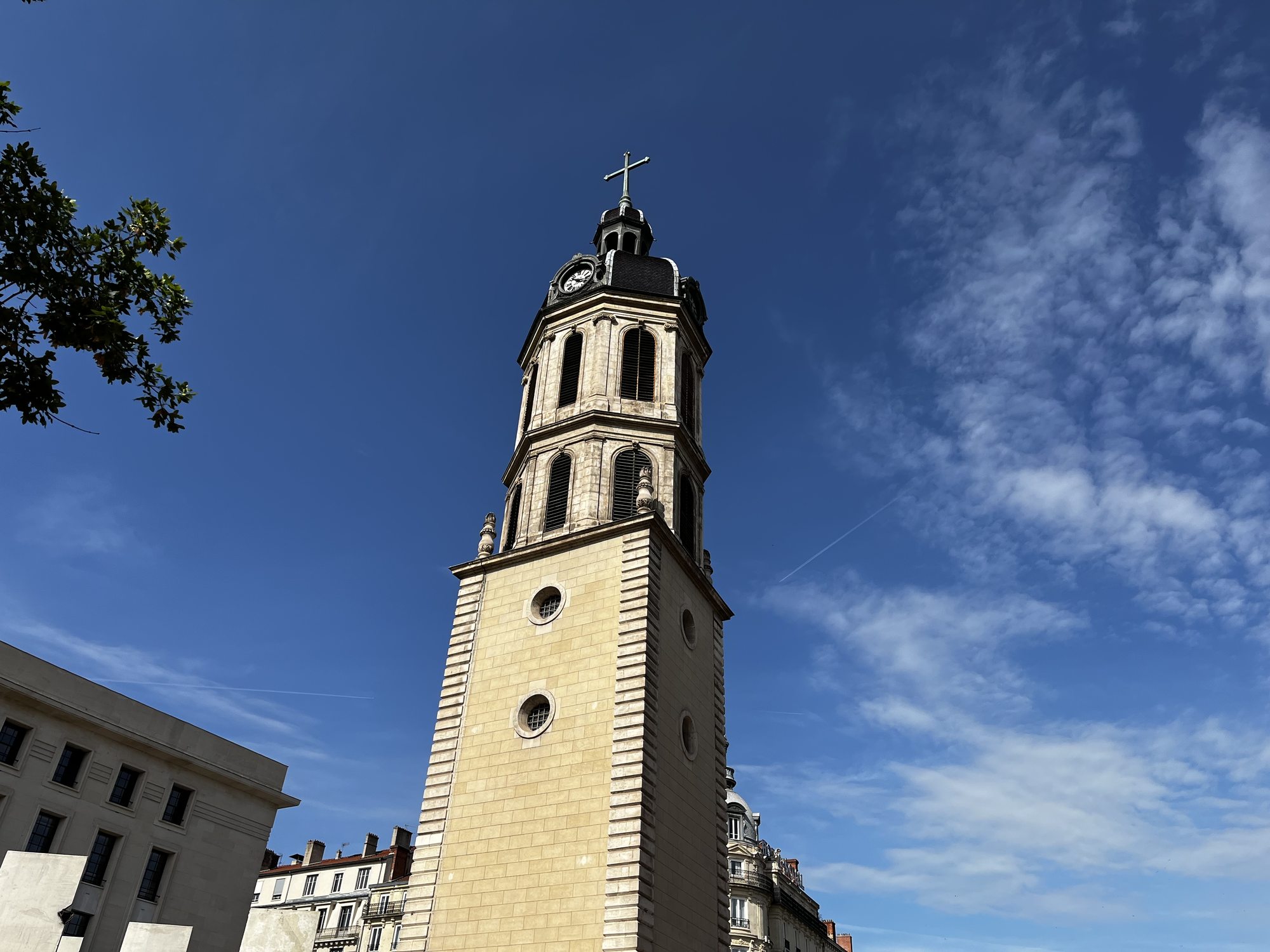
Saint-Jean cathedral is the anchor of Vieux-Lyon. Walk it slowly. The astronomical clock inside is the move most visitors skip — go check the chime time at the entrance, then come back at the right minute. The cathedral square outside is where the city gathers. Sit. Drink something. Watch.
From Saint-Jean, climb. Either take the funicular up to Fourvière (cheap, fast, in the rain it is the right call) or walk up the Montée des Chazeaux for the view that earns the climb. At the top: the Basilique Notre-Dame de Fourvière, a 19th-century basilica that is louder, more ornate, and more theatrical than anything Saint-Jean tries to be. Lyon has two cathedrals on two hills doing two completely different jobs. See both.
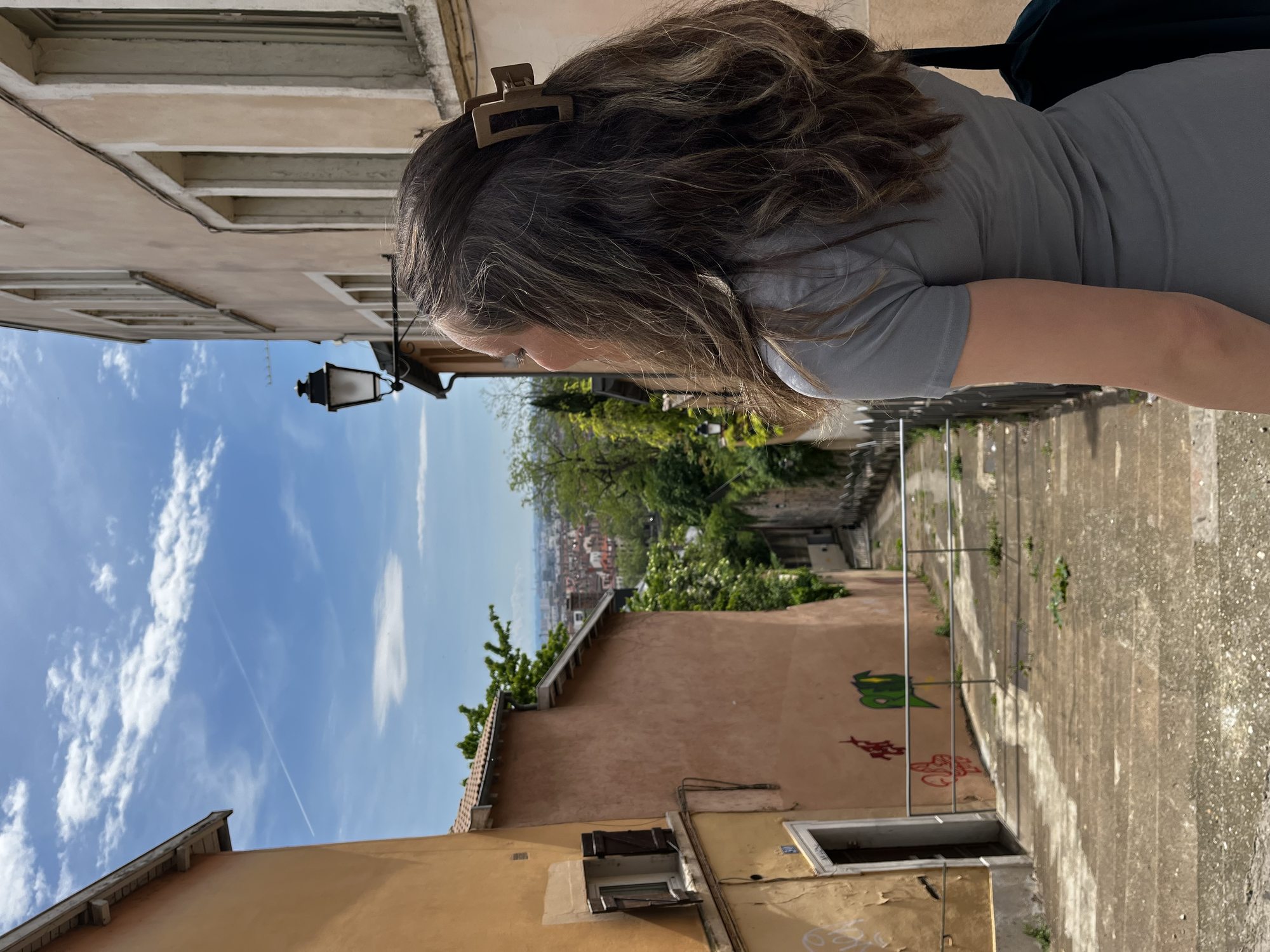
The terrace beside the basilica is the view of Lyon. The whole city below you. The Saône and the Rhône meeting at the southern tip of the Presqu'île. The Alps on a clear day. Stay until the light turns. Then walk back down through the Roman amphitheatre — yes, there is a Roman amphitheatre on the same hill, largely empty, free to walk through, with the city below it. Lyon does this casually. It does not announce its layers. You stumble into them.
Dinner: a bouchon in Vieux-Lyon. There are dozens. Walk in without a reservation only if it is early. I will get to the food properly on day two — this first bouchon is to set the rhythm of what Lyonnaise food is. Order the salade lyonnaise to start (poached egg, lardons, frisée, the right vinaigrette) and the andouillette or the quenelles for the main. Drink whatever the house red is. Walk back across the river to your hotel slowly.
Day 2 — The Presqu'île and the food argument
The Presqu'île — the peninsula between the Saône and the Rhône — is the centre of modern Lyon. Place Bellecour is the third-largest urban square in France. Walk from there north toward Place des Terreaux, the great square that holds the Hôtel de Ville and the Musée des Beaux-Arts.
The Musée des Beaux-Arts is one of the most underrated art museums in France. Second only to the Louvre by collection, with Rembrandt, Monet, Géricault, Delacroix, a real Egyptian collection, and far smaller crowds than anything in Paris. Allow two hours. The cloister courtyard at the centre of the building is itself worth the entry — a quiet garden with a single Rodin bronze, surrounded on all four sides by museum windows. Sit there. Skip the audio guide unless you came for a specific painter.
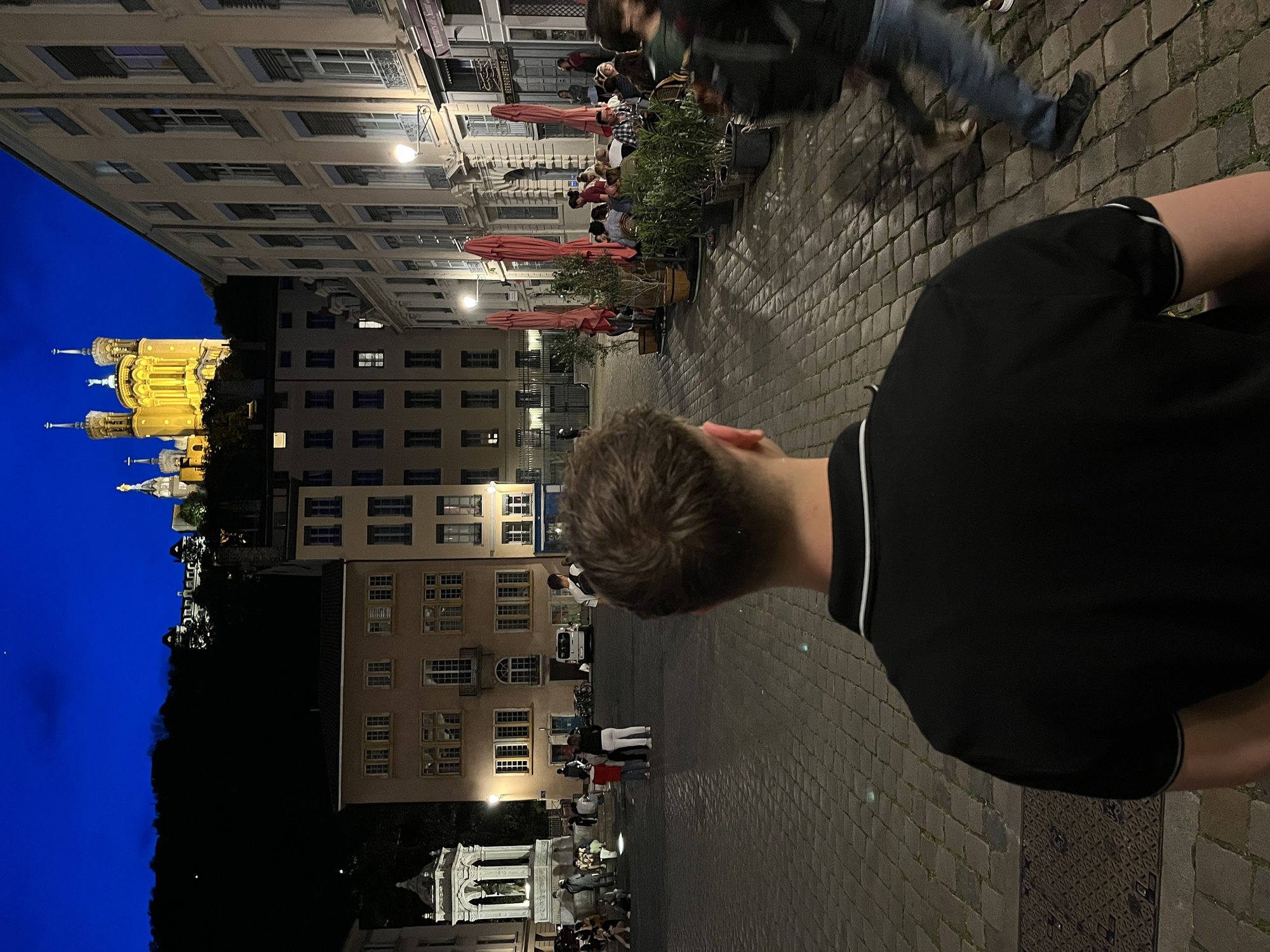
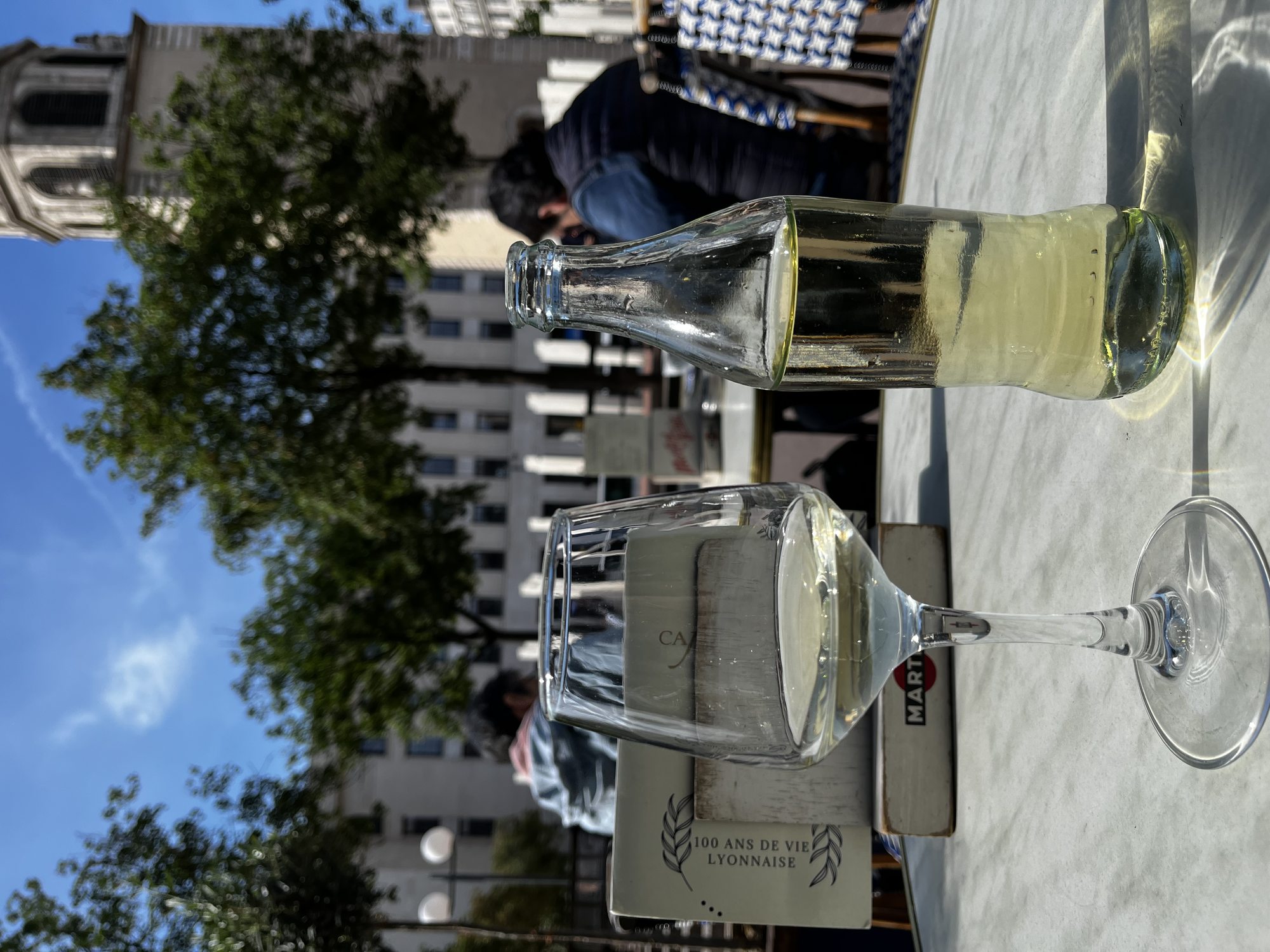
Walk south through the Presqu'île in the afternoon. The shopping streets between Bellecour and Terreaux are real shopping streets — French chains, independent boutiques, bookshops, butchers, a market hall worth twenty minutes of your time. Stop at a café and order a glass of something. The city is at its best when you walk it without an agenda.
Where to eat the actual bouchon dinner
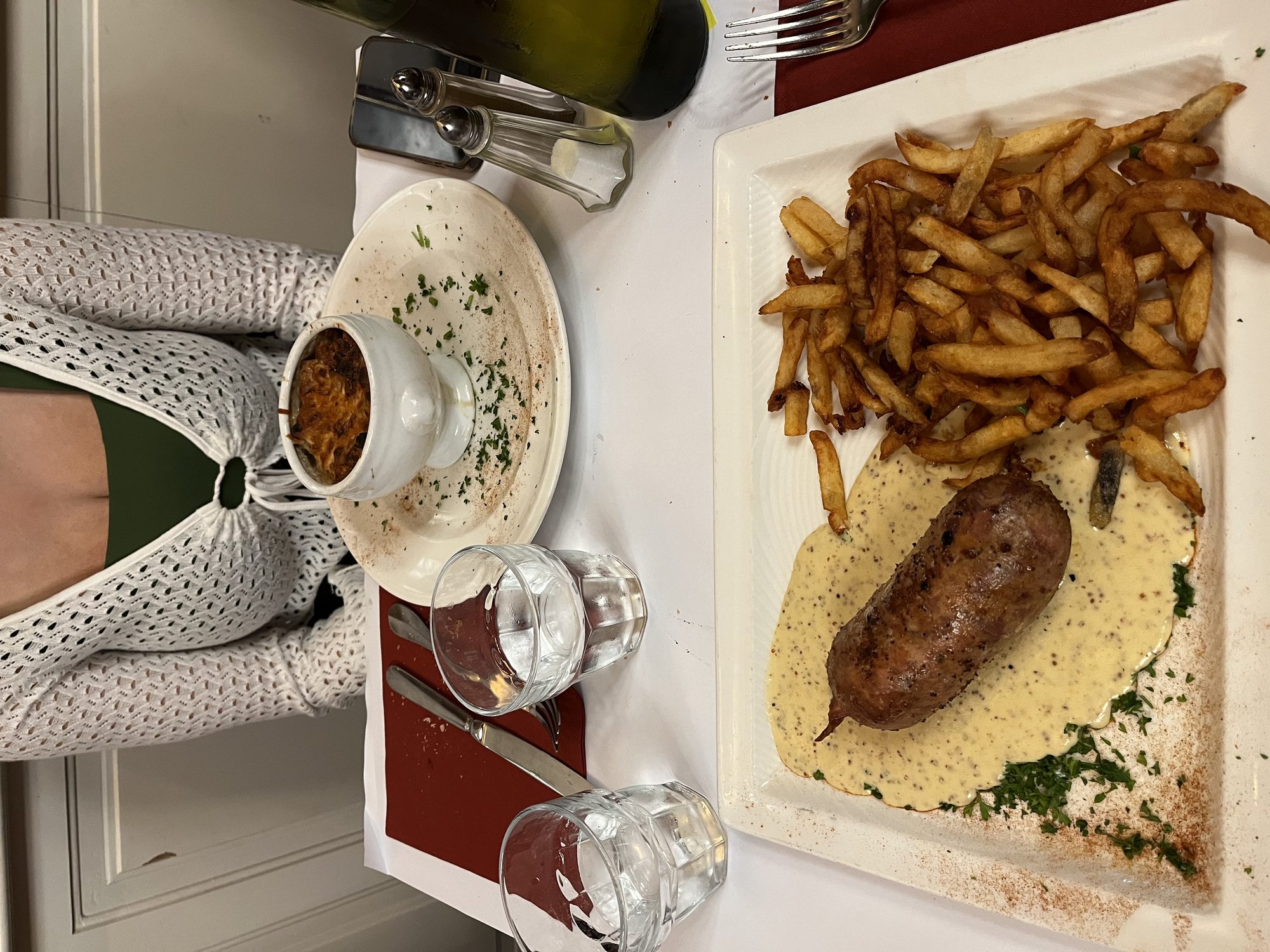
The bouchon dinner is the centre of the Lyon trip. Do not waste it on a tourist imitation. The way to do it: look for the Les Bouchons Lyonnais certification sticker on the door — a small red plaque with a chef puppet (Gnafron, a local figure). This is the official designation given by the city to a small number of restaurants that genuinely serve traditional Lyonnaise food prepared the traditional way. There are roughly twenty certified bouchons. They are not the most Instagrammed restaurants in the city. They are the right ones.
Order: a salade lyonnaise to start, the tablier de sapeur (tripe done well, do not skip it on principle, the breading transforms it), or the andouillette AAAAA (if you can stomach it — the five A's are the trade body's certification that this is real andouillette, not a soft imitation). For dessert: the tarte aux pralines, an entirely pink confection that looks like a child made it and tastes like the best thing you've eaten that week. Drink Beaujolais or Côtes du Rhône — both are local, both are reasonable, neither is a tourist markup.
Is Lyon better than Paris for a weekend?
For food: yes, no contest. Paris has more famous restaurants. Lyon has more good ones, at lower prices, with fewer reservations to wrestle for. The food argument for Lyon over Paris is one I will not back down from. For monuments and big-museum hits: no, Paris wins. For walking, neighbourhood texture, real urban life that has not been compressed into a tourist concentrate: Lyon. For cost: Lyon, easily — twenty to thirty percent lower for hotels and restaurants of equivalent quality. If you have been to Paris, Lyon is the better next trip. If you have never been to France, Paris first. But Lyon should be on your return list.
Day 3 — Croix-Rousse, the Tête d'Or, and the slow rooftops
Croix-Rousse is the hill north of the Presqu'île — historically the silk-weaving district, now the village inside the city. The traboules here are wider than in Vieux-Lyon, because the silk workers needed to move large bolts of cloth between buildings. Walk the Boulevard de la Croix-Rousse on a market morning — Tuesday, Friday, Sunday. The market is two kilometres long. Cheese, fish, lavender, olives, real bread, the kind of produce that makes you stop and stare at a tomato.
Walk down from Croix-Rousse slowly. Stop at the Mur des Canuts — the massive trompe-l'œil mural at Boulevard des Canuts that fakes an entire neighbourhood of windows, balconies and pedestrians on a flat wall. Lyon is the world capital of trompe-l'œil murals — there are more than a hundred — and the Mur des Canuts is the masterpiece.
In the afternoon: the Parc de la Tête d'Or. Lyon's central park — 117 hectares, free entry, a botanical garden, a small lake with rowing boats you can hire by the hour, a zoo (also free, also small, also surprisingly well-curated), and a glass pergola at the rose garden that is one of the prettiest small structures in the city. Walk it slowly. Bring something to eat. Sit by the lake. This is not the most famous thing in Lyon, but it is one of the most pleasant afternoons in any French city.
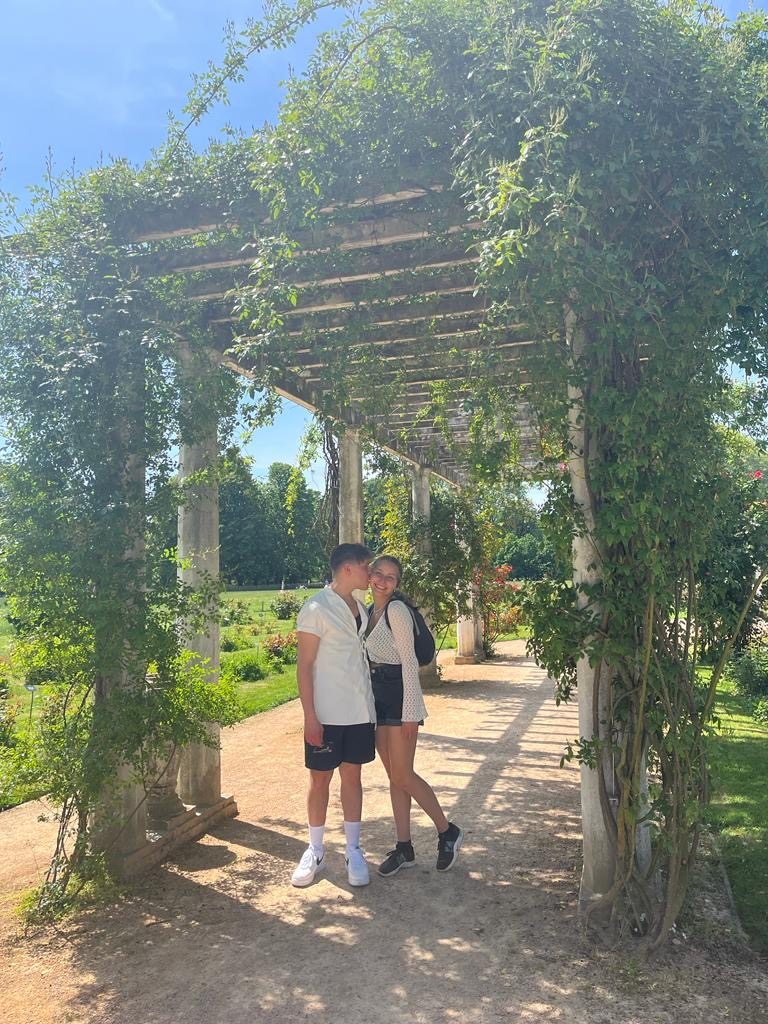
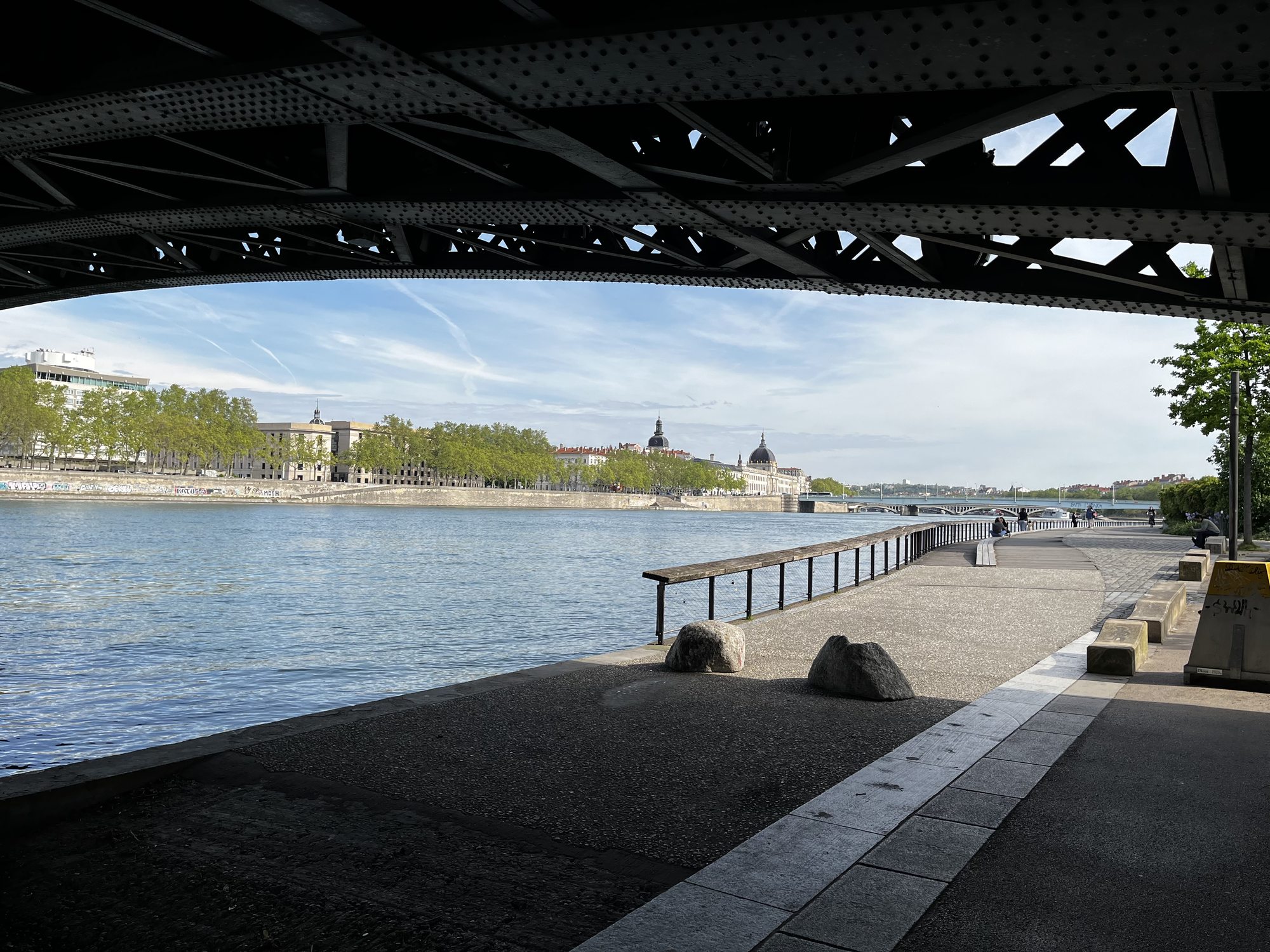
For your last evening: a café terrace on the Presqu'île for the slow drink, dinner at a less-touristed bouchon (or a modern Lyonnaise restaurant if you want a counterpoint — Lyon's contemporary food scene is genuinely good and underdiscussed), and a walk along the Saône at night with the Fourvière basilica lit on the hill above. The Pont Bonaparte bridge at midnight is one of the underrated romantic moments in the city.
"Three days in Lyon is not a short trip. It is the right trip — long enough to walk into the city, short enough that you leave with a reason to come back."
How to actually book a 3-day Lyon trip
Timing: May, June, or September are the sweet spots. Lyon is at the latitude of Geneva — proper four-season city. Summers can hit 35°C and the city is built of stone, so it holds heat. Winters are damp and grey. The shoulder seasons are the gift. Avoid the Festival of Lights weekend in early December unless that is specifically why you came — the city is extraordinary then but the hotels triple their prices and the streets are wall-to-wall.
Where to stay: the Presqu'île, between Bellecour and Terreaux. Walking distance to everything you need on this itinerary. Vieux-Lyon is also lovely to stay in but slightly more touristy and slightly less practical for day three. Avoid the area around Part-Dieu station unless you have a reason — it is functional, modern, and absent of the texture you came for. Book three months ahead in May, June, or September. Lyon is not as crowded as Paris but the good places do fill.
How to arrive: TGV from Paris Gare de Lyon to Lyon Part-Dieu. Two hours. Trains every 30 to 60 minutes. Book ahead for €35 to €60 fares in second class. The plane from Paris is slower door-to-door once you account for the airport. Lyon Saint-Exupéry airport is well-connected to Europe and the Mediterranean; if you are coming from outside France, the direct flight is the easier choice. The Rhôneexpress tram from the airport to Part-Dieu is 30 minutes.
Lyon in 3 days — the booking essentials
When to go: May, June, or September. Avoid August (city empties, half the bouchons close) and the Festival of Lights weekend (prices triple) unless that is the reason for the trip.
Where to stay: The Presqu'île — between Place Bellecour and Place des Terreaux. Walkable to everything in this itinerary. Three months ahead booking is enough.
How to arrive: TGV from Paris to Part-Dieu in 2 hours. From other European cities, fly to Lyon Saint-Exupéry and take the Rhôneexpress tram. Skip the regional airports.
The food rule: Eat at a certified Bouchons Lyonnais establishment. Look for the small red plaque with Gnafron the puppet on the door. There are roughly twenty in the city. They are the real ones.
What to skip: The Cinéma Lumière museum unless you are a film historian. The Vieux Lyon souvenir shops. Restaurants on the cathedral square — they are tourist-priced, and there are better bouchons 200 metres away.
The free moves: The Roman amphitheatre on Fourvière hill. The Tête d'Or zoo. All 230 traboules. The Mur des Canuts. The Saône-side walk at sunset. Lyon is one of the rare European cities where most of the best moments cost nothing.
For travellers who want this kind of trip to be normal — not a once-a-year event — the PONTUS community runs a private travel membership built around it. Read about the community side →
Lyon’s best hotels are small and on the Presqu’île. Book them right — and know who actually owns online travel before you do.
The Verdict — And Why It Matters
Three days is the right length for Lyon. Long enough to walk the old city, climb the hill, eat the bouchon dinner that earns the trip, and have one slow afternoon that does not feel rushed. Short enough that you arrive home with a reason to come back — for the Beaujolais country an hour away, for the Festival of Lights in December, for a different bouchon next time, for the walks you did not get to.
The mistake most travellers make on Lyon is the same mistake they make on most European cities: they treat it as a list of monuments to check, when it is in fact a city to walk through. Walk it. Eat what the locals eat. Climb both hills. Cross both rivers. Push on the wooden doors. The trip is built into the walking.
And — if I have not yet been clear enough about this — if you are choosing between a return trip to Paris and a first trip to Lyon, do Lyon. I have said it in the main piece. I will say it again here. Lyon is what people think Paris is going to be. The food. The walks. The cost. The texture. Three days is enough to see that for yourself.
"Push on the wooden doors. Eat the andouillette. Climb both hills. The trip is built into the walking."
If you read this all the way down, there's a fair chance you've been somewhere too — and you have your own version of what just happened in this piece. I want to read it. I read every story that comes in, and I write back. The pieces that earn it go live here with your name on them, your photographs, your verdict.
This is what PONTUS
is built for.
Three days in Lyon. Two weeks in Naples and the Amalfi Coast. A long weekend in Quebec City. A honeymoon in Santorini. This is the rhythm a travel-shaped life looks like — and PONTUS exists to make that life normal, not exceptional.
- For those who want to be part of a community of like-minded people
- For those who don't want to break the bank just because they want to see the world
- For those who are ready to put the effort in and build their own income from the travel industry
Whatever you want, whatever you choose — PONTUS is here.
Join the Community