The 10-Day
Greece Itinerary.
Ten days is the difference between seeing Greece and being in it — the same famous islands, at a pace that isn't a race, with Crete on the end for the country most people never reach.
Ten days, four Greeces, one honest budget.
The shape of it: two nights in Athens, two in Mykonos, three in Santorini, and three in Crete — a whole island most people skip. It's the longer companion to our 7-day Greece itinerary; if you only have a week, start there. This guide assumes peak July, so everything below is priced at its busiest. Still choosing islands? We wrote Athens vs Santorini and Mykonos vs Santorini to help.
Land in Athens, and don't rush it.
AthensDrop your bags in Koukaki or Plaka — walkable, under the Acropolis, cheaper a few streets back from the rock. Do nothing ancient today. Athens rewards a slow first evening: the neoclassical lanes of Plaka, a climb up Anafiotika where island builders set a village into the hillside, and a first taverna dinner with the Acropolis lit gold above you.
This is the day to shed the flight and remember you came to be somewhere, not to tick things off.
The Acropolis early, then the city underneath it.
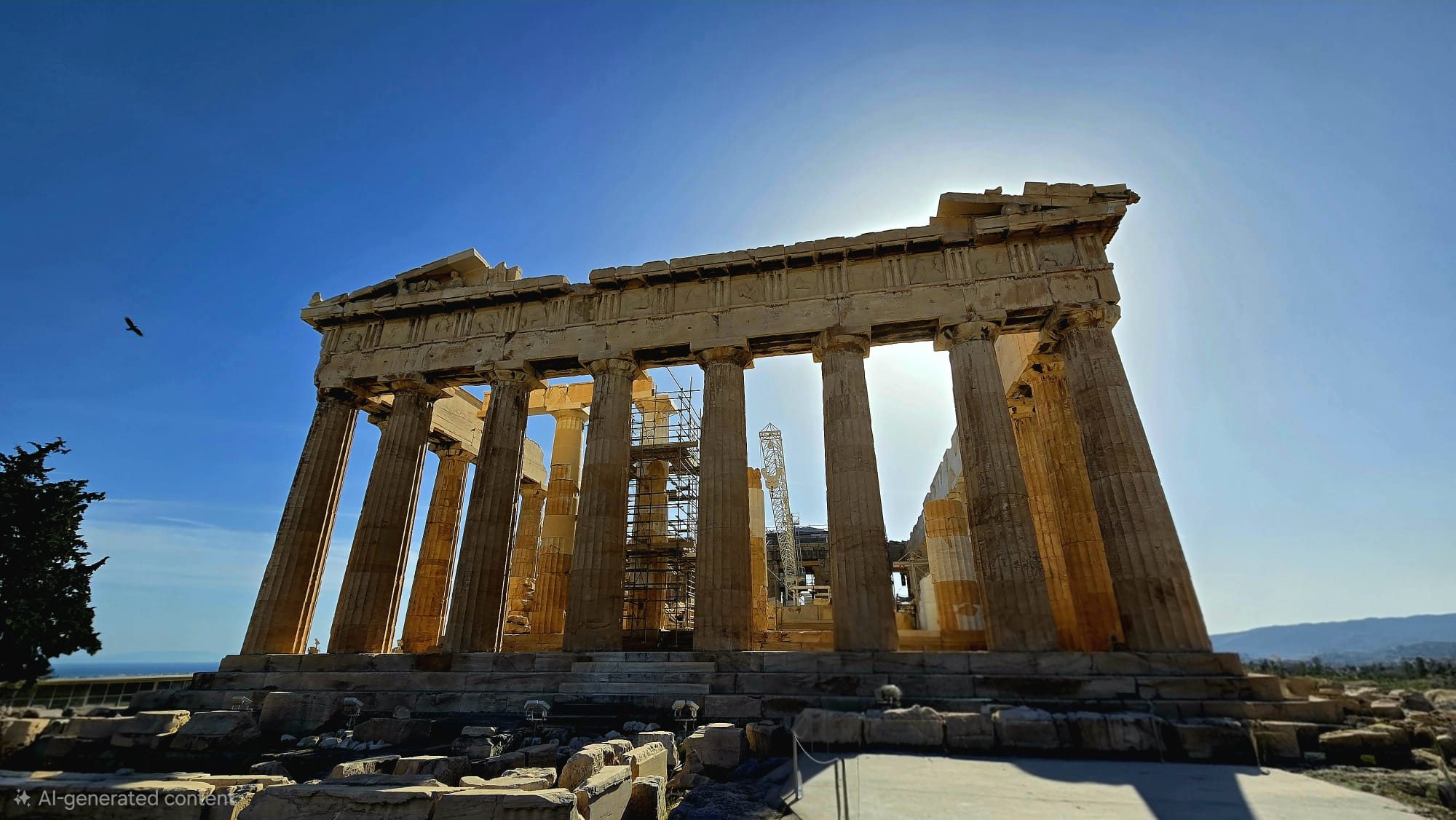
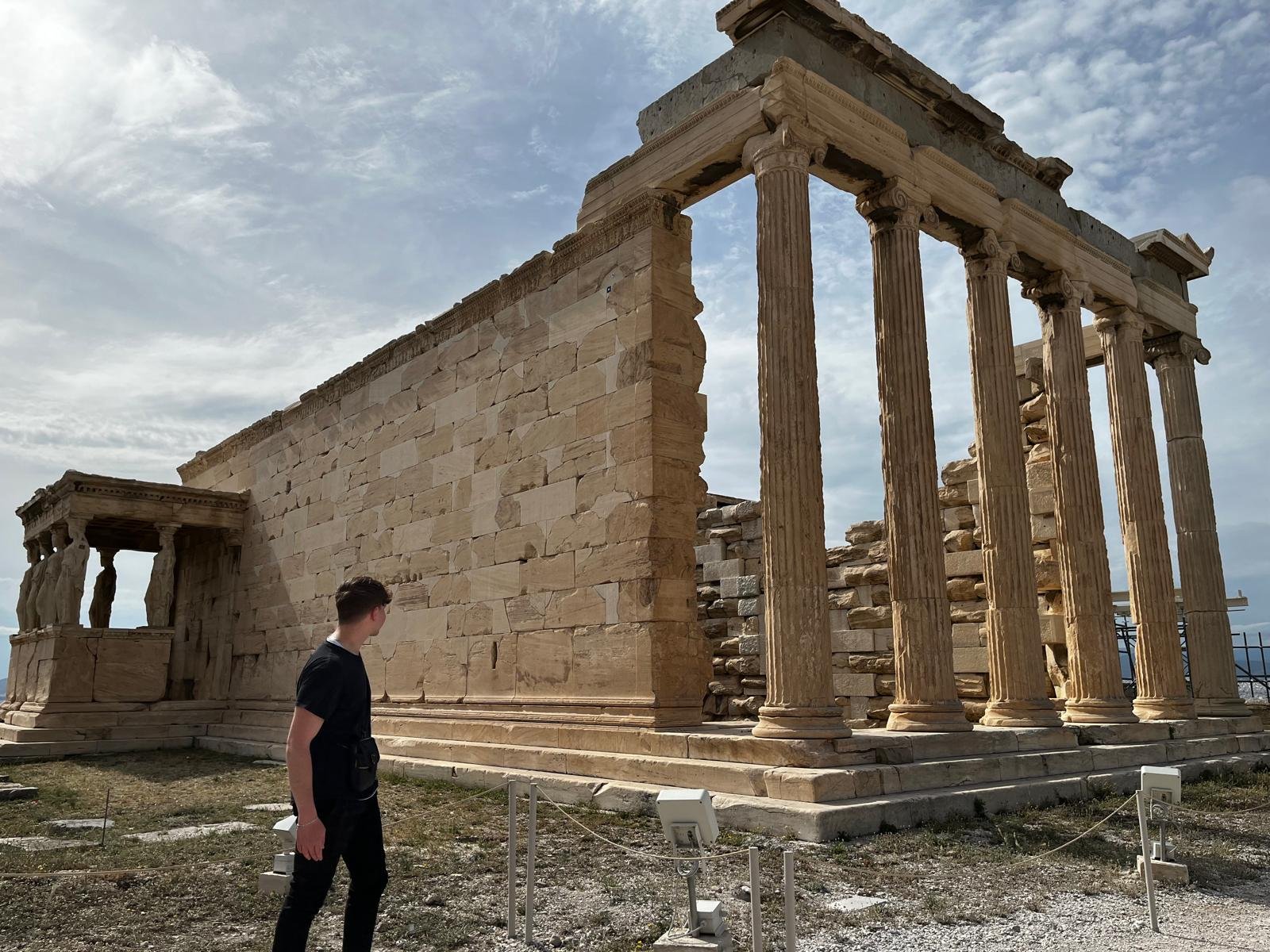
AthensBe at the rock for the first entry slot, before the heat and the cruise crowds. A guided small-group tour earns its keep here — the Acropolis without context is a beautiful pile of marble; with a good guide it becomes a city. The Acropolis Museum down the hill is one of the best in Europe, and mercifully air-conditioned.
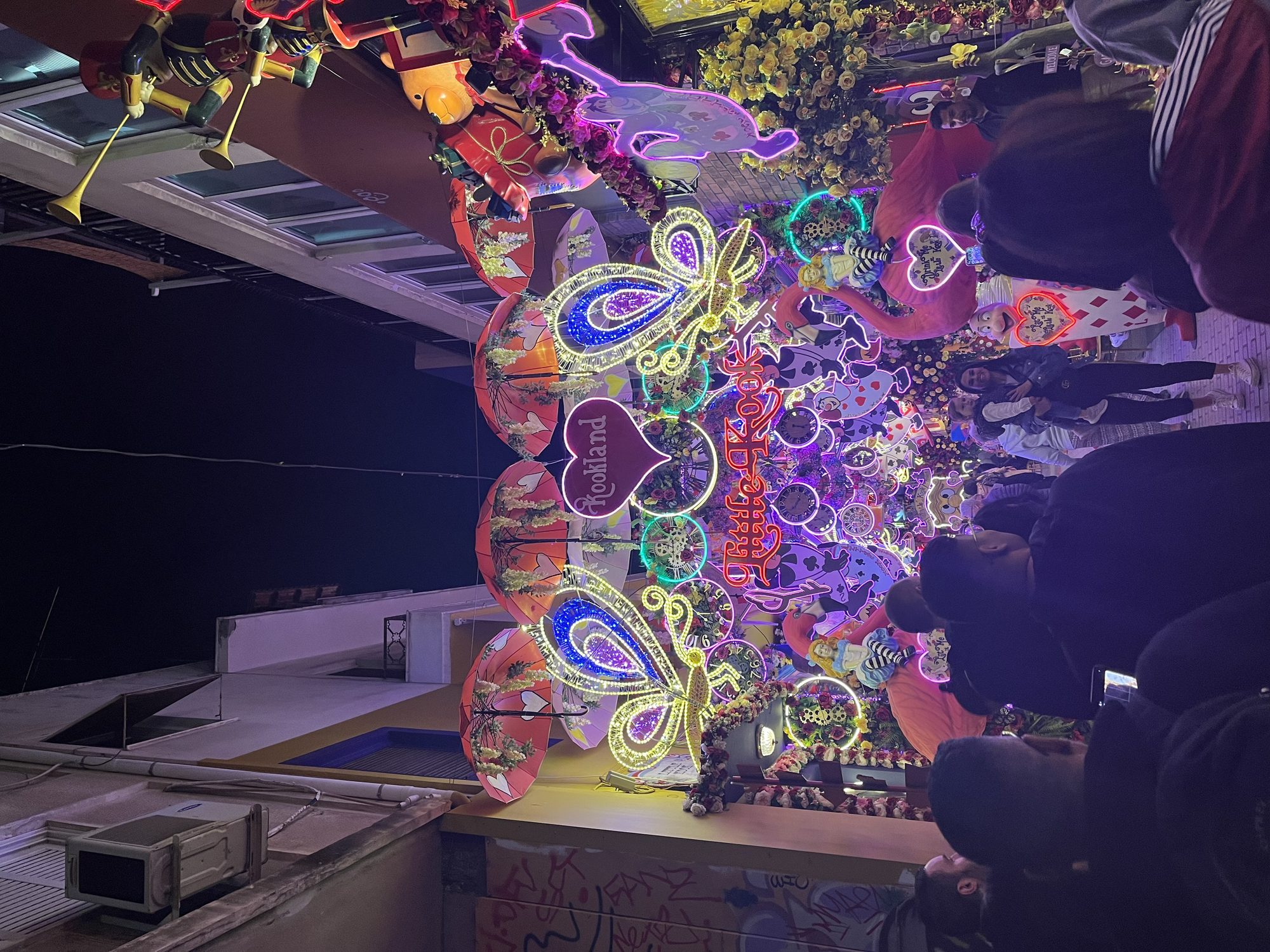
Give the afternoon to the Ancient Agora and the market streets of Monastiraki, then dinner in Psiri — the loud, string-lit heart of the Athens night.
Ferry to Mykonos, and let the island be what it is.
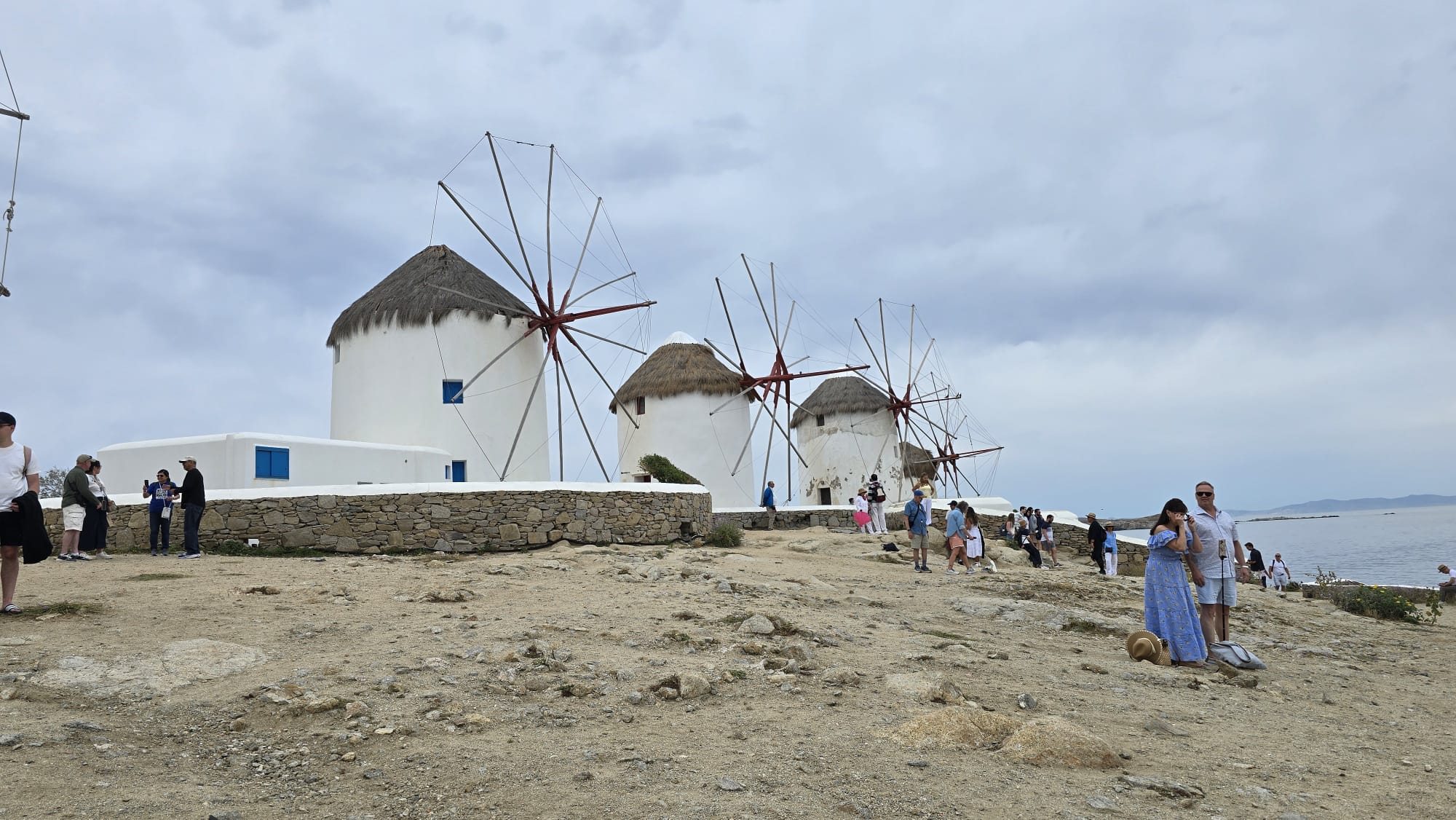
Athens → MykonosTake a fast ferry from Piraeus — under three hours to Mykonos. Drop your bags and walk straight into Mykonos Town, a whitewashed maze designed to get you pleasantly lost, where every wrong turn ends at the sea. Aim the evening at Little Venice and the hilltop windmills for sunset, then dinner in the old town.
Mykonos gets called overrated by people who arrived expecting a quiet island. It isn't that and never pretended to be — it's a beautiful, expensive, high-energy place, and it's superb at exactly that.
Ancient Delos in the morning, a beach after.
MykonosMorning: the short boat to Delos — a whole sacred island that was once one of the most important places in the Greek world, now an open-air ruin you can walk end to end. A guided half-day makes sense of it and has you back by early afternoon.
Then choose your Mykonos: the organised clubs of Paradise and Super Paradise, or the calmer sand at Ornos and Platis Gialos. One more slow dinner in the old town before you move on.
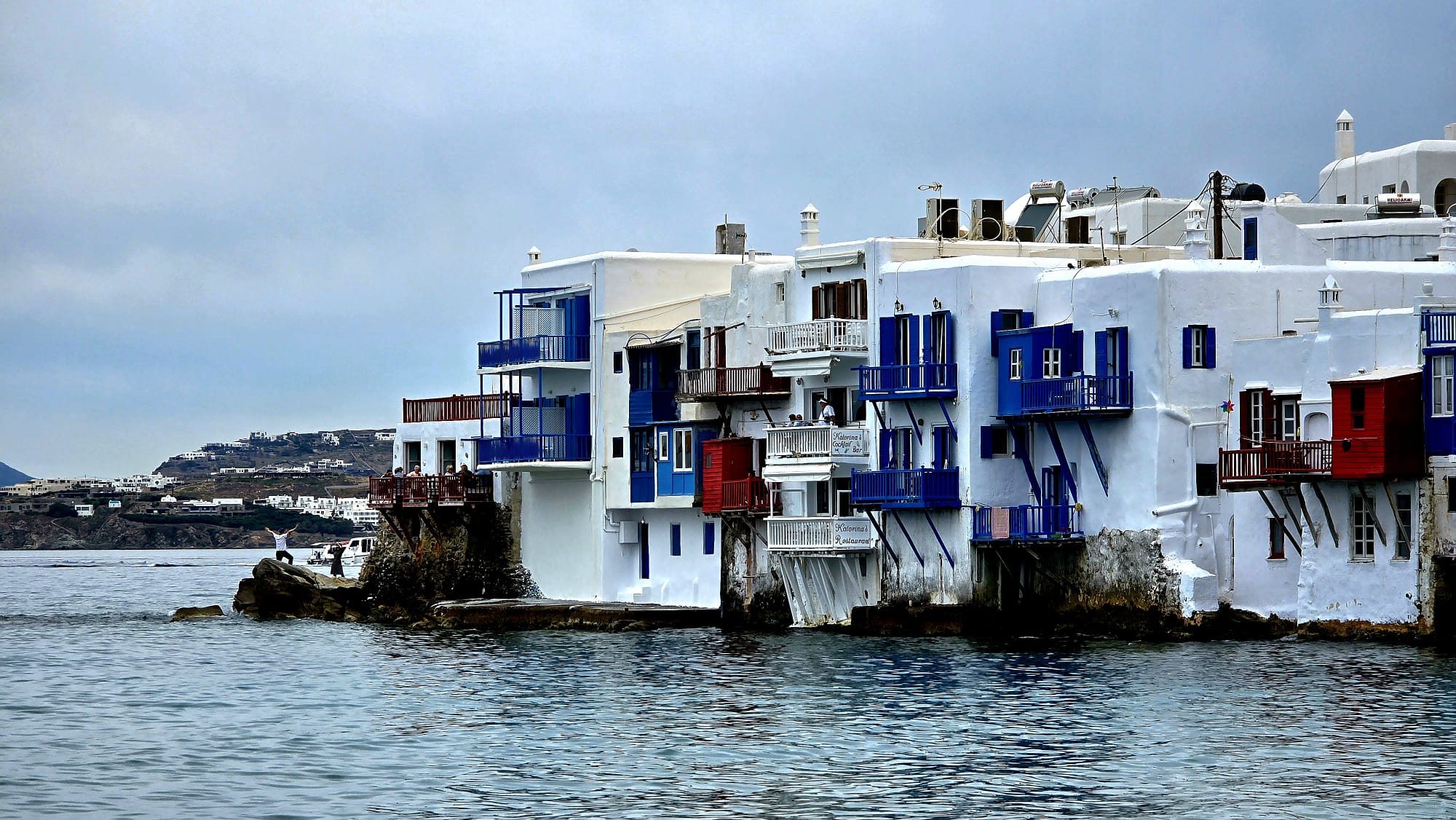
Cross to Santorini, and the sunset you came for.
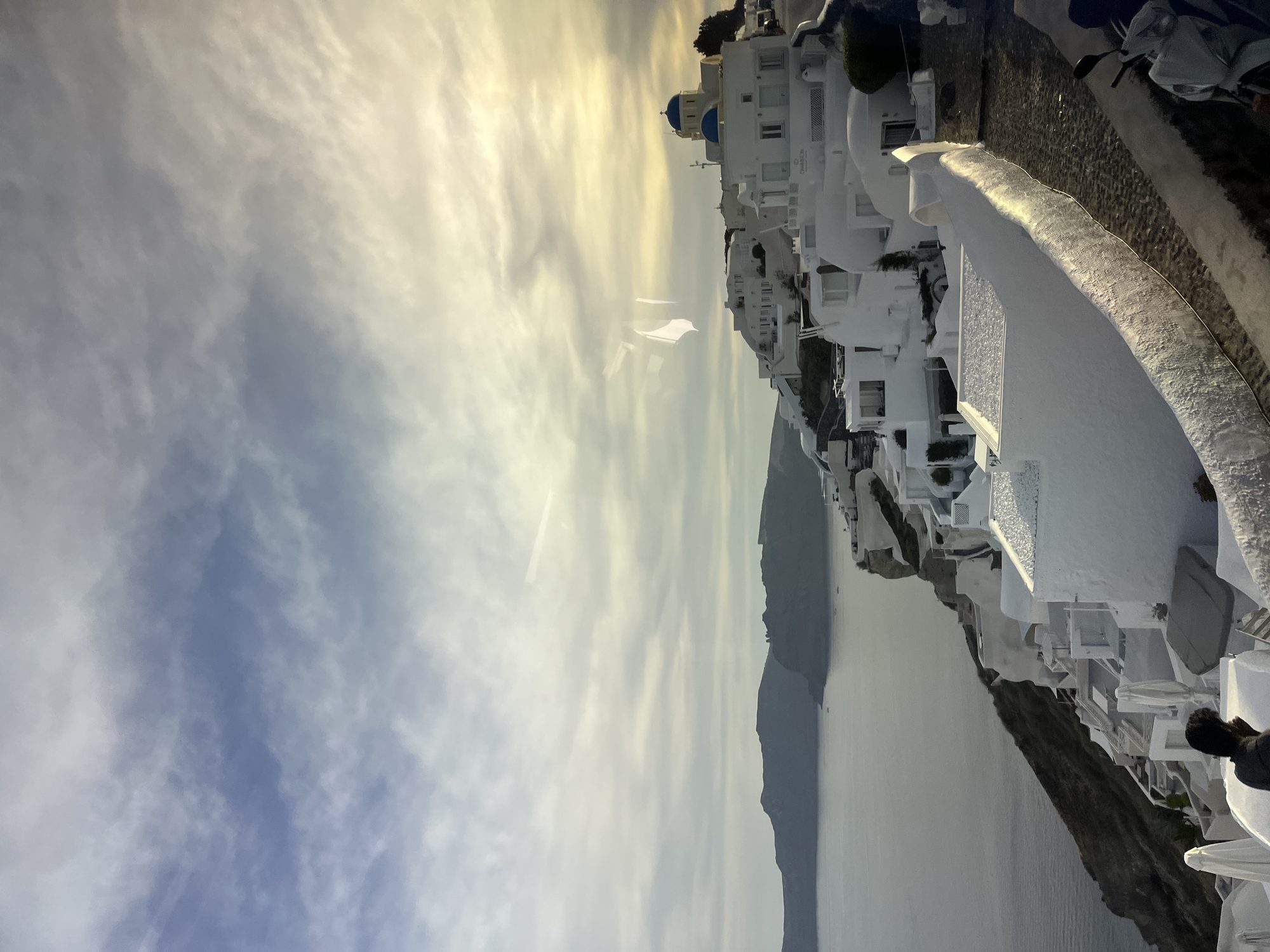
Mykonos → SantoriniA fast ferry links the two islands in around two to three hours. Watch for the moment the caldera rises out of the water — it's the best first impression in the Aegean. Check into a caldera-view room in Fira, Firostefani, or Oia (Oia is the postcard and priced like it).
Then walk out for the Oia sunset — yes, it's crowded; yes, it's still worth doing once. Stand slightly off the main square and it's yours.
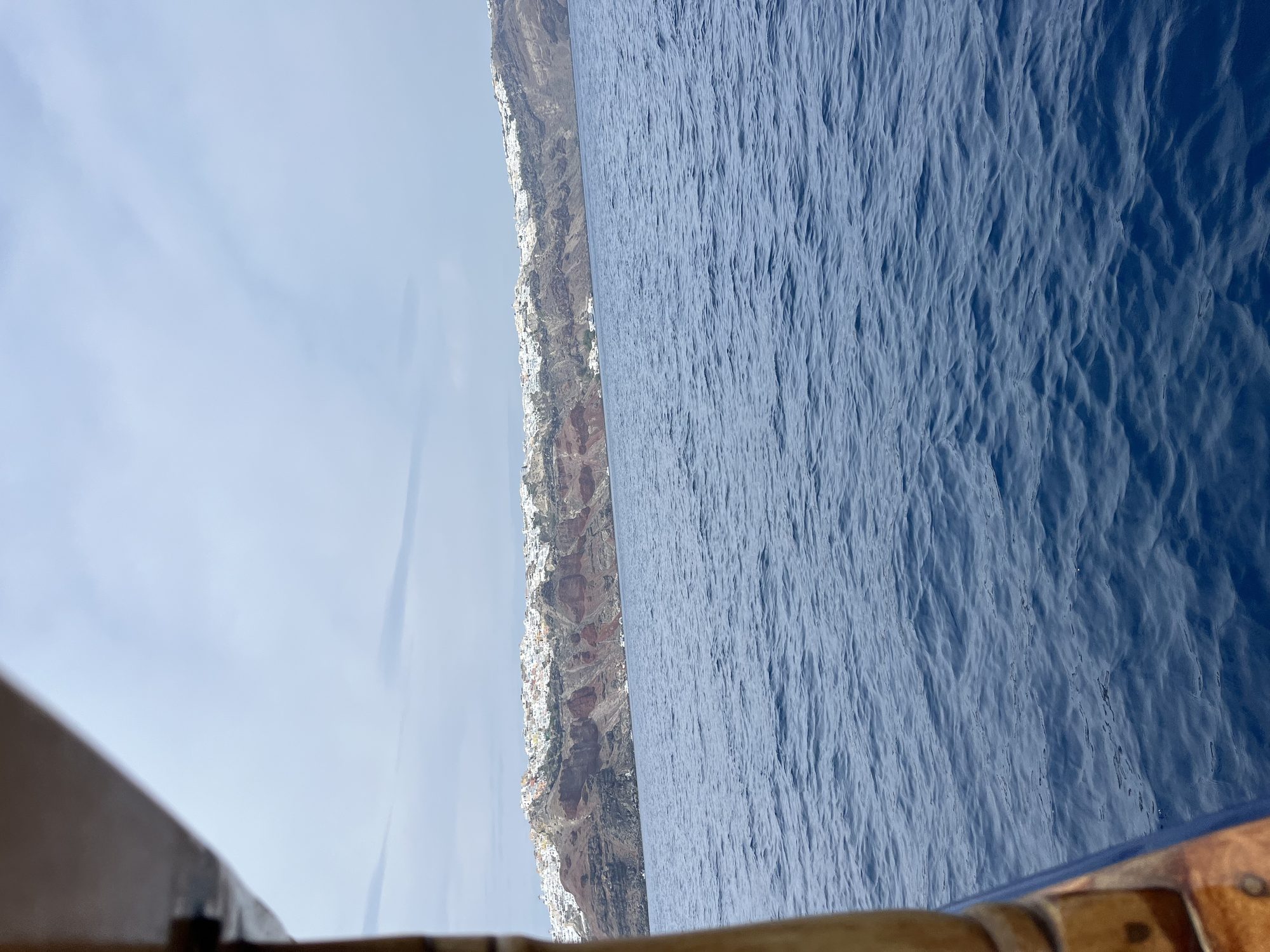
Wine on the cliffs, then the water at golden hour.
SantoriniMorning: the island's volcanic wine is genuinely unlike anywhere else — Assyrtiko grown low to the ground against the wind. A half-day tour of three wineries is the unhurried way in. Or walk the caldera path from Fira to Oia in the cool of the morning (about three hours, unforgettable).
Afternoon: get on the water. A sunset catamaran cruise around the caldera — swim stops at the hot springs, dinner and drinks aboard, the island lit from the sea as the sun goes — is the single best thing most people do here.
The slow Santorini — beaches, ruins, a hill village.
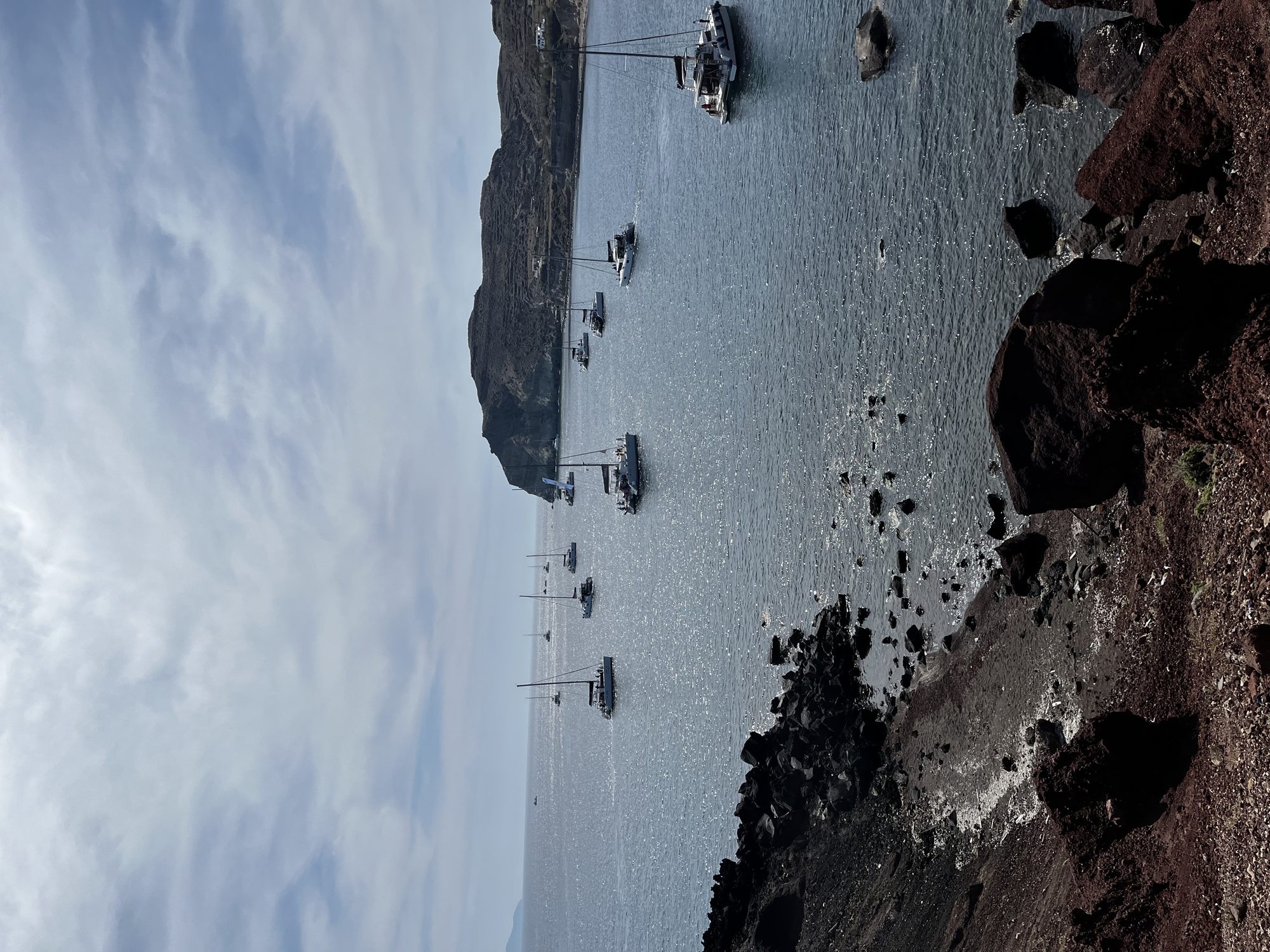
SantoriniThe day the seven-day trip never gets. Swim at the Red Beach under its rust-coloured cliffs, then the Bronze-Age city of Akrotiri — Greece's Pompeii, buried by the same eruption that made the caldera. Late afternoon, climb up to Pyrgos, the old inland capital, for a dinner with the whole island falling away beneath you and none of the Oia crush.
This is the day people remember — the one where Santorini stops being a photo and becomes a place.
Ferry to Crete — the island that's really a country.
Santorini → CreteA fast ferry drops down to Heraklion in under two hours. Crete is the one that doesn't fit on a postcard — big enough to have its own mountains, gorges, cuisine and dialect, and old enough to have been the seat of Europe's first civilisation.
Start with that: the Bronze-Age palace of Knossos, the labyrinth of the Minotaur myth, on the edge of the city. A guide turns a maze of low walls into a throne room. Then a first Cretan dinner — this is the best-eating island in Greece, and it isn't close.
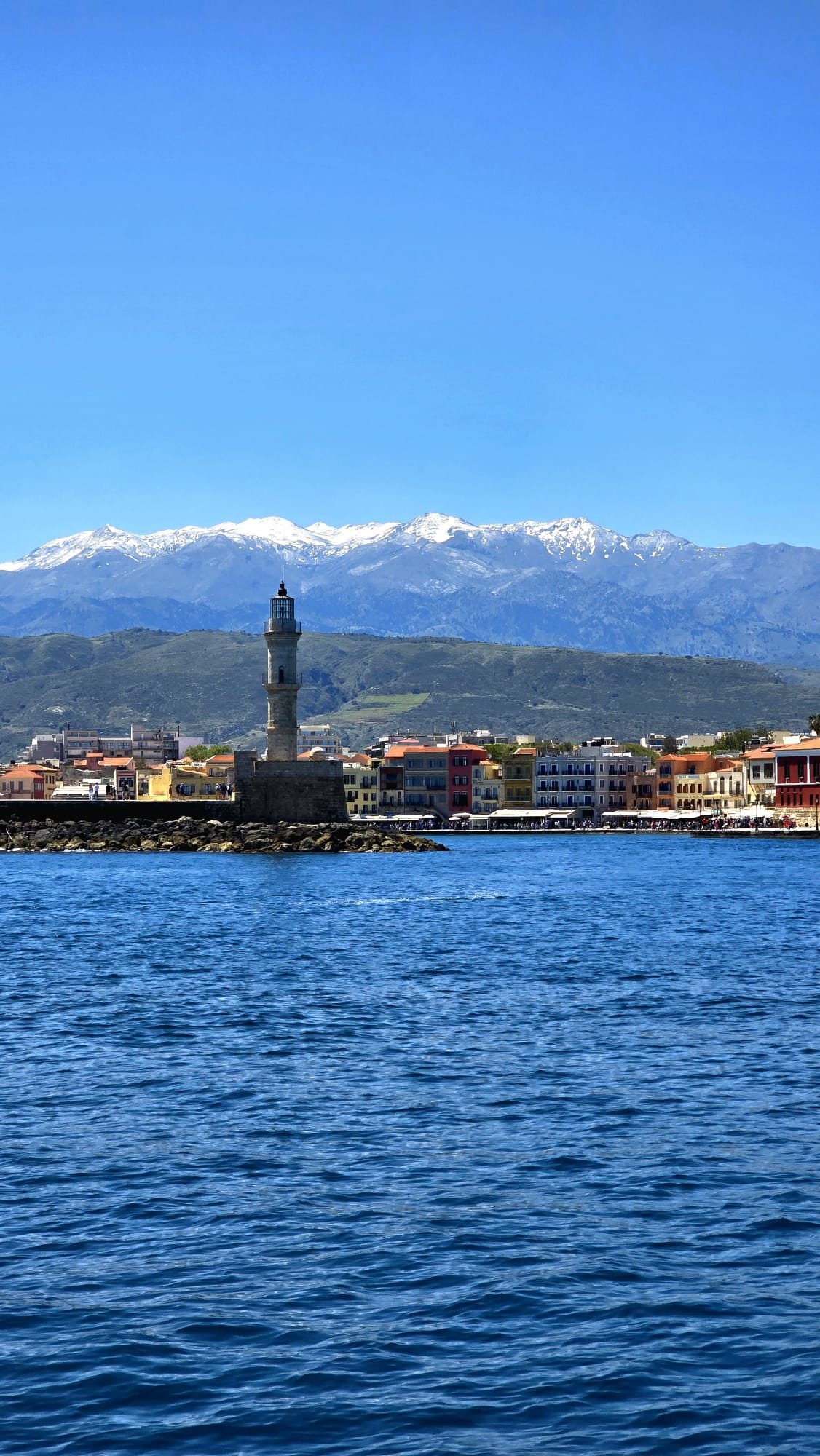
West to Chania, or into the gorge.
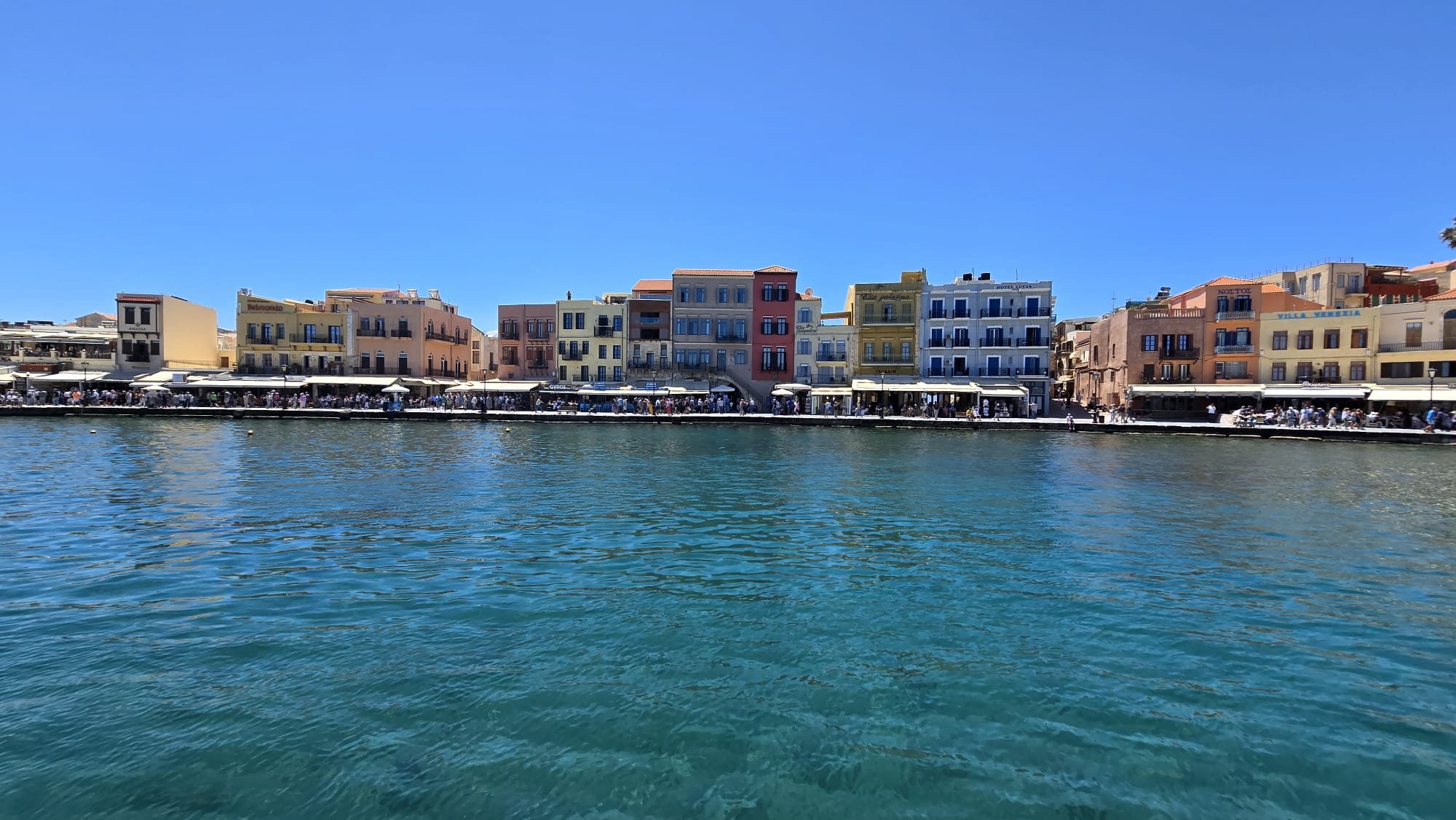
CreteTwo honest ways to spend the last full day. The gentle one: drive west to Chania, whose Venetian harbour and old town are the loveliest in Crete, and swim at one of the ribbon-sand beaches on the way. The hard, unforgettable one: the Samaria Gorge, a 16km walk down through a national park to the Libyan Sea, where a boat picks you up at the bottom.
Either way, end on the water. Crete's south and west coasts are where the island keeps its best beaches, and its most honest tavernas.
Fly back to Athens, and home.
Crete → AthensSkip the long ferry north and take the 50-minute flight from Heraklion to Athens — often cheaper than the boat and it leaves the morning open. Connect to your international departure from Athens, which flies almost everywhere.
Ten days, four very different Greeces, done at a pace that let you actually be in each one. That's the whole idea.
What ten days costs, honestly.
| What | Detail | Per person |
|---|---|---|
| Accommodation · 9 nights | Athens 2 · Mykonos 2 · Santorini caldera 3 · Crete 2 | €900–1,200 |
| Ferries + flight home | Athens→Mykonos→Santorini→Crete, then Crete→Athens | €220–330 |
| Activities | Acropolis · Delos · a Santorini cruise · Knossos | €200–360 |
| Food & drink | ~€45/day · tavernas, gyros, the odd view dinner | €430–480 |
| Local transport & extras | Metros, buses, a Crete rental, museum entries | €120–180 |
| Estimated total | 10 days · per person · before international flights | €1,900–2,400 |
New itineraries, first.
We publish these dated, honest itineraries as we build them. Join PONTUS and the next one lands in your inbox before it's anywhere else.
Get the next itinerary →